
Blumhouse Expands Horror Empire: YouTube Icon Matthew "MatPat" Patrick to Adapt Cult Indie Game ‘Amanda the Adventurer’
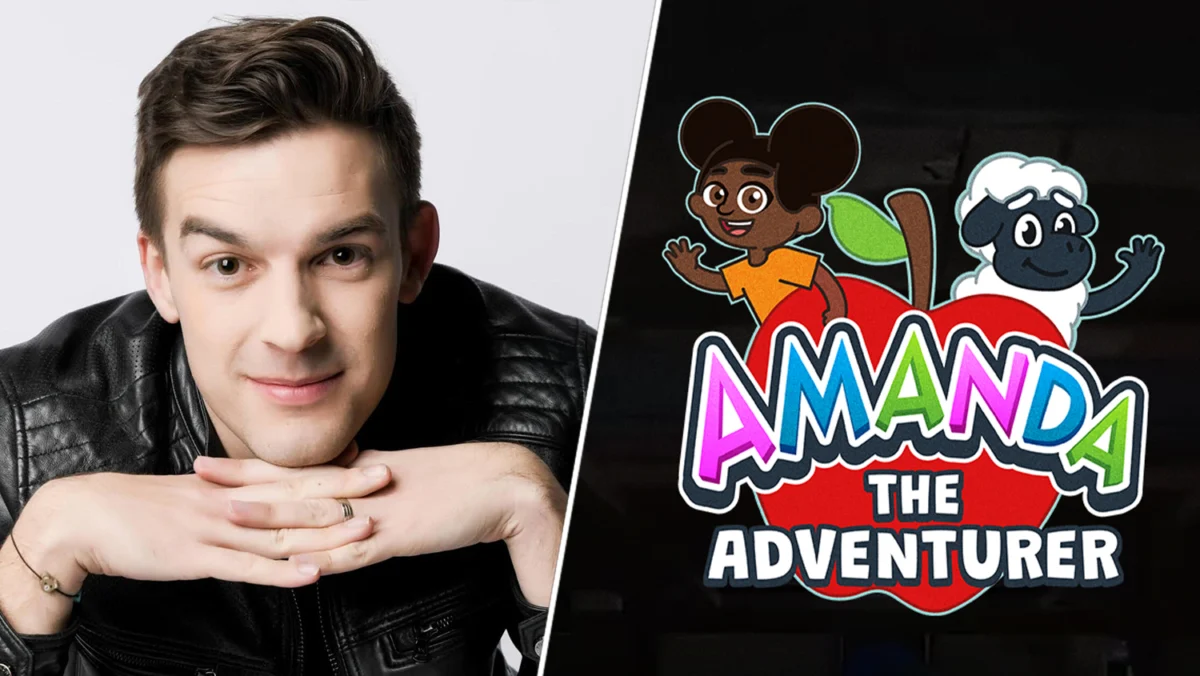
LOS ANGELES — Horror powerhouse Blumhouse is once again mining the rich, unnerving depths of modern indie video gaming for cinematic terror. During the studio’s annual BlumFest celebration, horror mogul and Blumhouse founder Jason Blum dropped a bombshell announcement that sent shockwaves through both the gaming and cinematic communities: internet icon and digital media pioneer Matthew "MatPat" Patrick is officially developing a feature-film adaptation of the viral 2023 puzzle-horror hit, Amanda the Adventurer.
The announcement cements Blumhouse’s aggressive and lucrative strategy of translating beloved, lore-heavy interactive media into mainstream box-office juggernauts. Following the monumental success of the Five Nights at Freddy’s (FNAF) franchise—which terrified audiences worldwide and hauled in an astounding $520 million at the global box office—Blumhouse is turning its sights to another low-fi, high-anxiety indie darling.
For Patrick, who retired from his long-running, multi-billion-view YouTube channels earlier this year, the project represents a monumental transition from dissecting digital mysteries behind a monitor to orchestrating them on the silver screen. With Epic Pictures CEO Patrick Ewald locked in as a producer through its DreadXP banner, the adaptation promises to bring the uncanny, unsettling world of a cursed children’s television show from monitors to the multiplex.
Main Facts: Unpacking the Amanda the Adventurer Project
The upcoming cinematic adaptation of Amanda the Adventurer brings together a dream team of internet culture veterans and horror heavyweights. Here are the core details surrounding the high-profile announcement:
- The Source Material: Amanda the Adventurer is a 2023 psychological puzzle-horror game developed by MplusPlus and published by DreadXP. Known for its deceptively innocent exterior that masks a deeply disturbing narrative, the game gained massive traction across streaming platforms like YouTube and Twitch.
- The Creative Force: Matthew "MatPat" Patrick, founder of the massively influential "The Game Theorists" and associated channels, is spearhousing the feature film adaptation. This marks a major creative leap for Patrick, transitioning from pop-culture analysis to narrative filmmaking.
- Production Heavyweights: Jason Blum and Blumhouse Productions are backing the project. Additionally, Patrick Ewald, CEO of Epic Pictures (the parent company of game publisher DreadXP), will serve as a producer on the film.
- The Premise: In the game, players follow the story of Riley Park, who inherits their late aunt Kate’s desolate house. While cleaning out the attic, Riley discovers a collection of VHS tapes featuring a 2000s-era educational cartoon called Amanda the Adventurer. As Riley watches the episodes, they realize the titular character, Amanda—alongside her loyal, anthropomorphic sheep companion Wooly—is directly communicating with them, pulling the viewer into an increasingly sinister, mind-bending mystery.
- Blumhouse’s Gaming Pipeline: This announcement comes on the heels of Blumhouse’s historic success with Five Nights at Freddy’s (2023) and its upcoming sequel, solidifying the studio’s dominance in the "mascot horror" and indie game adaptation space.
Chronology of a Phenomenon: From Attic Tapes to the Big Screen
To understand the magnitude of the Amanda the Adventurer film adaptation, it is essential to trace the trajectory of both the source material and Matthew Patrick’s long-standing relationship with the horror genre.
The Genesis of a Nightmare (2022–2023)
Amanda the Adventurer began its life as a game jam project created in just 48 hours for the Dread X Collection 7. Its unique premise—combining the nostalgic, comforting aesthetic of early-2000s public access children’s television (reminiscent of Dora the Explorer or Blue’s Clues) with psychological horror and cryptic puzzles—struck a chord with indie horror fans.
Following its viral reception, MplusPlus expanded the concept into a full standalone game released in April 2023. Gamers across the globe scrambled to decode its cryptic lore, reverse-engineer its alternate reality game (ARG) elements, and piece together the tragic fate of Aunt Kate and the cursed television program.
The MatPat Connection and YouTube Legacy
Simultaneously, Matthew Patrick was cementing his legacy as one of YouTube’s most brilliant minds. Through his "Theory" channels (Film Theory, Game Theory, Food Theory, and Style Theory), Patrick built an empire predicated on deep-dive analysis, lore dissection, and interactive storytelling. For years, Patrick’s channels served as the digital town square for indie horror games like Five Nights at Freddy’s, Baldi’s Basics, and Hello Neighbor, often popularizing these games and turning them into cultural phenomena through his meticulous investigations.
In early 2024, Patrick shocked the digital world by announcing his retirement from full-time hosting on his channels, passing the torch to a new generation of creators. However, his departure was never a step away from the entertainment industry; rather, it was a clearance of schedule to pursue larger-scale creative endeavors.
The Blumhouse Synergy
Patrick’s relationship with Blumhouse is longstanding and symbiotic. Recognizing his unparalleled understanding of modern horror tropes and internet culture, Blumhouse cast Patrick as a waiter named Ness in the 2023 cinematic adaptation of Five Nights at Freddy’s. He returned to the fold for the franchise’s sequel, lending his voice to the beloved animatronic character Toy Bonnie.
When Blumhouse began scouting for talent to helm the Amanda the Adventurer adaptation, Patrick was uniquely positioned—not only as a superfan and cultural analyst of the game, but as someone who understands the exact psychological triggers that make low-fi indie horror resonate with Gen Z and millennial audiences.
Supporting Data: The Economics of Indie Horror Adaptations
Blumhouse’s pivot toward indie video game adaptations is not merely an artistic choice; it is a masterclass in modern Hollywood economics. The financial validation of this strategy can be measured in staggering figures:

- The FNAF Effect: The 2023 film adaptation of Five Nights at Freddy’s, directed by Emma Tammi, defied critical pessimism to gross over $520 million globally against a modest production budget. It stands as one of the most profitable horror releases in cinematic history and set a high-water mark for video game-to-film adaptations.
- Built-In Audiences: Unlike traditional original screenplays that require massive marketing budgets to build awareness, indie horror games like Amanda the Adventurer and FNAF arrive with pre-existing, hyper-engaged digital communities. Millions of fans have already watched their favorite streamers play the game, theorized about its lore on Reddit, and analyzed every frame of footage.
- Low-Risk, High-Reward Budgets: True to the Blumhouse business model, horror films based on indie games typically operate on controlled budgets. By keeping production costs lean while leveraging massive, organic internet fandoms, the studio virtually guarantees profitability, paving the way for lucrative multi-picture deals and merchandise synergies.
- The DreadXP Factor: Partnering with DreadXP—a publisher renowned for unearthing raw, inventive indie horror concepts—gives Blumhouse direct access to a pipeline of bleeding-edge horror intellectual property that has already been vetted by the gaming community.
Official Responses and Industry Perspectives
The announcement at BlumFest elicited overwhelming excitement from both the creators involved and the wider entertainment industry.
Jason Blum, speaking on the studio’s expanding slate, emphasized the importance of working with creators who genuinely understand the DNA of the source material. By bringing in Matthew Patrick—a man who has spent over a decade dissecting the exact psychological beats of indie horror—Blumhouse is prioritizing authentic fan representation over corporate oversight.
Patrick Ewald, CEO of Epic Pictures and producer on the project, highlighted the synergy between DreadXP’s mission to elevate unique indie horror voices and Blumhouse’s unparalleled ability to scale projects for a global theatrical audience.
For his part, Matthew Patrick expressed profound enthusiasm for the project, noting that translating the unsettling, meta-narrative format of Amanda the Adventurer into a cinematic experience presents a thrilling creative challenge. Patrick’s deep familiarity with the game’s hidden lore ensures that Easter eggs, ARG elements, and psychological twists will be woven seamlessly into the film’s screenplay.
Furthermore, representation agencies like The.Team (representing Patrick through agent Dan Levitt) have noted a significant uptick in cross-medium collaborations, as digital creators increasingly step behind the camera to helm major Hollywood productions.
Implications: What Amanda the Adventurer Means for the Future of Horror Cinema
The pairing of Blumhouse, Matthew Patrick, and Amanda the Adventurer carries profound implications for the future of the horror genre and the entertainment industry at large:
1. The Validation of Digital Creators as Filmmakers
For decades, Hollywood maintained a strict barrier between traditional cinema and digital content creation. The success of creators like Matthew Patrick in major studio productions signals a tectonic shift. Studios now recognize that digital creators possess a direct line to contemporary audiences’ psychological tastes, an understanding of viral marketing, and an intuitive grasp of pacing that traditional executives often overlook. Patrick’s transition from YouTube theorist to Hollywood producer could open doors for a wave of digital auteurs to step into studio filmmaking.
2. The Rise of "Analog Horror" and "Mascot Horror" in Cinemas
Amanda the Adventurer belongs to a burgeoning subgenre of horror that relies on unsettling, retro media—often categorized under analog horror or found-footage aesthetics. By bringing a game centered around a cursed, low-resolution children’s television show to the big screen, Blumhouse is proving that audiences are hungering for horror that subverts nostalgic comfort. The success of Amanda the Adventurer could pave the way for cinematic adaptations of other internet-born horror sensations, such as The Mandela Catalogue or Backrooms lore.
3. Redefining Fan-Studio Engagement
Blumhouse has mastered the art of co-opting fan communities into marketing engines. By enlisting MatPat—a figure who practically built the online community surrounding these games—Blumhouse ensures that the film will be developed with the blessing and active participation of the hardcore fanbase. This collaborative approach minimizes the risk of fan backlash (a common pitfall of video game adaptations) and transforms the audience into active participants before the film even hits theaters.
Conclusion
As production ramps up on Amanda the Adventurer, horror enthusiasts and gamers alike have every reason to look toward the horizon with bated breath—and perhaps a touch of unease. With Jason Blum’s production savvy, Patrick Ewald’s indie pedigree, and Matthew Patrick’s encyclopedic knowledge of horror lore steering the ship, the cursed VHS tapes of Aunt Kate’s attic are poised to leap off monitors and into the shared nightmares of moviegoers everywhere.
One thing is certain: when Amanda asks, "Do you want to play?" film audiences will have no choice but to answer.
