Unveiling the Past: How Eleanor Coppola’s Long-Awaited Footage Transforms the Legacy of Marie Antoinette
Main Facts
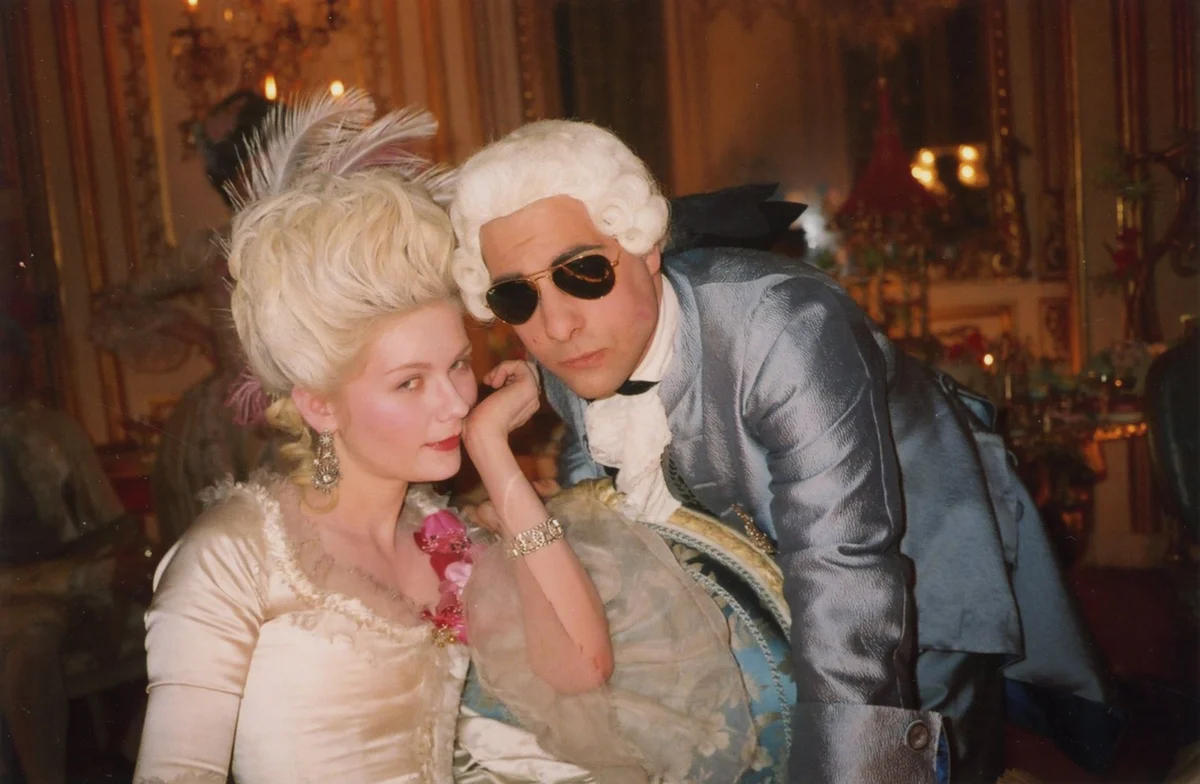
Two decades after Sofia Coppola’s visually resplendent yet initially polarizing historical drama MarieAntoinette hit movie theaters, the film is receiving a vital new chapter through the lens of a deeply personal companion piece. Making Marie Antoinette, a newly completed archival documentary, brings to light over 80 hours of behind-the-scenes footage captured during the original 57-day shoot inside the historic halls of the Palace of Versailles.
The documentary was compiled from a digital library shot entirely by the late Eleanor Coppola, a formidable filmmaker and matriarch of the Coppola family. Shelved for 14 years, the raw footage was dusted off during the COVID-19 pandemic and assembled by Sofia Coppola alongside editor Aaron Matthews. Following Eleanor Coppola’s passing two years ago, the project stands not only as an intimate look into the genesis of a misunderstood cinematic classic—which has since earned a revered Criterion 4K release—but also as a touching monument to a mother-daughter creative bond.
The documentary features diary entries written by Eleanor Coppola and narrated by Academy Award-nominated actor Diane Lane. It captures the frantic logistics, staggering hand-made craftsmanship, and occasional creative friction of a major studio production operating inside a notoriously rigid, hyper-exclusive European historical landmark. Making Marie Antoinette premiered at the 64th New York Film Festival and is scheduled for a theatrical release on October 23, followed by a streaming debut on MUBI on November 6.
Chronology: From Versailles to the Pandemic and Beyond
The timeline of Making Marie Antoinette spans nearly two decades of artistic reflection, family collaboration, and posthumous completion.
2005–2006: The 57-Day Shoot at Versailles
During the production of the 2006 feature film, Eleanor Coppola found herself in a familiar yet uniquely hesitant role. Fifteen years after co-directing the celebrated 1991 documentary Hearts of Darkness: A Filmmaker’s Apocalypse—which chronicled the tumultuous making of her husband Francis Ford Coppola’s Apocalypse Now—she picked up a digital camera to quietly document her daughter’s sophomore major feature. Armed with self-awareness and a lingering shyness, Eleanor shadowed the cast and crew across 57 grueling days of production, capturing unguarded moments between takes, tense behind-the-scenes negotiations, and the day-to-day exhaustion of a massive period piece.
2006–2020: The Shelved Archive
Following the release of Marie Antoinette, the sprawling digital library of behind-the-scenes recordings was archived and largely forgotten. While Sofia Coppola continued her illustrious filmmaking career with works like Lost in Translation, The Bling Ring, and Priscilla, Eleanor’s footage remained untouched for over a decade. During this period, Eleanor notably stepped into her own narrative spotlight as a feature director, making history in 2016 by becoming the oldest woman to direct a narrative feature debut at age 83 with Paris Can Wait.
2020–2024: Pandemic Archiving and Posthumous Completion
During the isolation of the COVID-19 pandemic, Eleanor and Sofia Coppola revisited the digital tapes. What began as a nostalgic look back evolved into a formal mission to turn the personal material into an archival documentary. Following Eleanor Coppola’s passing, Sofia Coppola and editor Aaron Matthews took up the mantle to finalize the project, meticulously weaving Eleanor’s footage and diary entries into a cohesive, fast-paced narrative of creative perseverance.
Fall 2026: Festival Circuit and Public Release
Making Marie Antoinette made its high-profile debut at the 64th New York Film Festival, drawing critical acclaim for its unique dual perspective on art, motherhood, and filmmaking. The project bridges the gap between historical retrospective and a living testament to family collaboration, paving the way for its dual distribution rollout via theatrical screenings on October 23 and MUBI on November 6.
Supporting Data & Production Insights
The documentary peels back the layers of illusion that defined the 2006 period piece, shedding light on the immense physical labor, budget constraints, and logistical hurdles required to bring Sofia Coppola’s pastel-tinted vision to life.
The Scale of Craftsmanship
Costume Design: Costume designer Milena Canonero engineered an astonishing 72 unique gowns solely for lead actress Kirsten Dunst, alongside extensive period-accurate wardrobes, powdered wigs, and custom makeup for the entire supporting cast and background extras.
Production Logistics: According to production notes highlighted in the documentary, the exhaustive daily prep work required to dress and powder the cast resulted in the production losing an entire day of shooting each week—a massive blow on an inflexible shooting schedule.
The Access Privilege: Gaining permission to film inside the actual Palace of Versailles for a cinematic endeavor is an extraordinary rarity. Eleanor Coppola’s presence provided an unprecedented fly-on-the-wall perspective of a crew operating within a monument that strictly guards its historical spaces.
Financial and Artistic Context
Budget Realities: While Marie Antoinette is remembered for its aesthetic opulence, the production operated under strict budgetary and temporal constraints. The documentary captures the tension between maintaining grand artistic ambitions and navigating corporate or logistical realities.
Critical Reassessment: Upon its initial 2006 release, the film faced mixed reviews from audiences expecting a traditional historical biopic. Over the last two decades, its reputation has experienced a dramatic renaissance, culminating in critical reappraisals and a prestigious Criterion 4K home video release. Making Marie Antoinette arrives at a time when the film’s pop-culture footprint and artistic influence are at an all-time high.
Behind the Lens: Perspectives, Tensions, and Family Dynamics
One of the most compelling elements of Making Marie Antoinette is how it exposes the complex intersection of familial support and professional autonomy. Eleanor Coppola’s narration—voiced by Diane Lane—reveals a deep internal conflict regarding her presence on set:
"I’m basically a shy person and I hate to intrude," Eleanor reflects in her diaries. "It’s counter to my personality to shoot a documentary. And yet, over and over again, I do it."
This self-conscious hesitation paradoxically granted Eleanor unmatched access. Instead of the clinical distance of a standard Electronic Press Kit (EPK), viewers are treated to casual interactions: Jason Schwartzman casually plucking away at a harpsichord, Kirsten Dunst preparing quietly for emotionally heavy scenes, and the relaxed banter that filled the background of iconic promotional stills.
Navigating a Male-Dominated Industry
The documentary also highlights the subtle systemic hurdles Sofia Coppola faced on set. In one revealing sequence, Eleanor captures a moment of frustration when Sofia is left out of a crucial logistical discussion regarding the readiness of background extras. This interaction serves as a stark reminder of the male-dominated corporate structures surrounding the young director—an ironic contrast to a film centered entirely around women navigating the gilded cage of the French court.
Later footage demonstrates Sofia’s growing authority and firmness. When debating camera positioning and point-of-view choices with her cinematographer regarding a scene centered on her protagonist, Sofia stands her ground with a definitive declaration:
"It’s not the guy’s story."
A Family Affair
The Coppola family lineage permeated the entire production. Sofia’s brother, Roman Coppola, operated as a second-unit director, offering a trusted set of eyes during frantic shooting days. Meanwhile, legendary filmmaker Francis Ford Coppola made brief appearances on set to offer words of encouragement to his daughter amidst mounting pressure:
"Throw a Marie Antoinette party and invite everyone to it," he advised. "Do it the way you want to."
Yet, no presence was more constant than Eleanor’s. From calling a doctor to treat Sofia’s worsening bronchitis during the early days of production to a poignant camera pan that captures Sofia looking back through a lens at a mother-daughter scene on screen, the documentary cements the project as an intimate dialogue between two generations of female artists.
Implications for Cinema and Documentary History
Making Marie Antoinette is far more than a standard making-of feature; it is a profound meditation on artistic legacy, maternal mentorship, and the hidden sacrifices behind prestige filmmaking.
For Sofia Coppola, the documentary serves as a bittersweet reminder of the monumental exhaustion required to mount such a large-scale production—an experience that famously made her reconsider ever tackling a budget of that magnitude again. For Eleanor Coppola, the archival project represents the closing loop of an artistic awakening. The process of organizing her raw tapes reignited her own creative drive, pushing her toward narrative filmmaking later in life.
By preserving these moments, Making Marie Antoinette recontextualizes a modern classic. It proves that behind every cinematic vision of lonely isolation, excessive wealth, and historical pageantry lies a very human network of collaboration, trial, error, and unconditional love. As the documentary heads to theaters and MUBI this autumn, it invites cinephiles to look past the velvet ropes of Versailles and witness the fragile, beautiful reality of a filmmaker finding her voice with her mother standing right beside her.