
The Impossible Run: How Tom Cruise and the IMF Defied Cinematic Gravity
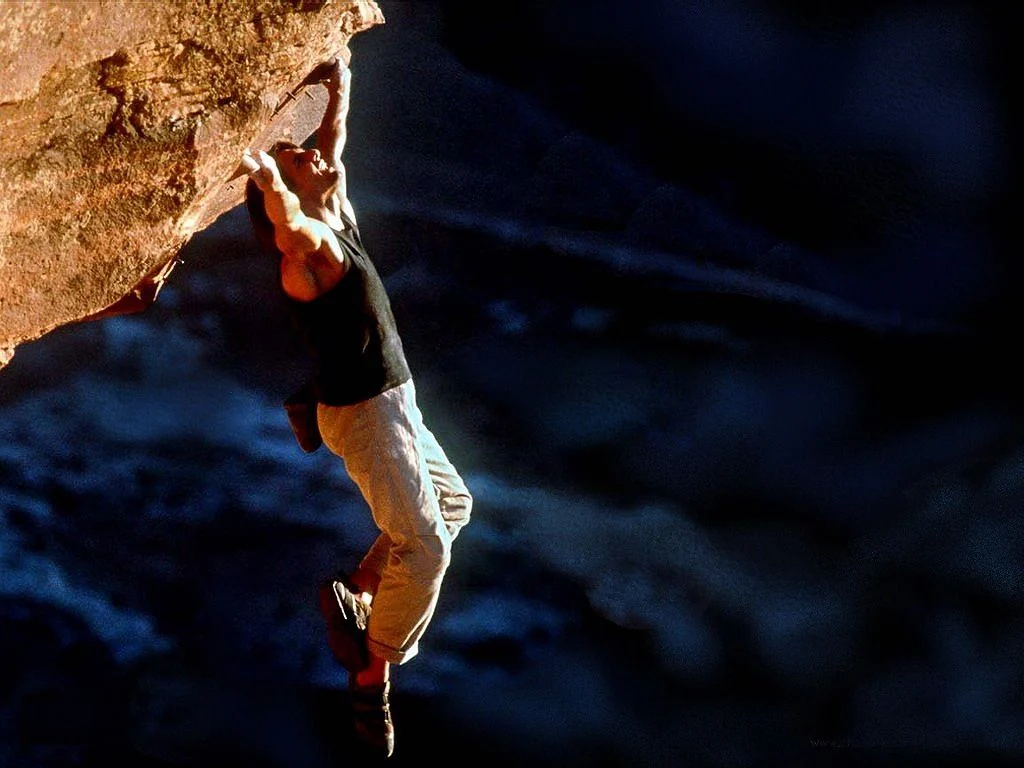
Nearly three decades after a 1960s television spy drama was successfully re-engineered for the modern multiplex, the Mission: Impossible franchise stands as an absolute anomaly in contemporary Hollywood. While intellectual properties routinely buckle under the weight of shared-universe fatigue and studio meddling, Tom Cruise and the Impossible Mission Force (IMF) have steadily refined a formula for blockbuster cinema that remains as potent as ever.

The enduring legacy of the franchise—highlighted by the discourse surrounding installments like Mission: Impossible — The Final Reckoning—proves that practical stunts, auteur-driven visions, and an unwavering commitment to theatrical spectacle can still command global audiences. What began in 1996 as a stylistic adaptation of Bruce Geller’s television series has systematically eclipsed its source material, morphing into the gold standard of modern action filmmaking.

Main Facts: The Anatomy of a Blockbuster Dynasty
At its core, the Mission: Impossible franchise relies on a deceptively simple premise: rogue agent Ethan Hunt (Tom Cruise) is disavowed by his government, faces an impossible crisis orchestrated by a shadowy syndicate, and must assemble a tight-knit team of specialists to save the world. Yet, the real-world facts behind the franchise are far more complex:

- The Star-Producer Synergy: Tom Cruise’s involvement goes far beyond acting. As a producer, Cruise has tied his personal brand to the physical safety and creative direction of every film, pioneering a standard of practical stunt work that shuns excessive CGI in favor of genuine peril.
- The Director’s Playground: Unlike most contemporary franchises that enforce rigid house styles, Mission: Impossible has uniquely functioned as a showcase for distinct cinematic auteurs—ranging from Brian De Palma and John Woo to J.J. Abrams, Brad Bird, and Christopher McQuarrie.
- Box Office and Critical Consistency: Across nearly three decades and eight films, the franchise has largely avoided the critical and financial duds that plague other long-running properties, culminating in massive global acclaim for entries like Fallout.
Chronology: From Television Roots to Cinematic Dominance
To understand how the franchise reached its current cultural stature, one must trace its evolution across three distinct eras:

1. The Genesis and the Auteurs (1996–2006)
- 1996 (Mission: Impossible): Directed by Brian De Palma, the inaugural film swapped the ensemble teamwork of the original Peter Graves television show for a paranoid, suspense-heavy thriller centered on Cruise’s Ethan Hunt. Featuring the legendary ceiling-drop wire infiltration, it set a high-water mark for cinematic tension, even if its labyrinthine plot divided purists.
- 2000 (Mission: Impossible II): Directed by John Woo, the second installment leaned heavily into early-2000s action tropes, slow-motion dual-wielding, and romantic subplots. Widely considered a creative nadir by critics, it nevertheless established the franchise’s willingness to let radically different directors stamp their identities onto the material.
- 2006 (Mission: Impossible III): J.J. Abrams brought his television pedigree (Alias, Lost) to the franchise, grounding Hunt with a personal life—his relationship with Julia Meade (Michelle Monaghan)—while introducing Philip Seymour Hoffman’s chilling arms dealer, Owen Davian.
2. The Shot in the Arm and Expansion (2011–2018)
- 2011 (Ghost Protocol): Master animator-turned-live-action director Brad Bird injected pure adrenaline into the series. Scaling Dubai’s Burj Khalifa, Cruise redefined what an action sequence could achieve, treating set pieces like finely tuned musical movements.
- 2015 (Rogue Nation): Christopher McQuarrie stepped behind the camera, introducing Rebecca Ferguson as MI6 agent Ilsa Faust. McQuarrie’s arrival shifted the episodic franchise into a more serialized narrative, tightening the ensemble around Cruise.
- 2018 (Fallout): Widely lauded as the pinnacle of the series—and arguably one of the greatest action movies ever made—Fallout paired a 25,000-foot HALO jump with brutal, music-free close-quarters combat, cementing Cruise’s status as a dying breed of traditional movie star.
3. The Modern Reckoning (2023–2025)
- 2023 (Dead Reckoning Part One) & 2025 (The Final Reckoning): McQuarrie and Cruise tackled the existential threat of artificial intelligence ("The Entity"). While the duology pushed the scale of stunts to unprecedented heights—including a motorcycle cliff-jump into a ravine—it also wrestled with complex narrative ties to the franchise’s past, proving that even the most consistent series can experience friction when wrapping up multi-decade storylines.
Supporting Data: Critical Trajectory and Box Office Resilience
| Film Title | Release Year | Director | Notable Stunt / Element |
|---|---|---|---|
| Mission: Impossible | 1996 | Brian De Palma | Langley CIA vault wire-drop |
| Mission: Impossible II | 2000 | John Woo | Rock-climbing opening & motorcycle duel |
| Mission: Impossible III | 2006 | J.J. Abrams | Philip Seymour Hoffman’s Owen Davian |
| Mission: Impossible — Ghost Protocol | 2011 | Brad Bird | Burj Khalifa exterior scale |
| Mission: Impossible — Rogue Nation | 2015 | Christopher McQuarrie | Opera house fight & plane-door cling |
| Mission: Impossible — Fallout | 2018 | Christopher McQuarrie | HALO jump & bathroom brawl |
| Mission: Impossible — Dead Reckoning Part One | 2023 | Christopher McQuarrie | Motorcycle cliff-drop & train wreck |
| Mission: Impossible — The Final Reckoning | 2025 | Christopher McQuarrie | Series-culminating continuity arc |
Statistically and critically, the franchise exhibits an upward trajectory rare in Hollywood history. While early installments faced scrutiny over convoluted storytelling, the mid-era pivot toward practical, director-led set pieces turned the series into a critical darling. Fallout, in particular, shattered franchise box-office records while securing some of the highest review scores ever recorded for an action sequel, proving that audience appreciation compounds over time when quality remains steady.

Official Responses and Creative Insights
The success of the Mission: Impossible enterprise is fueled by the transparent, often harrowing promotional campaigns spearheaded by Paramount Pictures and Tom Cruise himself. Behind-the-scenes featurettes detailing Cruise’s preparation—ranging from months of HALO jump training to obtaining a pilot’s license for complex aerial dogfights—have become masterclasses in modern studio marketing.

Key creative voices have frequently highlighted the collaborative yet intensely demanding nature of the production:

- Christopher McQuarrie has noted in interviews that crafting these films is an exercise in reverse-engineering: the team often designs a breathtaking, death-defying stunt first, and then constructs a compelling narrative justification around it.
- Tom Cruise has consistently emphasized that his primary motivation is the theatrical experience itself. In various press junkets, the actor-producer has reiterated his commitment to keeping cinema alive on the giant screen, stating that audiences deserve tangible, authentic thrills rather than digital facsimiles.
Implications: The Last Movie Star in an Era of Brands
The cultural footprint of Mission: Impossible extends far beyond box office receipts; it serves as a case study for the survival of individual movie-stardom in an ecosystem dominated by faceless intellectual properties.

At a time when audiences are trained to buy tickets based on comic book banners or corporate logos, Tom Cruise remains a singular supernova. He relies on a simple, enduring contract with the viewer—a promise articulated by Ethan Hunt in Fallout: "I won’t let you down."

Whether or not The Final Reckoning marks the absolute definitive conclusion of Ethan Hunt’s journey, the franchise has fundamentally altered the landscape of action cinema. It has proven that practical craftsmanship, respect for the theatrical format, and narrative persistence can conquer the passage of time. As long as Hollywood continues to chase trends, the legacy of the IMF stands as a monument to what can be achieved when a team chooses to accept the impossible, again and again.
