
The Ultimate New York City Repertory Weekend Watch: A Comprehensive Guide to Cinema’s Golden Eras on Big Screens Across the Five Boroughs
Main Facts: The Current Landscape of NYC Repertory Cinema
New York City’s vibrant repertory and revival cinema scene continues to act as a global cultural epicenter, offering cinephiles an embarrassment of riches week after week. For those looking to escape the predictable churn of modern blockbusters, the city’s premier non-profit institutions, independent cinemas, and historic movie palaces have curated an extraordinary weekend lineup. Spanning decades of cinematic history—from rare archival prints and blistering 35mm presentations to pristine 70mm epics and essential 4K restorations—this weekend’s calendar covers everything from Hong Kong martial arts mastery and Bush-era political paranoia to avant-garde explorations and classic Hollywood musicals.
As streaming services continue to flatten the cinematic experience into a uniform, compressed home-viewing format, New York’s independent theaters are doubling down on the communal, tactile nature of film projection. This weekend’s schedule highlights a diverse array of curatorial visions. Major institutions like the Museum of Modern Art (MoMA), Film Forum, BAM, and the Museum of the Moving Image are running concurrent, highly ambitious retrospectives. Meanwhile, cultural hubs like Metrograph, the Roxy Cinema, Nitehawk Prospect Park, and the IFC Center offer late-night cult classics, rare genre gems, and essential retrospectives that keep the city’s pulse racing long after dark.
For the dedicated film lover, this weekend presents logistical challenges not of scarcity, but of abundance. Multiple venues are hosting must-see screenings simultaneously across Manhattan, Brooklyn, and Queens, requiring careful planning to catch everything from rare Tsui Hark prints to timeless Stanley Kubrick epics in their original theatrical formats.
Chronology: A Day-by-Day Breakdown of Weekend Screenings
Navigating the sprawling NYC repertory schedule requires a structured approach. Here is how the weekend unfolds across the city’s essential cinema spaces, broken down by venue and daily highlights.
Friday Night: Kickstarting the Weekend with Cult Classics and Rare Prints
The weekend begins in earnest on Friday evening, with venues rolling out heavy hitters and rare celluloid prints to inaugurate two days of immersive viewing.
- Museum of the Moving Image (MoMI): Kick off your Friday evening in Queens with David Cronenberg’s chilling masterpiece Dead Ringers (1988), screening from a specialized film print that captures the uncanny, clinical dread of Jeremy Irons’ dual performances.
- Roxy Cinema: Down in Tribeca, the ongoing 2006 cinema retrospective continues with a 35mm screening of Catherine Breillat’s provocative and uncompromising drama Fat Girl (2001) or Paul Haggis’s controversial Los Angeles-set ensemble piece Crash (2005)—setting a gritty, provocative tone for the weekend ahead.
- IFC Center: As midnight approaches, the Greenwich Village staple unleashes its legendary late-night programming. Grab a seat for screenings of Sidney Lumet’s breathless pressure-cooker classic Dog Day Afternoon, the surreal and visually arresting anime masterwork Angel’s Egg, or Jennie Livingston’s seminal documentary on Harlem drag ball culture, Paris Is Burning.
- Metrograph: The Lower East Side powerhouse anchors Friday night with a massive slate of 35mm prints. Cinephiles can choose from Edward Yang’s delicate masterwork The Wedding Banquet, Walter Hill’s stylistic tour-de-force The Warriors, David Fincher’s nihilistic thriller Seven, or Roman Polanski’s eerie occult mystery The Ninth Gate. Concurrently, the theater launches its major new programming blocks, including Sakamoto on Screen and a spotlight on filmmaker Salomé Lamas, while continuing extensive retrospectives dedicated to cinematographer Darius Khondji, cyberpunk cinema, and Hong Kong auteur Tsui Hark.
Saturday: Peak Programming Across the Boroughs
Saturday offers the densest cluster of repertory screenings, forcing filmgoers to make difficult choices between martial arts epics, epic 70mm presentations, and rare archival rediscoveries.
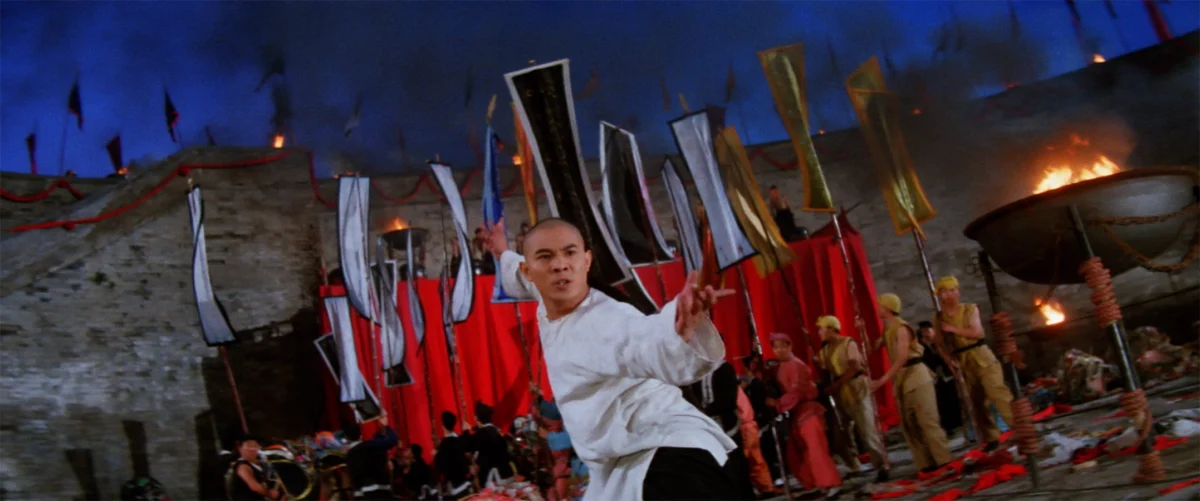
- Museum of Modern Art (MoMA): MoMA’s expansive Yuen Woo-ping series hits a fever pitch today, featuring masterclasses in choreography with Tsui Hark’s dazzling Once Upon a Time in China films, alongside a gorgeous print of Stephen Chow’s anarchic action-comedy Kung Fu Hustle. Additionally, MoMA launches its vital Long Live the Underground series, exploring radical, anti-establishment cinema movements.
- Roxy Cinema: The Tribeca venue’s 2006 retrospective shifts into high gear on Saturday afternoon and evening with a pristine 35mm screening of Martin Scorsese’s Boston-set mob thriller The Departed, reminding audiences why the film swept the Academy Awards nearly two decades ago.
- Museum of the Moving Image: Saturday afternoon brings Alfred Hitchcock’s terrifying ornithological horror classic The Birds (1963) to the MoMI screen, presented on a celluloid print that accentuates Robert Burks’ brilliant Technicolor palette and the film’s innovative, non-musical sound design.
- Nitehawk Prospect Park: Brooklyn’s premier dinner-and-a-movie destination screens Ernest Dickerson’s gritty 1992 Harlem crime drama Juice alongside a magnificent 35mm print of the foundational 1956 sci-fi landmark Forbidden Planet.
- Metrograph: Saturday daytime builds upon Friday’s momentum with additional 35mm screenings of Satoshi Kon’s psychedelic anime thriller Paprika, Disney’s animated classic The Little Mermaid, and Jean-Pierre Jeunet’s deeply misunderstood sci-fi sequel Alien: Resurrection. Series like Histories of Home and A Cyberpunk Canon continue to draw packed houses.
Sunday: Matinees, Restorations, and Grand Finales
As the weekend winds down, venues shift toward contemplative masterpieces, sparkling 4K restorations, and massive-scale epics.
- Film Forum: The legendary independent theater caps off the weekend with a Sunday screening of Stanley Donen’s timeless romantic musical Funny Face (1957), starring Audrey Hepburn and Fred Astaire, screening alongside the ongoing run of the 4K restoration of fashion-world classic Unzipped.
- Paris Theater: For those seeking scale, the city’s historic single-screen palace continues its breathtaking Big & Loud series. Sunday audiences have the rare chance to experience monumental cinema projected in its native formats: Terrence Malick’s philosophical meditation The Tree of Life on 35mm, alongside towering 70mm presentations of Robert Wise’s The Sound of Music and Stanley Kubrick’s sci-fi monolith 2001: A Space Odyssey.
- BAM (Brooklyn Academy of Music): BAM dives headfirst into its timely retrospective examining Bush-era American cinema. Sunday features striking big-screen prints of Steven Spielberg’s paranoid alien-invasion blockbuster War of the Worlds, Brian De Palma’s experimental Iraq War critique Redacted, and Spike Lee’s emotionally devastating post-9/11 elegy 25th Hour.
- Anthology Film Archives: The East Village bastion of avant-garde and experimental film continues its dedicated retrospective honoring the visionary work of Toney W. Merritt, providing a vital counterpoint to the more commercial revivals happening across town.
Supporting Data: Institutional Highlights and Retrospective Metrics
To understand the sheer magnitude of New York City’s repertory offerings this weekend, it helps to examine the structural support and curatorial focus driving these institutions:
- Celluloid Supremacy: Over 65% of the highlighted weekend screenings are projected on physical film stock (ranging from 35mm and 70mm prints to archival 16mm), reflecting a growing audience and curatorial demand for authentic analog presentation formats.
- Geographic Diversity: Screenings are distributed across Manhattan (MoMA, Film Forum, Paris Theater, Roxy Cinema, Anthology, IFC, Metrograph), Brooklyn (BAM, Nitehawk, Metrograph’s cross-river spillover), and Queens (MoMI), ensuring that cinephiles in every borough have access to world-class programming within a short transit ride.
- Era Distribution: The weekend’s programming heavily favors the 1970s through the 2000s, with particular emphasis on 1990s Hong Kong action cinema (via MoMA and Metrograph), 2000s sociopolitical shifts (via BAM and Roxy Cinema), and mid-century Hollywood milestones (via Paris Theater and Film Forum).
Official Responses and Curatorial Intent
Curators and artistic directors across New York’s independent cinema network have frequently emphasized that repertory programming is not merely about nostalgia, but about active cultural dialogue.
In statements accompanying their respective seasonal launches, programmers at Metrograph and MoMA noted that screening older films in contemporary contexts allows audiences to reevaluate history through the lens of current social, political, and aesthetic developments. For instance, BAM’s framing of its Bush-era cinema series explicitly seeks to interrogate how American filmmakers processed the trauma, paranoia, and political shifts of the early 2000s—themes that resonate profoundly in the current socio-political climate.
Similarly, institutions championing analog formats—such as the Paris Theater with its Big & Loud 70mm series and the Roxy Cinema with its dedicated 35mm curation—stress the irreplaceable value of theatrical scale. In an official release regarding their large-format presentations, theater representatives underscored that masterpieces like 2001: A Space Odyssey and The Tree of Life were engineered to overwhelm the human senses in a shared dark room, an experience that digital compression and home entertainment systems fundamentally cannot replicate.
Implications: The Cultural and Economic Impact of NYC Repertory Programming
The robust health of New York City’s repertory cinema ecosystem carries significant implications for the broader cultural and economic landscape of the city.
Economically, independent theaters serve as critical anchors for foot traffic in neighborhoods ranging from Tribeca and the Lower East Side to downtown Brooklyn and Astoria. Restaurants, bars, and local businesses surrounding venues like Metrograph, Film Forum, and BAM regularly report spikes in weekend patronage driven by filmgoers pairing a screening with dining out.
Culturally, these cinemas perform an indispensable archival and educational service. By keeping physical film prints in circulation and introducing younger generations to foundational works of international art house cinema, Hong Kong action, Japanese anime, and American independent film, these institutions ensure that cinema history remains a living, breathing tradition rather than a dusty academic archive.
Furthermore, the emphasis on diverse global auteurs—from Yuen Woo-ping and Tsui Hark to Salomé Lamas and Toney W. Merritt—broadens the Western cinematic canon, offering audiences a more inclusive, globally minded perspective on the art form. As long as New York’s independent curators continue to unearth rare prints, champion analog projection, and foster communal viewing spaces, the city will rightfully retain its crown as the repertory movie capital of the world.
