
Bridging Cultures and Pixels: Alissar Kobeissi on the Evolution of Animation, Pipeline Innovation, and Middle Eastern Representation
By Trevor Hogg
The global landscape of animation is undergoing a seismic shift. No longer boxed into the corner of children’s entertainment or confined to a handful of Western studios, the medium is rapidly expanding into a boundary-pushing art form that embraces mature storytelling, complex character performances, and a diverse amalgamation of artistic styles.
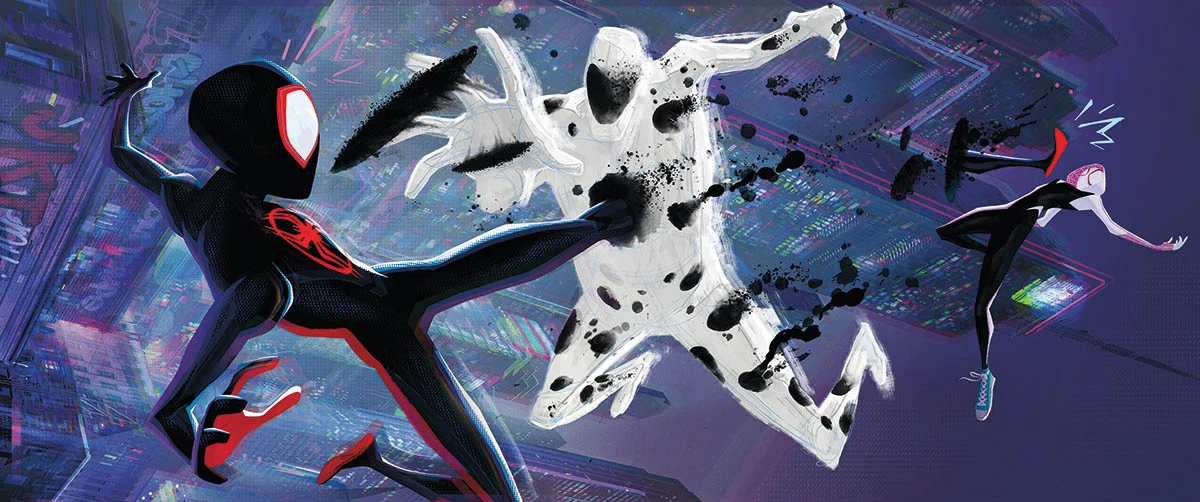
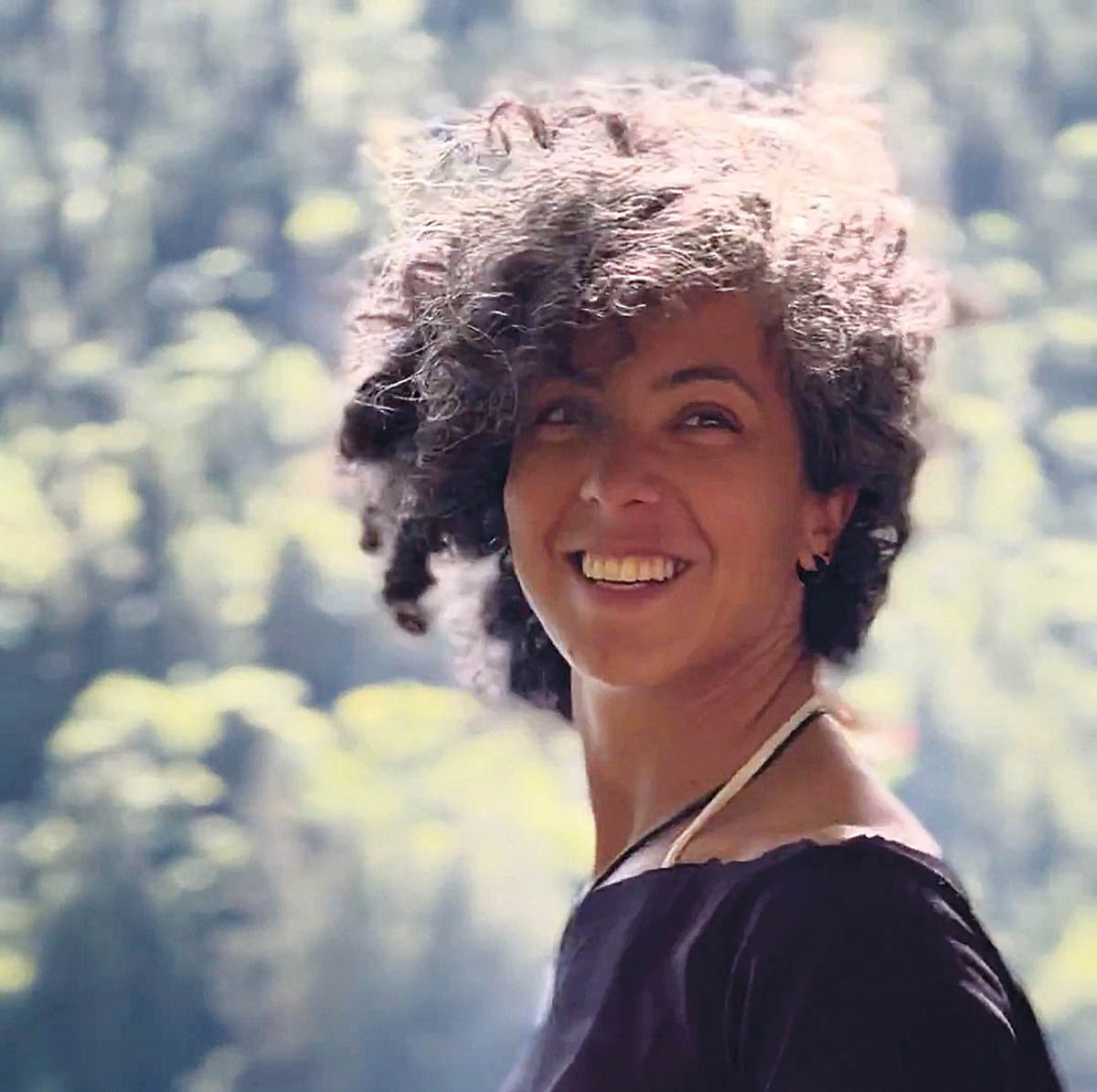
At the forefront of this global movement is Alissar Kobeissi, a Senior Animator at Sony Pictures Imageworks. With a career spanning major players like Walt Disney Animation Studios, Illumination, and Skydance Animation, Kobeissi represents a new wave of international talent. Her journey—from a young girl in the United Arab Emirates falling in love with dubbed anime and Disney VHS tapes to shaping performances in blockbuster hits like Spider-Man: Across the Spider-Verse and Netflix’s In Your Dreams—offers a profound look into the changing dynamics of the animation industry today.
Main Facts: The Anatomy of Modern Animation Leadership
Alissar Kobeissi’s career is defined by technical precision, a deep reverence for the craft of acting, and a front-row seat to the industry’s technological evolution.
- The Subject: Alissar Kobeissi, Senior Animator at Sony Pictures Imageworks.
- Studio Credits: Sony Pictures Imageworks, Walt Disney Animation Studios, Illumination, and Skydance Animation.
- Key Projects: Spider-Man: Across the Spider-Verse, In Your Dreams, Smallfoot, Sing 2, and the VR short Reimagined Volume III: Young Thang.
- Educational Background: Bachelor’s in Computer Graphics & Interactive Media from the Académie Libanaise des Beaux-Arts (ALBA) in Beirut, supplemented by specialized 3D character animation training at AnimSchool.
- Core Philosophy: Animation is a medium, not a genre. Successful animation requires blending real-world reference footage with hand-drawn 2D principles to achieve nuanced, emotionally resonant character performances in a 3D space.
Chronology: From Pan-Arab TV to Hollywood’s Major Studios
Kobeissi’s path to becoming a pillar of modern feature animation was forged across continents, academic institutions, and industry pipelines.
Early Inspirations (1990s–2000s)
Growing up in the UAE, Kobeissi’s early media diet consisted of classic anime titles such as Pokémon, Nobody’s Boy: Remi, and Romeo’s Blue Skies dubbed in Arabic on the Pan-Arab television channel Spacetoon. Alongside these broadcasts, she obsessively rewatched Disney and Pixar classics on VHS.
"I remember getting Mulan for my birthday, and I was totally obsessed with it," Kobeissi recalls. "Mulan had everything: culture, real-world issues on gender, humor, and creativity. It was cinematically beautiful. I would like to make a movie like that one day."
Academic Foundations in Beirut
Driven by her passion, Kobeissi enrolled at the Académie Libanaise des Beaux-Arts (ALBA) in Beirut, earning a Bachelor’s degree in Computer Graphics & Interactive Media. Her curriculum was deliberately multidisciplinary, spanning gouache painting, JavaScript, art history, and typography. A pivotal moment occurred when she witnessed a digital donkey rotate in LightWave 3D—a technical marvel that sparked her transition into 3D character animation via online courses at AnimSchool.
The Breakout and Studio Hop
After graduating, Kobeissi sought international experience, recognizing the limited local infrastructure for feature animation in the UAE at the time. Her big break arrived when a character animation shot she had meticulously refined went viral online. The clip caught the attention of industry heavyweights Kevin Webb (then head animator at Sony Pictures Imageworks) and Patrick Delage at Illumination.
In 2018, Kobeissi landed at Sony Pictures Imageworks to work on Smallfoot. She subsequently transitioned to Illumination for Sing 2, eventually returning to Sony and contributing to some of the industry’s most visually revolutionary projects, including Spider-Man: Across the Spider-Verse.
Supporting Data: Pipeline Innovations and Hybrid Aesthetics
The technical demands of contemporary feature animation require constant adaptation. Studios are restructuring their internal pipelines to accommodate hybrid 2D/3D visual styles and increasingly complex effects-driven animation.
Bridging Layout and Animation
At Sony Pictures Imageworks, the visual revolution of the Spider-Verse franchise necessitated systemic structural changes. Because animators on the first film absorbed a massive amount of layout responsibilities within their shots, the studio took proactive measures for subsequent entries.
"A new department was created to bridge layout and animation because, in the previous Spider-Verse, we as animators ended up doing a lot of layout in our shots," Kobeissi explains. "This was to take some of that load off and bring layout into animation, but still not have animators do it in production."
The Marriage of 2D and 3D Techniques
The historical divide between 2D hand-drawn animation and 3D computer graphics has dissolved. Kobeissi points to how comic-book aesthetics birthed Spider-Verse, video-game sensibilities inspired Arcane, and a renewed appreciation for anime styles has trickled into modern cinematic pipelines.
"I have never thought of anime being directly part of the influence towards those new animation styles," Kobeissi notes, "but it definitely has a role to play because animation is connected across the world… The comic style birthed Spider-Verse, the game style birthed Arcane, and, in a way, they had a similar result with the 2D/3D. Then anime was also growing in parallel… We have yet to uncover its full potential."
To maintain these sophisticated hybrids, Kobeissi relies heavily on traditional tools to guide digital rigging. "I use the Wacom tablet because it’s the closest thing to drawing, and I do draw thumbnails," she says. "Then I draw over my animation reference and poses to push the stylization, the line of action, and the shapes to have them more graphic and readable."
Handling Effects-Driven Characters
Complex artistic challenges often arise when characters are composed of non-traditional elements. During her work on the VR short film Reimagined Volume III: Young Thang, Kobeissi animated a character entirely made of water.
"Every single acting choice came with a different way that water moved, and it all had to match the emotion and energy of the character," she recalls. To achieve this, animation and effects departments must communicate seamlessly. By establishing clear silhouettes, poses, and energy lines in early animation phases—such as indicating wind-blown hair to emphasize emotional impact—animators ensure that downstream effects work enhances, rather than obscures, the character’s performance.
Official Perspectives: Education, Mentorship, and the Middle East
A decade after completing her formal education, Kobeissi experienced a full-circle moment by returning to her educational roots as a freelance instructor. Through the Gnomon Workshop, she conducted a four-hour masterclass titled Animating Characters for Feature Films, focusing on personality, character specificity, and entertainment.
"Teaching allows me to put words to things that have become such an intuitive process," Kobeissi observes. "Even though that might sound small, it’s not, because it opens up what collaboration can be."
The Rise of Middle Eastern Animation
Reflecting on her origins in the Middle East, Kobeissi notes a profound evolution in regional talent and infrastructure. While she was forced to move abroad to pursue feature animation opportunities, today’s landscape is markedly different.

She actively stays connected to the burgeoning scene through international animation festivals and by helping host Beirut Animation Nights, a festival dedicated to works by Lebanese artists.
"There is so much content and such diversity in animation styles, and so many stories and perspectives on what people are thinking about and wanting to express," she states. "I’m honestly fascinated by it. Not a lot of that existed when I studied at university in Lebanon."
Implications: The De-Monopolizing of Global Animation
Kobeissi believes the animation industry is entering a golden age defined by institutional decentralization, maturing audiences, and courageous storytelling.
Animation as a Medium, Not a Genre
The traditional perception that animation exists exclusively for children is rapidly evaporating. Audiences—particularly teenagers and young adults raised on visually adventurous projects like Spider-Verse and Arcane—understand that animation is a versatile storytelling medium capable of tackling heavy, real-world issues.
"The most juice for animation in our generation is that now there is more unpaved road to experiment with different stories that we can tell," Kobeissi remarks. Citing Oscar-nominated films like Flee and The Breadwinner, she emphasizes that stylized animation can make difficult historical and social realities palatable and emotionally resonant.
The Democratization of Studios
The rise of streaming platforms has fundamentally altered who gets to make animation. Regional monopolies are crumbling, allowing studios across the globe to contribute to the artistic conversation.
"We are seeing the de-monopolizing of animation. More countries can be players in the animation world," Kobeissi says. "Netflix, for example, invests heavily in diverse stories, and skills across different countries are rising. Especially around the time of Arcane, smaller studios found ways of making beautiful 3D animation that also utilizes the artistic hand-drawn skill. Blue Eye Samurai came after that."
Looking Forward: Closing the Gap Between Artists and Story
Despite the medium’s vast commercial and artistic successes, Kobeissi remains reflective about structural challenges within major Hollywood studios. She advocates for greater fluidity between the execution phase of animation and the high-level creative decisions dictating a film’s narrative direction.
"Something I’m thinking about at this stage of my career is how we can bridge the [gap between the] artist and the story in these big studios a little bit more," she concludes. "As artists, we somehow get disconnected from the big creative decisions made on a movie as well as the story. Breaking out of the animation role into something more creative feels challenging, but there’s something for everyone to benefit from by making some of these barriers more fluid."
As Alissar Kobeissi continues to push the boundaries of character performance at Sony Pictures Imageworks and mentor the next generation of international artists, her trajectory stands as a testament to the fact that the future of animation belongs to those willing to blend technical rigor with cultural authenticity and unbridled imagination.
