
The Return of the Staines Massive: Sacha Baron Cohen Reflects on Two Decades of Satire and the Trump Encounter
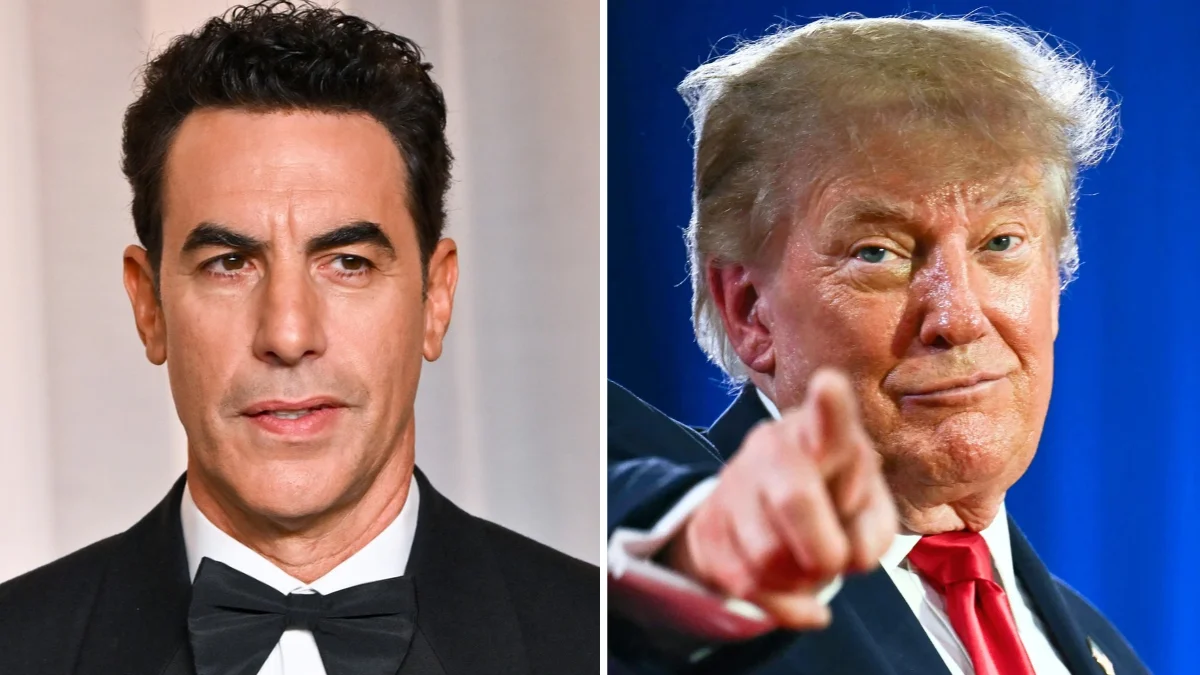
Two decades after he effectively retired his most iconic persona, Sacha Baron Cohen has dusted off the signature yellow tracksuit, the oversized jewelry, and the relentless swagger of Ali G. The return, marked by the release of Ali G: Who Iz I?—which has made its theatrical debut ahead of an October 30 premiere on Amazon Prime—serves as a cultural full-circle moment for a performer who redefined the boundaries of guerrilla comedy at the turn of the millennium.
For a generation of viewers, Da Ali G Show was more than a comedy series; it was a Trojan horse. Baron Cohen, operating behind the veil of a naive, hip-hop-obsessed suburbanite from Staines, managed to secure interviews with the world’s most formidable political and intellectual power brokers, often exposing their vanity, prejudices, and intellectual fragility in the process. As the world reacquaints itself with the character, Baron Cohen has been reflecting on the lessons learned from those encounters, specifically his infamous 2003 interview with a then-real estate mogul named Donald Trump.
The Power Move: A Chronology of the Trump Tower Encounter
The legend of the Ali G-Trump interview has only grown in the years since the 2003 broadcast. During a recent live taping of the podcast Happy Sad Confused at New York’s 92nd Street Y, Baron Cohen provided host Josh Horowitz with a vivid, behind-the-scenes look at the psychology of the future president.
The encounter began with a deliberate display of dominance. While Baron Cohen noted that most of the high-profile figures he interviewed were punctually respectful of the production schedule, Donald Trump was a notable exception. "Donald Trump kept us waiting for about 40 minutes," Baron Cohen recalled.
Upon entering Trump Tower alongside director James Bobin, the duo was ushered into a waiting room where they were forced to listen to a cacophony of shouting. According to Baron Cohen, Trump was on the phone with Rudy Giuliani, delivering a string of expletives—the sort of language, Baron Cohen joked, that was "not for the likes of delicate Jewish ears."
Reflecting on the experience, Baron Cohen categorized the outburst as a calculated performance. "Later on, I heard that he used to do that with other people. It really was a power move."
The dynamic shifted once the cameras finally began to roll. Baron Cohen observed that Trump had initially seemed taken with James Bobin, describing him as a "very handsome, blond, Oxford-educated" Englishman—a prototype of the prestige Trump historically valued. However, the atmosphere soured instantly when Trump realized he was not engaging with a high-brow interviewer, but rather the absurdity of Ali G.
"I actually met a woman who was in the car with him after that interview, and he was apparently furious," Baron Cohen revealed. "He actually went out publicly a couple of times to criticize me. And in the end, we used all those clips and used them to advertise another show that I did."
Analyzing the "Brilliance" of a Political Phenomenon
The interview occurred long before the reality-TV fame of The Apprentice or the seismic shift of the 2016 election. Looking back at the interaction, Baron Cohen offers a nuanced assessment of Trump, one that moves beyond the dismissive "nincompoop" framing often employed by his critics.
"We were too easy to dismiss him as a nincompoop," Baron Cohen told the audience at the 92nd Street Y. "There are elements of brilliance to him, otherwise. And that explains his appeal with the fact that he’s there for a second term, the fact that he’s transforming this country."
This perspective aligns with comments made elsewhere during his current press tour. Speaking to Kara Swisher and Scott Galloway on the Pivot podcast, Baron Cohen acknowledged that there is a "huge amount of comedy" in the way Trump communicates. "He’s intentionally being funny," Baron Cohen explained, noting that the modern political right has effectively weaponized humor and sarcasm to deflect criticism. "If you have a look on the far right, they use comedy and sarcasm as an engaging way to dismiss criticisms."
Baron Cohen’s willingness to credit Trump with a form of performative intelligence suggests a maturation in the comedian’s own political outlook. Having spent his career infiltrating extremist groups and questioning authority figures, he now sees the complexity of a landscape where the lines between reality, entertainment, and political discourse have effectively vanished.
The Legacy of the "Trojan Horse" Format
Da Ali G Show was instrumental in pioneering the "infiltrator" genre of comedy. By creating a character so clearly ridiculous, Baron Cohen created a vacuum of social expectation; his subjects, believing themselves to be in a position of intellectual superiority, would often lower their guards to "educate" the interviewer.
This format produced legendary moments: Ali G asking Newt Gingrich if he thought the "real" reason the internet was invented was for "the porn," or challenging various politicians on the legitimacy of his own fabricated lifestyle. The genius of the character was his lack of malice; because Ali G appeared to be a harmless, if dim-witted, enthusiast, his interviewees often revealed more about their own intolerance and self-importance than they would have in a traditional, adversarial interview.
Now, as Ali G: Who Iz I? hits the screen, the cultural context has changed significantly. The "post-truth" era, which some critics argue was accelerated by the very figures Ali G once interviewed, presents a new challenge for satire. If the real world is already operating on the logic of a Da Ali G Show sketch, how does the satire evolve?
Implications for Modern Satire and Public Discourse
Baron Cohen’s recent reflections suggest that he views the current political climate not as a defeat for satire, but as an evolution of it. He posits that the public’s appetite for provocative, rule-breaking characters—whether it be Ali G or the populist rhetoric of contemporary political figures—is a reflection of a deep-seated desire to see the "black and white" of traditional politics challenged.
"In the black and white, the world is a little bit complicated," Baron Cohen noted. His return to the tracksuit is not merely a nostalgic exercise; it is an interrogation of the medium he helped create. By returning to the character who first made the world laugh at the absurdities of the powerful, Baron Cohen is inviting audiences to look at today’s political reality with the same skepticism he applied to the 2003 version of Donald Trump.
The fact that Baron Cohen can sit on a stage in New York and provide a measured, almost admiring breakdown of Trump’s communication strategy underscores how significantly the Overton window has shifted. The comedian who once thrived on making his subjects look foolish is now analyzing them as architects of a new, complex, and deeply comedic political reality.
Looking Forward: The October Premiere
As Ali G: Who Iz I? prepares for its October 30 streaming debut on Amazon Prime, the anticipation is tempered by a curiosity about what exactly "Ali G" can accomplish in 2024. In an era of viral social media clips, deepfakes, and hyper-polarized news cycles, the "guerrilla interview" style faces unprecedented obstacles.
However, the core of Baron Cohen’s appeal remains unchanged: the ability to strip away the artifice of public figures. Whether he is dealing with modern politicians, tech moguls, or cultural influencers, the question remains whether the "Ali G" brand of observational chaos can still expose the hidden truths of those in power.
In the final analysis, Baron Cohen’s return is a reminder that satire is a necessary pressure valve in a democratic society. As he himself observed, if we continue to underestimate the "brilliance" or the "comedy" inherent in our political figures, we risk losing the ability to distinguish between the performance of power and the reality of governance.
For now, the tracksuit is back, the jewelry is on, and the world is once again waiting to see who will be the next to sit in the chair—and whether they will be as prepared for the "Ali G" treatment as they think they are.
