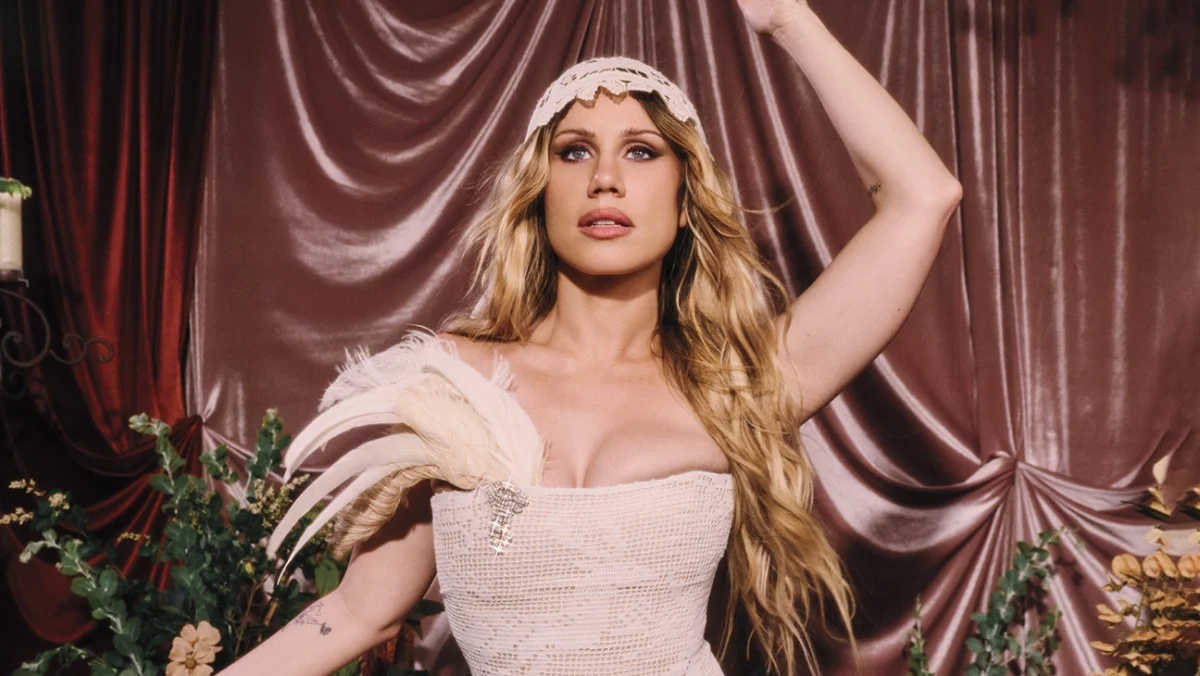
From Closet Pop to Mainstream Breakthrough: Slayyyter’s Unlikely Ascent and the Making of Worst Girl in America
LOS ANGELES — Six months ago, Catherine Grace Garner, known professionally as Slayyyter, stood at a precarious crossroads. A decade into a relentless music career that had cultivated a fiercely loyal cult following but offered precious little financial security, the 30-year-old artist viewed her forthcoming studio album, WorstGirl in America, as a definitive do-or-die moment.
She was drowning in overhead costs, sinking personal capital into tours and elaborate costumes without seeing a proportional return. The system felt soul-crushing. But in the music industry, fortunes can pivot on a single seasonal shift. Following the record’s release, Slayyyter secured her highest chart debut, birthed viral streaming phenomena, and delivered watershed performances at major music festivals including Coachella, Governors Ball, and Lollapalooza.
Today, she finds herself navigating a completely altered landscape—one where her latest single, “Crank 2,” amassed over 8 million Spotify streams in a mere three weeks. Yet, despite the accolades, charting singles, and critical praise from publications like The New York Times, Slayyyter remains remarkably grounded, viewing her mainstreambreakthrough not as an arrival, but as a hard-won rebirth.
Chronology of a Breakthrough: From St. Louis Closets to the Main Stage
Slayyyter’s journey to national prominence spans a decade of independent hustle, internet-era experimentation, and relentless self-funding.
The Formative Years (Early 2010s–2023): Growing up in a suburban Missouri family with "no money" and zero industry connections, Garner began making music in a bedroom closet in St. Louis. Securing 10,000 plays on early tracks felt like winning the lottery. Early releases and her 2023 Hollywood-satirizing indie album, Starfucker (released via Fader Label), earned her a niche lane of internet clout. However, she continually felt trapped in the "suburbs of fame"—not quite underground, but far from mainstream stability.
The Inflection Point (Late 2024–Early 2025): Departing from Fader Label, Slayyyter spent her late-night sessions collaborating with producers Austin Corona and Wyatt Bernard. She consciously rejected current pop trends, instead leaning into nostalgic, small-town aesthetics for what she feared might be her final record. In early 2025, she signed with Records/Columbia, setting the stage for her career’s defining pivot.
Coachella and the Streaming Surge (Spring 2026): On the first Friday of Coachella, Slayyyter filled the Mojave tent with 10,000 roaring fans. Donning a DIY outfit of a white top, denim shorts, and an animal pelt, she launched into her viral hit “Dance…” According to Spotify data, her global streams surged by a staggering 380 percent during the festival’s second weekend.
The Breakup and the Billboard Debut (Summer 2026): Just two days before Worst Girl in America dropped, Slayyyter discovered her then-boyfriend had cheated on her in her home while she was away rehearsing for Coachella. Channeling her heartbreak and anger, she transformed her pain into the summer smash "Brand New Chanels." The track propelled her onto the mainstream Billboard Hot 100 at No. 98, cementing her cultural crossover.
The Companion Era (Late 2026): With momentum at an all-time high, Slayyyter announced Worst Man in America—a companion piece to her breakthrough album, featuring seven new tracks alongside "Brand New Chanels" and "Crank 2."
Supporting Data & Metrics: The Numbers Behind the Momentum
While Slayyyter is quick to dismiss the notion that she has secured a permanent, multi-week radio blockbuster—noting that "Brand New Chanels" spent only a single week on the Hot 100—the data illustrates a massive scaling of her audience across every measurable metric:
Audience Scaling: Slayyyter noted that her festival crowds doubled sequentially from Coachella to Governors Ball, and doubled yet again by the time she took the stage at Lollapalooza in Chicago’s Grant Park.
Streaming Milestones: Her summer single “Crank 2” shattered her personal records, pulling in over 8 million listens on Spotify within three weeks of release.
Global Discoverability: During the height of her festival run, Spotify reported a 380% global spike in her catalog streams, driven largely by her live set placement and viral social media moments.
Chart Footprint: "Brand New Chanels" marked her official debut on the mainstream Billboard songs chart, peaking at No. 98.
Official Perspectives and Behind-the-Scenes Insights
Reflecting on her explosive year during a tour stop in a Roanoke, Virginia hotel room—surrounded by the familiar Americana sights of a Boot Barn, a Michaels, and a Buffalo Wild Wings—Slayyyter articulated the philosophy that guides her creative output.
"I haven’t really had time to process much," she admitted, reflecting on the six-month blur since her album’s release. The title Worst Girl in America originated as a semi-ironic term of endearment used by her and her skater friends in suburban Missouri. Today, it serves as an homage to the "flyover states" routinely ignored by pop mainstream gatekeepers.
"People just see the small town, the visuals that paint a portrait of small towns, and they feel so connected with it because we’ve all been there," Slayyyter explained regarding the album’s resonance.
Collaborator Wyatt Bernard shed light on the organic evolution of the record’s sound, noting that tracks like "Brand New Chanels" underwent a drastic sonic reinvention during their sessions in 2024 and 2025. Moving away from purely synthetic EDM structures, the team incorporated live drums and brash guitars to match Slayyyter’s raw, high-energy festival performances.
Despite her critical acclaim, Slayyyter playfully resists the "pop star" label. "I love pop stars… It’s more that I never felt manicured enough to fit into that," she said, pointing out that her music has never sounded like it had "its nails done."
Implications: The Slayyyter Paradox and the Future of Pop
Slayyyter’s sudden cultural ubiquity presents a fascinating paradox for the modern music industry. As artificial intelligence increasingly floods the marketplace with hyper-sanitized, algorithmically generated "songwritery" pop music, listeners are actively starving for human grit, emotional volatility, and authentic imperfection—elements that Slayyyter bakes directly into her hyperpop-punk sonic profile.
Her ability to convert personal trauma—specifically, the public betrayal by her former partner during her career’s highest professional milestone—into cathartic, stadium-filling anthems has transformed her live shows into spaces of profound emotional release.
"I see people on tour every night crying," she remarked. "I’ve never made music before where I’ve witnessed people crying in the front row."
Furthermore, her upcoming companion album, Worst Man in America, proves that she has no intention of resting on her laurels. Written in just three months alongside Corona and Bernard, the project captures her life post-breakthrough, expanding the narrative arc of her artistic rebirth.
As whispers grow regarding potential Best New Artist contention at the upcoming Grammy Awards, Slayyyter remains philosophical about her "overnight" success. Having spent her entire twenties navigating the underground internet trenches, she believes the grueling years of trial and error ultimately prepared her for the spotlight.
"I’m glad that I had the years of trying what does and doesn’t work and had touring experience," she reflected. "All of that has built me up to be able to handle this and deliver something worthwhile."
Whether the industry labels her an overnight sensation or a veteran survivor of the underground, Slayyyter is finally steering her own destiny—cigarette in hand, combat boots laced, and leading the charge for a new era of unmanicured pop.