
The Paradox of Modern Animation: Box Office Struggles, the Sequel Safety Net, and the Rejection of Generative AI
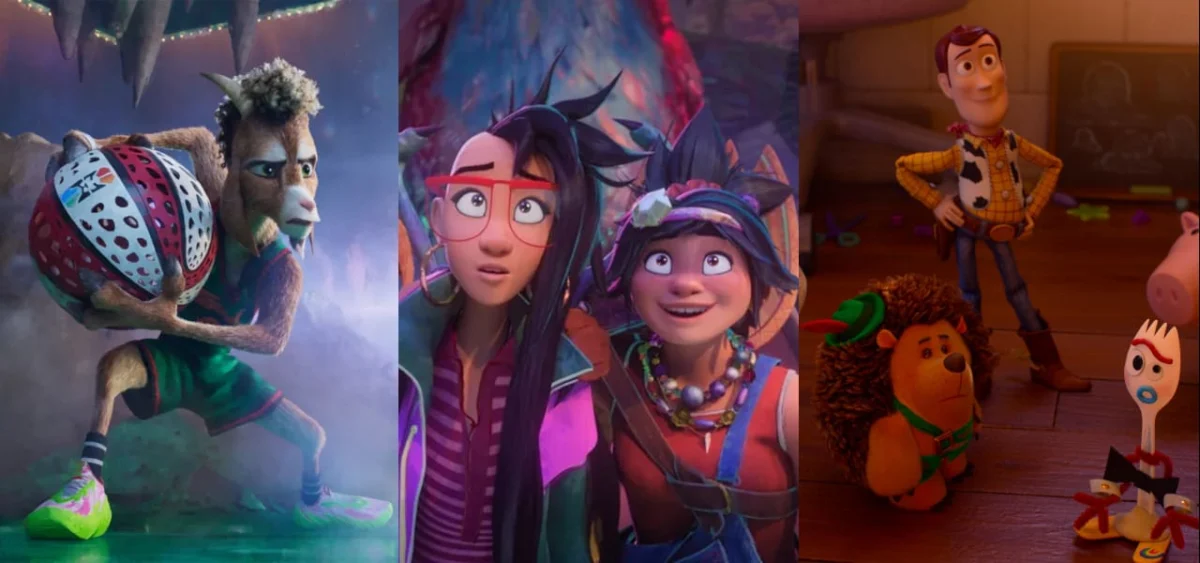
TURIN, ITALY — By nearly every creative metric, 2026 has solidified its place in cinema history as one of the most creatively vibrant and compositionally diverse years for feature animation. From visually stunning original projects to boundary-pushing artistic risks, the medium has arguably never looked better.
Yet, beneath this golden age of creative output lies a stark and unsettling paradox: crafting critically acclaimed masterpieces no longer guarantees that audiences will purchase theater tickets.
This tension served as the central thesis of a candid, high-profile panel discussion at the prestigious View Conference in Turin, Italy. Featuring some of the industry’s most prominent creative voices—including Forgotten Island directors Joel Crawford and Januel Mercado, Toy Story 5 co-director McKenna Harris, and GOAT director Tyree Dillihay—the conversation offered a rare, unvarnished look into the modern animation pipeline.
The panel laid bare the financial pressures forcing studios into a cycle of self-sabotage, the delicate ecosystem required to fund original storytelling, the industry’s ongoing hesitation to target older demographics, and a remarkably unified rejection of generative artificial intelligence by the artists building the medium’s future.
Main Facts
The overarching narrative emerging from the 2026 View Conference panel highlights a deep fracture between the artistic health of feature animation and its commercial viability in Western theatrical markets.
- The Theatrical Disconnect: Despite an influx of critically adored original films, major studios are struggling to draw general audiences back into theaters for non-franchise animated features.
- The Sequel Safety Net: Major studios like Pixar and Disney continue to rely on guaranteed intellectual property (IP) blockbusters—such as the multi-billion-dollar Toy Story franchise—to subsidize the financial risks of producing original stories.
- The Global Shift: Western studio executives remain anchored to the "family-friendly universality" model, lagging far behind global successes (most notably theatrical anime) that prove mature and niche audiences are ready for diverse storytelling.
- Resistance to AI: The panel’s creators roundly rejected the integration of generative artificial intelligence into their workflows, emphasizing that the intrinsic value of animation stems exclusively from lived human emotion, personal trauma, and genuine artistic expression.
Chronology
The discourse surrounding the state of animation has evolved rapidly over the past half-decade, shaped by shifting consumer habits, post-pandemic economic adjustments, and the rise of disruptive technologies.
- 2020–2023 (The Streaming Pivot): In response to global health crises and shifting studio priorities, major media conglomerates aggressively utilized proprietary streaming platforms to distribute high-budget animated films. Industry critics now argue this era inadvertently trained audiences to view animation as "at-home" content rather than a premier theatrical event.
- Early 2024–2025 (The Creative Renaissance): Studios began pushing back toward theatrical exclusivity, greenlighting a wave of visually inventive, risk-taking original features that earned widespread critical acclaim but suffered from shrinking box office returns.
- March 2026 (The IP Balance): Pixar released Daniel Chong’s original feature Hoppers, setting off internal industry discussions regarding how studios must balance original risks with mega-sequels like Coco 2 and Incredibles 3.
- October 2026 (The View Conference): Industry leaders gathered in Turin, Italy, to address the box office underperformance of critical darlings like DreamWorks’ Forgotten Island and to formally push back against sweeping narratives surrounding the inevitability of generative AI in studio pipelines.
Supporting Data and Financial Realities
The business model of Hollywood animation is currently navigating a treacherous tightrope walk between ballooning production costs and shifting audience demographics.
The Box Office Dilemma
The economic reality of 2026 releases exposes a troubling disconnect between critical praise and commercial return. DreamWorks and Universal’s Forgotten Island stands as a prime example. Hailed by critics as one of the visual and narrative peaks of the year, the film suffered a dismal opening weekend in the United States.
"I look at this year in animation, it’s been amazing, just with the quality of stories and the variety of stories and original stories," Joel Crawford noted during the panel. "I mean, I can’t remember a year that was this stacked with fantastic animated movies."
Yet, Crawford admitted the hard truth of the box office: "Forgotten Island, we struggled opening weekend in the U.S. to bring audiences in. So it’s still, no matter [what kind of] great reviews from audience and critics, the general audience is still for some reason a little hesitant to show up to the theater."
The Cost of Going Out
McKenna Harris, co-director of Toy Story 5—a massive global earner pulling in $1.15 billion worldwide—pointed out that family economics play a massive role in theatrical turnout. Post-pandemic economic pressures mean families must meticulously weigh the cumulative costs of a theatrical outing against the near-future availability of films on subscription streaming services.
Despite these hurdles, Harris emphasized that audiences still verbally express a desire for fresh concepts: "Everyone’s telling us that they want original stories… [but they are] missing out on this greater experience you can have in the theater."
Tyree Dillihay offered a broader view of a film’s financial lifespan, noting that while major studios demand massive returns on major investments, theatrical exhibition is ultimately "just one venue out of many," with video-on-demand and streaming rounding out the modern distribution matrix.
Official Responses and Industry Insights
Studio Self-Sabotage and the Streaming Trap
The panel did not shy away from placing partial blame on studio strategies of the past several years. Crawford bluntly stated, "It feels like the studios accidentally trained audiences to devalue animation theatrically." By conditioning consumers to expect animated features on their living room screens weeks after initial release, studios eroded the perception of animation as a major cinematic event.
The Sequel Economy
At Pixar, the math behind original storytelling remains an ongoing hurdle. Addressing the studio’s dual identity of releasing original bets like Hoppers alongside mega-sequels, Harris was refreshingly transparent about the corporate ecosystem.
"Everyone at Pixar, on the outside, Disney is announcing, hey, there’s Coco 2, there’s Incredibles 3. It’s sequel mania," Harris explained. "And we need those films in order for originals to get made. Trying to make original stories profitable, it’s still just the toughest nut to crack. [But] we can’t sacrifice ever telling original stories because that’s the DNA of the company."
Expanding Beyond the Family Demographic
The directors agreed that Western animation has long boxed itself into a corner by assuming financial security exclusively requires appealing to young children. Crawford argued that younger demographics are already light-years ahead of major American studios in appreciating the breadth of the medium, noting that major studios are "a little late to that."
Harris echoed this sentiment, explaining how financial anxiety dictates creative oversight: "If big studios are afraid of losing money, the belief is money comes with kids, money comes with universality."
Conversely, Dillihay pointed to the staggering global success of theatrical anime—such as films tied to Demon Slayer, Jujutsu Kaisen, and Chainsaw Man—as concrete proof that alternative storytelling models thrive when creators abandon the traditional Western studio formula. Referencing conversations with visionary filmmaker Guillermo del Toro, Crawford reminded the audience that a paradigm shift won’t happen overnight: "It’s not going to come from just one movie. It’s going to come from a wave. I feel like it’s safe to say this year’s a wave."
Implications for the Future
The Rejection of Generative AI
Perhaps the most definitive moment of the View Conference panel occurred when the conversation shifted toward generative artificial intelligence. Despite industry-wide pushes from tech sectors claiming AI’s inevitable ubiquity across all creative pipelines, the panel met the technology with a cool, near-hostile reception.
When the moderator pressed the filmmakers on how AI had aided their ideation and visualization processes, Januel Mercado interrupted cleanly and decisively: "We didn’t use any AI," drawing immediate, thunderous applause from the live audience.
To underscore the humanity of their work, Mercado highlighted the ending credits of Forgotten Island, which feature candid photographs of the actual cast and crew bonding with their best friends. "It’s just an amazing way to end the movie by reminding people, look at all the humans that made this art that you enjoyed," he said.
Harris confirmed a similar policy for Pixar on Toy Story 5: "Right now we’re at a crossroads; the studio is at a crossroads of, like, what does that mean for the identity of Pixar?" She expressed her hope that any technological evolution moving forward must strictly "benefit those artists and not take away their jobs."
Human Emotion vs. Algorithmic Replication
Crawford offered a poignant behind-the-scenes anecdote to illustrate the irreplaceable value of human trauma and personal history in art. During the production of Forgotten Island, an animator requested a key scene involving a father figure because the artist’s own father had passed away when he was a child. After studying the storyboards, the animator told the directors, "I need to bring something to this moment."
"The movies aren’t just a paint-by-numbers, make it pretty. It’s human expression," Crawford emphasized, delivering the panel’s sharpest critique of the tech sector:
"AI copies the hell out of what we’ve done and is always looking back. It’s frustrating that these big corporations don’t understand the art that they’re stealing."
Conclusion
As the animation industry navigates its box office anxieties, financial reliance on sequels, and the looming presence of technological disruption, the takeaway from the 2026 View Conference was resoundingly optimistic. Rather than succumbing to industry dread or attempting to compete with algorithmic efficiency on machines’ terms, these creators underscored a singular truth: the future of animation rests not in automated optimization, but in the relentless, vulnerable, and deeply human spirit of the artists who bring the medium to life.
