
The Psychology of Terror: Why the Scariest Horror Movies Rely on What You Can’t See
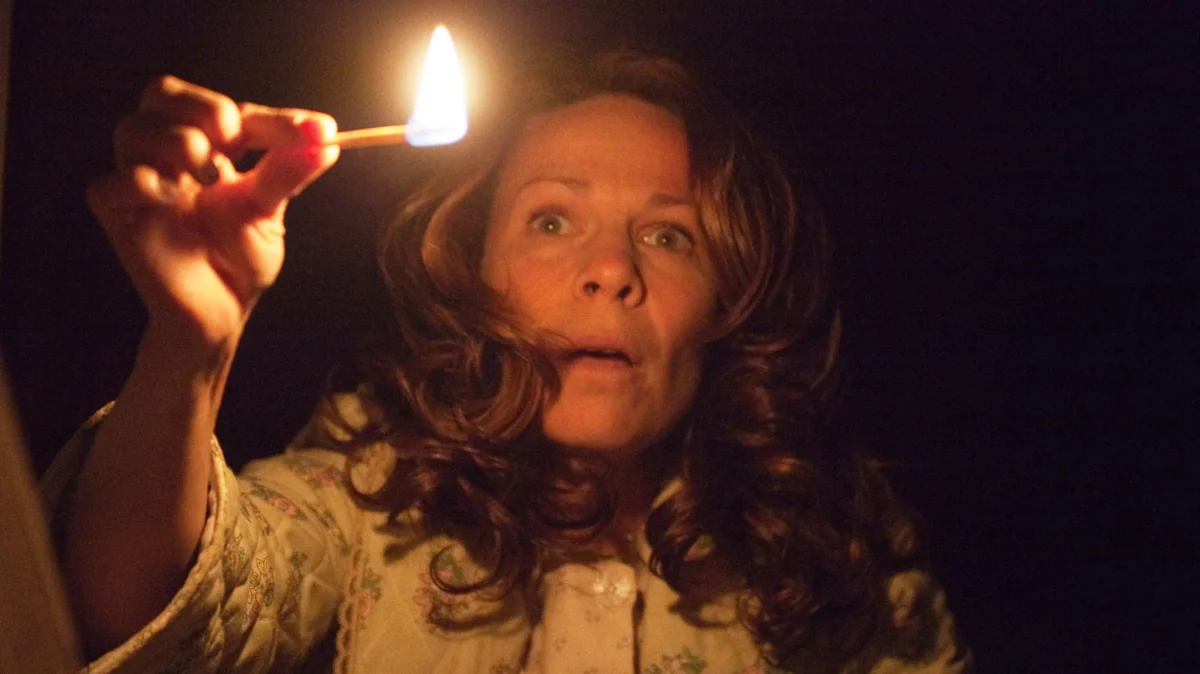
As the legendary horror author H.P. Lovecraft once observed, "the oldest and strongest emotion of mankind is fear, and the oldest and strongest kind of fear is fear of the unknown." While cinematic terror is inherently subjective—with some audiences recoiling at the sight of explicit viscera and arterial spray—the most enduringly chilling works of horror often rely on absolute restraint. Rather than leaning on explicit gore, these films weaponize atmosphere, pacing, performance, and insinuation. They plant a persistent seed of dread, proving that psychological violence wounds the human psyche just as deeply as any physical mutilation.
To explore this phenomenon, we examine the definitive ranking of the 10 best horror movies featuring no blood or gore, demonstrating how absence can yield maximum terror.
10. The Haunting (1963)
Director: Robert Wise
Studio: Metro-Goldwyn-Mayer
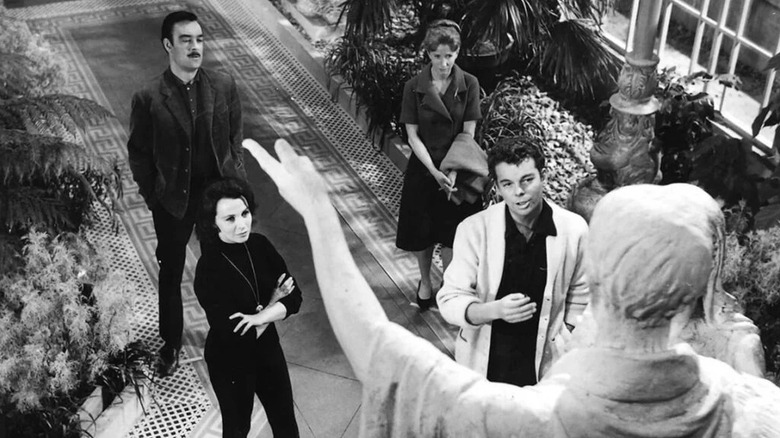
There is little that matches a classic haunted-house narrative for generating frights with only the barest suggestion of physical violence. Robert Wise’s 1963 masterpiece, The Haunting, achieves its profound unease strictly through tone, mood, and compositional geometry. Adapting Shirley Jackson’s seminal gothic novel The Haunting of Hill House, Wise successfully translates literary dread into a sophisticated cinematic chiller.
The story follows Dr. John Markway (Richard Johnson), an anthropologist researching the supernatural who rents Hill House—a notorious 19th-century New England mansion defined by a tragic history. He invites three individuals with paranormal sensitivities to investigate, most notably Eleanor "Nell" Lance (Julie Harris), a woman traumatized by a lifetime of poltergeist activity and the recent death of her mother.
Wise crafts an intensely subjective ghost story by utilizing experimental 30mm wide-angle Panavision lenses. This distorted cinematography places the audience directly inside Nell’s spiraling, paranoid state of mind, establishing The Haunting as a foundational pillar of haunted-house cinema.
9. The Ring (2002)
Director: Gore Verbinski
Studio: DreamWorks Pictures
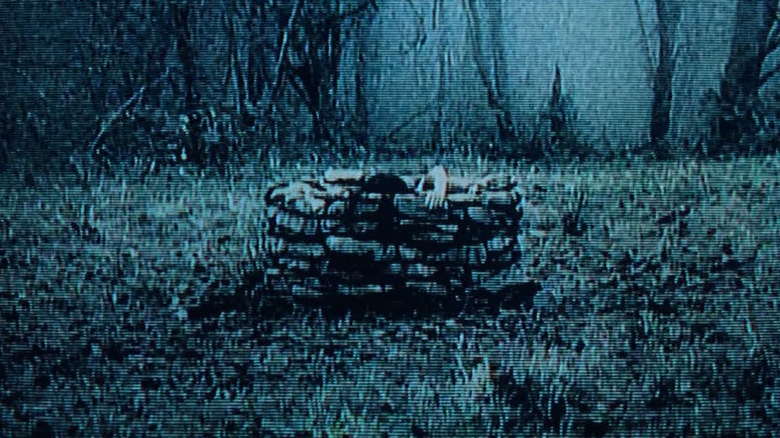
Remaking a foreign cultural phenomenon is fraught with danger, yet Gore Verbinski successfully transformed Hideo Nakata’s Japanese horror milestone Ringu into an American masterpiece. The Ring translated the slow-burn dread of J-horror into a supernatural melodrama, triggering a decade-long Hollywood trend of adapting Asian horror cinema.
Naomi Watts stars as Rachel Keller, an investigative journalist tracking a cursed videotape that promises death exactly seven days after viewing. This investigation entangles her and her son, Aidan (David Dorfman), in the tragic origins of Samara, a vengeful spirit capable of traversing cathode-ray television screens. Verbinski and cinematographer Bojan Bazelli saturated the Pacific Northwest setting in steely blue-grays and relentless rain, ensuring that even daylight sequences feel suffocating. By confining its violence mostly to off-camera implication or singular, iconic tableaus, The Ring secured a permanent place in cultural memory.
8. Paranormal Activity (2007)
Director: Oren Peli
Studio: Paramount Pictures
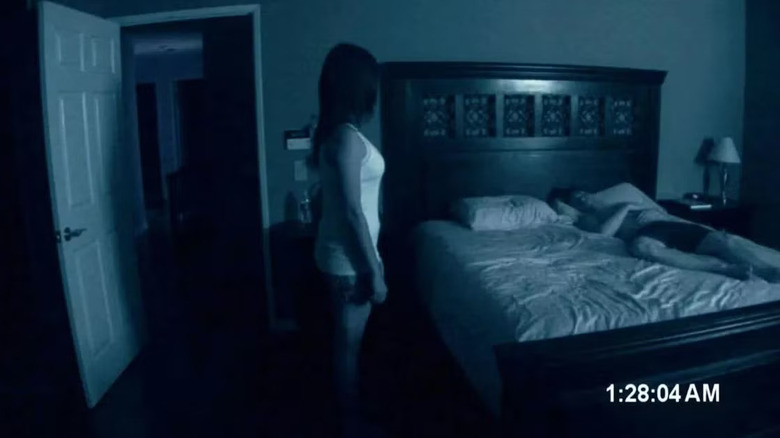
While the Paranormal Activity franchise eventually expanded into a labyrinthine mythology, the 2007 original remains a masterclass in minimalist horror. Written, directed, and produced by Oren Peli for a mere $15,000, the film was shot inside his San Diego home using a static camera locked onto a tripod in the corner of a bedroom.
The plot features a young couple, Katie Featherston and Micah Sloat (retaining their real names), haunted by an invisible entity that slowly escalates from minor poltergeist activity to outright terror. Eschewing flashy CGI monsters, the film relies on procedural dread—a sliding door, a shifting blanket, timestamps ticking in the dead of night—letting the audience’s imagination construct the threat. Paranormal Activity revitalized the found-footage genre, proving that low-budget constraints can foster intense intimacy and fear.
7. The Others (2001)
Director: Alejandro Amenábar
Studio: Dimension Films
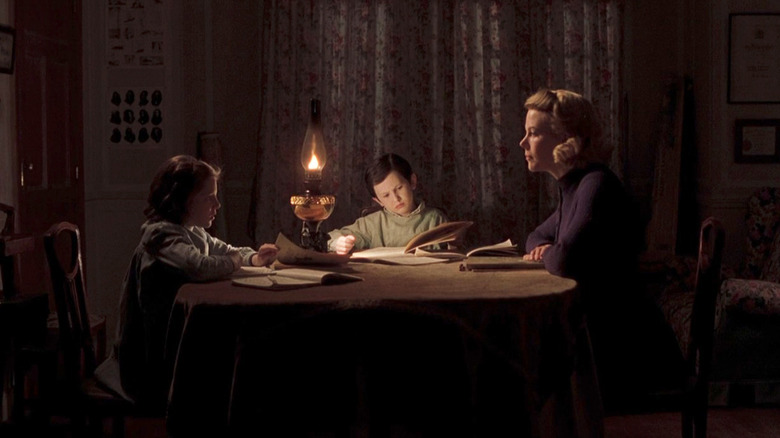
Alejandro Amenábar’s 2001 gothic ghost story strands Grace Stewart (Nicole Kidman) and her photosensitive children inside a fog-enshrouded Jersey mansion in the aftermath of World War II. Because her children suffer from a rare allergy to sunlight, every curtain must remain drawn and every door locked, creating a naturally claustrophobic environment.
When new servants arrive and strange phenomena manifest, Grace’s religious rigidity curdles into intense paranoia. Amenábar constructs his terror entirely out of candlelight, shadows, and the claustrophobic geography of a massive, shadowed estate. Devoid of physical blood, the film relies on Kidman’s fragile, controlled performance and a devastating late-stage narrative twist that reframes a traditional ghost story into a profound psychological tragedy of guilt and denial.
6. The Conjuring (2013)
Director: James Wan
Studio: Warner Bros. Pictures
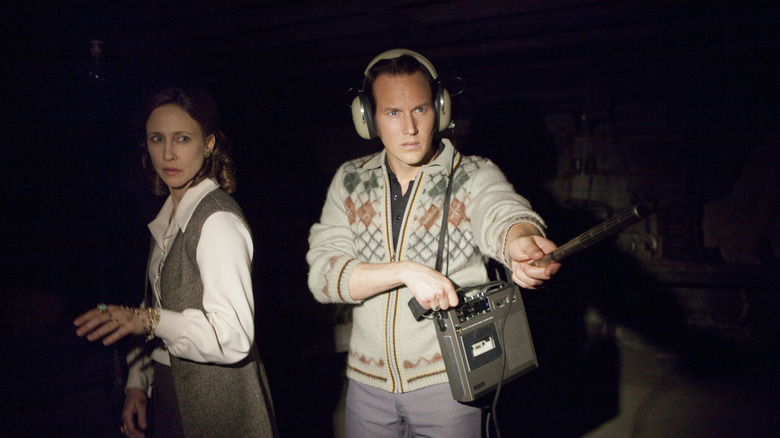
James Wan’s 2013 blockbuster revitalized classical, studio-budget horror by rejecting modern torture-porn trends in favor of deep-focus compositions and patient camera movements. Detailing a heavily fictionalized case from the files of real-life paranormal investigators Ed and Lorraine Warren (Patrick Wilson and Vera Farmiga), the film follows their intervention at the Perron family’s Rhode Island farmhouse in 1971.
Wan builds tension through masterful blocking and sound design rather than gore, proving that cinematic fear lives entirely in anticipation. The film’s enormous success launched the multi-billion-dollar Conjuring Universe, yet the original stands out as a disciplined throwback to the pacing of 1970s and 1980s horror classics.
5. Rosemary’s Baby (1968)
Director: Roman Polanski
Studio: Paramount Pictures
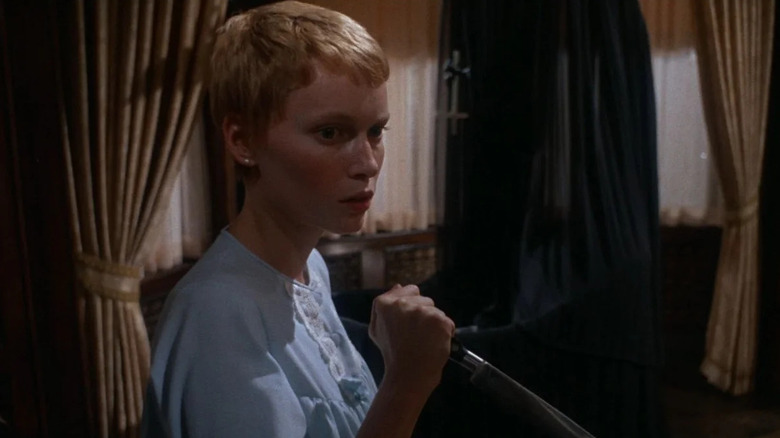
Roman Polanski’s American directorial debut adapts Ira Levin’s novel to transform pregnancy into a site of profound psychological horror. Mia Farrow stars as Rosemary Woodhouse, who moves into a foreboding Manhattan apartment building with her ambitious actor husband (John Cassavetes), only to find their eccentric elderly neighbors taking an unnerving interest in her unborn child.
The film operates as a masterclass in gaslighting and institutional betrayal. Rosemary’s growing isolation is handled with subtle shifts in mood, anchored by Ruth Gordon’s Oscar-winning supporting performance as the aggressively intrusive neighbor, Minnie Castevet. Exploring themes of bodily autonomy and systemic distrust, the film remains a chilling exploration of paranoia.
4. The Innocents (1961)
Director: Jack Clayton
Studio: 20th Century Fox
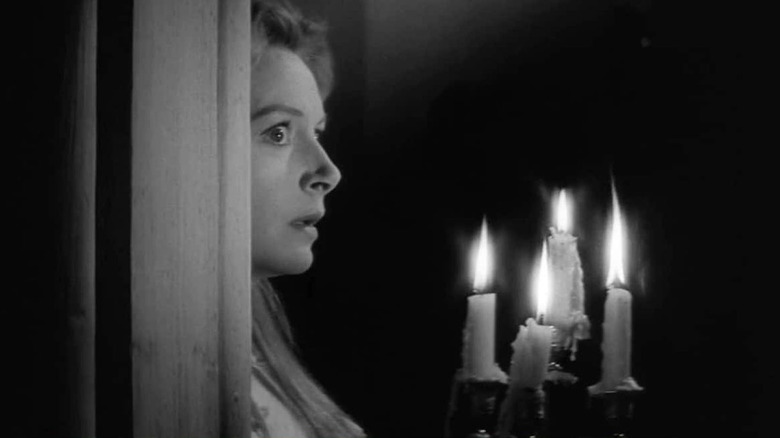
Jack Clayton’s 1961 adaptation of Henry James’s novella The Turn of the Screw is perhaps the definitive cinematic exploration of psychological ambiguity. Deborah Kerr stars as Miss Giddens, a governess who becomes convinced that the ghosts of two former servants are possessing the young orphans in her care.
Cinematographer Freddie Francis utilized deep-focus black-and-white CinemaScope to stretch shadows across empty rooms, letting candlelight pool in unsettling ways. Co-written by Truman Capote, The Innocents avoids overt violence, focusing instead on Victorian sexual repression, unreliable narration, and the haunting notion that the real threat may reside entirely within the protagonist’s mind.
3. Halloween (1978)
Director: John Carpenter
Studio: Compass International Pictures
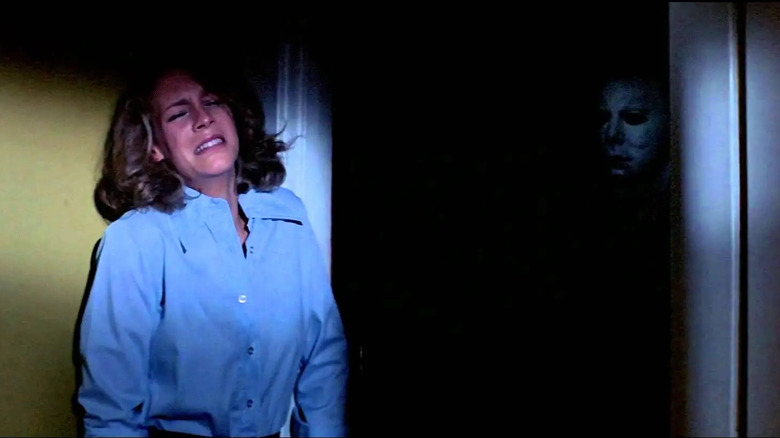
Produced on a modest budget of $300,000, John Carpenter’s Halloween established the modern slasher film blueprint. Michael Myers (Nick Castle), institutionalized after murdering his sister as a child, escapes and returns to Haddonfield, Illinois, to stalk babysitter Laurie Strode (Jamie Lee Curtis).
Donald Pleasence portrays Dr. Loomis, defining Myers as "purely and simply evil." Carpenter weaponizes empty suburban spaces, utilizing wide lenses and patient framing to suggest that mortal danger can lurk in broad daylight behind a blank white mask. The violence itself is remarkably sparse; what lingers in the cultural consciousness is the relentless dread of a figure standing motionless across the street.
2. Psycho (1960)
Director: Alfred Hitchcock
Studio: Paramount Pictures
Alfred Hitchcock’s Psycho fundamentally changed the landscape of popular cinema, enforcing strict theatrical admission rules to preserve its mid-movie narrative twists. Adapting Robert Bloch’s novel—which was loosely inspired by killer Ed Gein—the film pivots from a criminal fugitive on the run to the grim reality of the isolated Bates Motel.
Prompted partly by budgetary constraints and partly by a desire to keep the violence from becoming visually unpalatable, Hitchcock shot the film in stark black-and-white. The infamous shower sequence remains a masterclass in editing and suggestion, utilizing rapid cuts to imply violence without ever showing a blade piercing flesh. Psycho successfully shifted horror away from supernatural or extraterrestrial monsters, anchoring terror firmly within the fractured human psyche.
1. The Blair Witch Project (1999)
Directors: Daniel Myrick, Eduardo Sánchez
Studio: Artisan Entertainment
Topping the list is the ultimate triumph of unseen dread: The Blair Witch Project. Shot for roughly $60,000 on consumer-grade Hi8 and 16mm cameras, Daniel Myrick and Eduardo Sánchez crafted a pop-culture phenomenon by leaning entirely into audience imagination.
The film follows three student filmmakers venturing into the Maryland woods to document a local legend, only to become hopelessly lost. Bolstered by a revolutionary internet marketing campaign that presented the footage as genuinely recovered, the movie never shows its titular antagonist. Instead, tension accumulates through primitive token markers—twig figures bound with twine, piles of stones, disembodied cries in the dark—and the psychological unraveling of its cast. The Blair Witch Project proved that the most terrifying monster in cinema is always the one the human mind constructs for itself.
