
Unveiling the Liminal: Roxel Creative Pulls Back the Curtain on the Visual Effects of Backrooms

The internet-born phenomenon of the "Backrooms"—a collective hallucination of endless, yellow-hued, office-space corridors—has successfully made the leap from creepypasta forum lore to the big screen. Central to this cinematic adaptation is the meticulous visual effects (VFX) work that anchors the surreal, often nauseating experience of the film in a tangible, photorealistic reality.
Recently, Roxel Creative, the studio responsible for much of the film’s visual heavy lifting, released an extensive breakdown of their work. Spearheaded by Associate VFX Supervisor Calvin Romeyn, the studio’s contribution serves as a masterclass in modern digital filmmaking, demonstrating how to elevate low-fidelity "found footage" aesthetics into a sophisticated, high-budget visual experience.
Main Facts: The Intersection of Digital Craft and Internet Lore
At its core, the Backrooms film adaptation faces a unique creative challenge: how to maintain the grainy, "found footage" aesthetic that defined the original viral videos while operating at a professional, cinematic scale. Roxel Creative’s approach was not to polish the edges, but to enhance the uncanny nature of the environment.
The breakdown highlights several key sequences, most notably the film’s opening, which relies on a jarring, handheld perspective to disorient the audience. By utilizing a hybrid workflow of photogrammetry, digital set extensions, and deliberate "glitch" artifacts, the team at Roxel was able to render environments that feel both hyper-real and fundamentally wrong.
Calvin Romeyn’s leadership in this project marks a significant moment for studios specializing in independent, web-first horror content. By balancing the raw energy of amateur horror with the technical rigor of traditional VFX pipelines, Roxel has set a new benchmark for how internet-native IP can be adapted for traditional distribution.
A Chronology of the Production Pipeline
The journey of the Backrooms VFX was anything but linear. The production necessitated a rigorous, multi-stage pipeline that bridged the gap between location shooting and pure digital artifice.
Phase 1: Pre-Visualization and Asset Capture
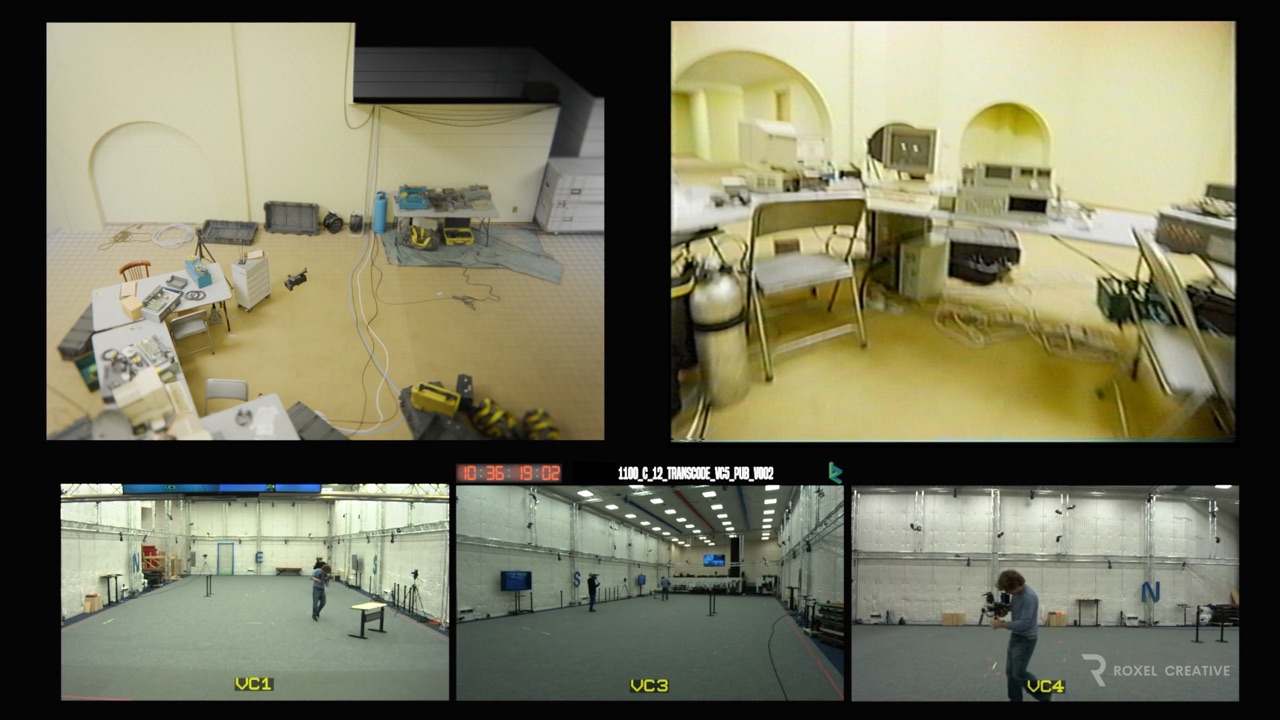
Before a single frame of the final film was rendered, the team engaged in extensive environmental scanning. Because the Backrooms are defined by their repetitive, claustrophobic geometry, the team utilized LiDAR scanning to capture suburban alleyways and interior office spaces. This provided the "ground truth" for the geometry, ensuring that when the camera moved through the digital space, the perspective shifts felt grounded in physics.
Phase 2: The "Vertigo Room" Integration
One of the most complex segments featured in the breakdown is the "Vertigo Room." This sequence required a seamless blend of live-action performance and complex digital set extensions. The production team used high-end motion capture to track the movement of the camera, allowing Roxel to overlay digital geometry that reacted to the lighting cues captured on set.
Phase 3: The Polish and the "Found Footage" Filter
The final stage of the pipeline was perhaps the most counterintuitive: the "de-polishing" process. After the digital assets were fully rendered, the team applied custom-built shaders designed to simulate the specific color science of 1990s and early-2000s camcorders. This involved adding chromatic aberration, subtle lens flares, and digital noise patterns that shift based on the "camera’s" movement. This layer of abstraction is what gives the film its signature, unsettling, and authentic "found footage" aesthetic.
Supporting Data: The Technical Complexity of Liminal Spaces
To understand the scale of the work, one must look at the data density behind the scenes. Roxel Creative reported that for the opening sequence alone, the team managed over 400 individual layers of digital assets.

- Geometry Density: The office environments required the management of nearly 50,000 unique asset instances to simulate the endless, repeating nature of the Backrooms.
- Lighting Models: To maintain the "flicker" effect of the iconic buzzing fluorescent lights, the team utilized procedural lighting algorithms that randomized intensity at 1/60th-of-a-second intervals, mimicking the faulty wiring of the space.
- Rendering Throughput: The total render time for the film’s key sequences exceeded 12,000 hours of compute time, distributed across a render farm that specialized in maintaining the grain and noise levels consistent with analog tape.
These metrics highlight that "simplicity" in film—the look of an empty, mundane room—is often the result of the most complex digital engineering.
Official Responses and Creative Intent
In a recent statement, Calvin Romeyn emphasized that the goal of the VFX team was never to create "flashy" effects, but rather to create an environment that the audience would fear to enter.
"The horror of the Backrooms isn’t in the creatures or the action," Romeyn noted. "It’s in the architecture. It’s in the feeling that the room you just left is identical to the one you just entered. Our job was to make that repetition feel like a trap. We spent more time debating the specific hue of the carpet than we did on some of the more traditional creature effects."
The director of the film echoed these sentiments, noting that Roxel Creative was chosen specifically for their ability to treat "bad" quality—the digital noise and the low-light artifacts—as a character in the film. Rather than fixing the "errors" typically associated with found footage, the team leaned into them, using them as tools to obscure the truth and heighten the tension.
Implications for the Future of Horror Cinema
The success and technical transparency of the Backrooms VFX breakdown have profound implications for the industry.

The Democratization of High-End Horror
First, it proves that the barrier to entry for high-quality horror is shifting. By using open-source tools and creative, non-traditional workflows, independent studios can compete with the polish of major studio productions. The industry is moving away from the "bigger is better" mentality toward a "smarter is scarier" approach.
The Evolution of Found Footage
For years, the found footage genre was defined by its limitations: low budgets, shaky cameras, and limited locations. With the Backrooms project, we are seeing the birth of "prestige found footage." This is a sub-genre that respects the technical history of the format while utilizing the vast capabilities of modern VFX to do things that were previously impossible, such as creating impossible geometries or non-Euclidean spaces.
The Role of the VFX Studio as Storyteller
Roxel Creative’s involvement demonstrates that VFX studios are no longer just "fix-it" shops. They are now integral creative partners from the pre-production phase. The breakdown reveals that the "Vertigo Room" sequence was not just an edit, but a collaborative design process where the VFX team helped define the spatial logic of the scene.
Conclusion: A New Standard for the Uncanny
As the film industry continues to grapple with how to adapt viral internet content, the Backrooms project stands as a beacon. It provides a blueprint for how to respect the source material while pushing the boundaries of what is technically achievable.
For those interested in the deep-dive technical aspects, the full breakdown serves as a reminder that behind every "simple" shot of an empty room lies a labyrinth of digital labor. As audiences demand more immersive, authentic, and terrifying experiences, studios that can bridge the gap between the raw, grainy aesthetic of the internet and the high-fidelity power of modern VFX will lead the way.

The Backrooms is more than just a horror movie; it is a testament to the fact that in the right hands, digital pixels can be just as haunting as any physical set. As we look forward to future issues of industry magazines featuring this project, it is clear that the work of Roxel Creative has fundamentally altered the landscape of modern horror visual effects.
For those looking to dive deeper into the technical craft, the upcoming issue of our magazine will feature an exhaustive, frame-by-frame analysis of the "Backrooms" workflow, including exclusive interviews with the digital artists who brought the liminal to life.
