
Return to Arrakis: Production Underway for the Epic Conclusion of Denis Villeneuve’s Dune Saga

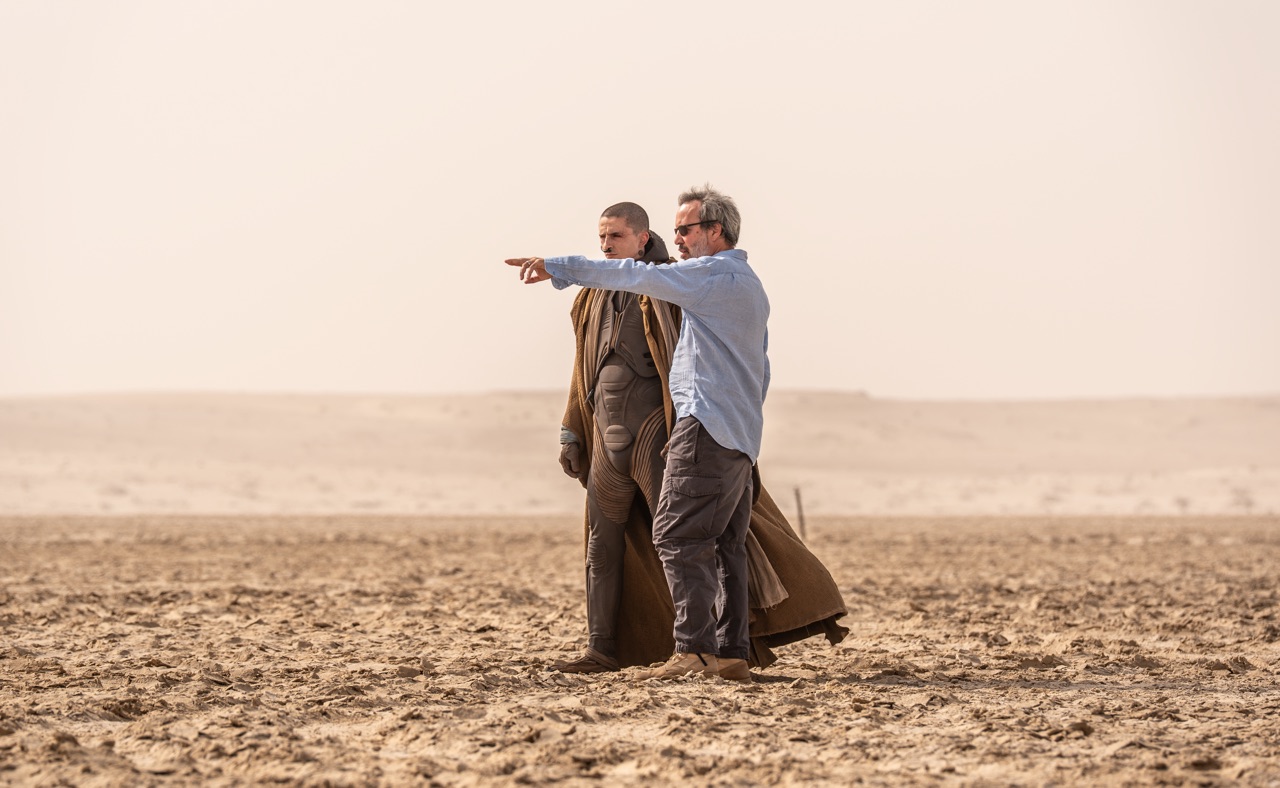
The spice must flow, and once again, it is flowing in the Liwa Desert. As of late 2026, production for Dune: Part Three—the highly anticipated conclusion to director Denis Villeneuve’s sweeping science-fiction trilogy—is officially in full swing. A newly released photograph from the Abu Dhabi set captures director Denis Villeneuve in deep consultation with lead star Timothée Chalamet, signaling the final chapter in the journey of Paul Atreides.
As the production team navigates the scorching dunes of the United Arab Emirates, the industry is buzzing with anticipation. This final installment is poised to adapt the remainder of Frank Herbert’s seminal literary work, Dune Messiah, promising a cinematic experience that will define a generation of science fiction.
Main Facts: The Final Piece of the Puzzle
Dune: Part Three is not merely another sequel; it is the culmination of a decade-long vision. Following the critical and commercial triumph of Dune: Part One (2021) and the even more expansive Dune: Part Two (2024), the final film is tasked with resolving the complex geopolitical and religious tapestry woven by Villeneuve.
The production has returned to the Liwa Desert in Abu Dhabi, a location that has become synonymous with the visual identity of Arrakis. The desolate, rolling sands provide the stark, otherworldly canvas necessary to depict the brutal environment of the desert planet. Warner Bros. has confirmed that principal photography is well underway, with an international crew working under strict secrecy to maintain the visual integrity of the film’s conclusion.
Chronology: From Novel to Blockbuster
The journey to Dune: Part Three has been a meticulous exercise in patience and precision. To understand the significance of this current production, one must look at the timeline of the franchise’s modern revival:
- 2021: Dune: Part One introduces global audiences to the Atreides family, the betrayal on Arrakis, and the rise of Paul. The film garners critical acclaim for its scale and technical mastery.
- 2024: Dune: Part Two expands the scope, focusing on Paul’s integration with the Fremen and his inevitable ascension to messianic status. The film shatters box office records, cementing Villeneuve’s status as a master of modern sci-fi.
- 2025: Pre-production for the third film commences, with rumors swirling about how Villeneuve intends to adapt the darker, more introspective narrative of Dune Messiah.
- 2026: Principal photography begins in the Liwa Desert. The release of on-set imagery confirms that the creative team, led by Villeneuve and starring Chalamet, is back in the field to capture the final act.
Supporting Data: The Scale of the Arrakis Project
The sheer scale of the Dune production is unparalleled in contemporary cinema. The technical requirements to bring Frank Herbert’s vision to life are immense, relying on a delicate balance between practical location work and cutting-edge visual effects.
The choice of the Liwa Desert is not aesthetic alone. The region offers a unique topography that simulates the harsh, shifting landscape of Arrakis. According to production insights, the crew utilizes a combination of traditional film techniques—such as heavy reliance on natural light and in-camera effects—and massive digital environment extensions to create the scale of the worm-ridden desert.
The production benefits from a deep reservoir of talent. From the costume design, which reflects the evolution of the Fremen culture, to the sound design that creates the iconic thrum of the spice harvesters, every element is meticulously coordinated to maintain continuity with the previous two films. The budget for the final installment is expected to be among the highest in the studio’s history, reflecting the massive logistical undertaking required to shoot in such a remote, hostile environment.

Official Responses and Creative Direction
In recent months, Denis Villeneuve has been vocal about the weight of responsibility he feels in adapting Dune Messiah. While the first two films focused on the rise of a hero, the third film is famously intended to be a cautionary tale.
"The book is a warning about the danger of the messianic figure," Villeneuve noted in previous press engagements. "Paul Atreides is not a typical hero. He is a tragic figure, and the third film must reflect that reality without compromising the epic spectacle that audiences have come to expect."
Warner Bros. executives have echoed this sentiment, emphasizing that the final film will prioritize narrative depth over mere spectacle. By returning to the original locations, the team aims to ground the abstract concepts of the finale in the tangible reality established in the first two parts. The chemistry between Villeneuve and Timothée Chalamet remains the cornerstone of the project, with the director frequently citing Chalamet’s commitment to the character’s psychological disintegration as the driving force of the third script.
Implications for the Industry
The success of the Dune trilogy has profound implications for the film industry. In an era dominated by superhero fatigue and repetitive franchise models, Villeneuve has proven that high-concept, intellectual science fiction can command massive global audiences.

1. The Renaissance of Epic Sci-Fi
The Dune series has revitalized the "prestige blockbuster." By proving that audiences are hungry for dense, challenging lore and deliberate pacing, the trilogy has encouraged studios to invest in more ambitious, auteur-driven projects.
2. Global Location Impact
The consistent use of Abu Dhabi as a filming location has turned the Liwa Desert into a hub for international production. This has not only bolstered the local economy but has set a new standard for how remote locations can be integrated into high-budget workflows, prioritizing authentic environments over green-screen reliance.
3. The End of the "Trilogy" Standard
Dune: Part Three marks the end of a specific creative era. Unlike many franchises that expand indefinitely, Villeneuve has maintained that this is a finite story. The industry is watching closely to see how the studio handles the "post-Dune" landscape. Will there be spin-offs? Will the success of this trilogy lead to a rush of other classic sci-fi novel adaptations?
Final Thoughts: The Weight of Destiny
As the production continues in the sands of the Liwa Desert, the atmosphere is one of intense focus. There is a palpable sense that the team is aware of the historical weight they are carrying. To complete a narrative as iconic as Dune—a work once deemed "unfilmable"—is a monumental achievement.

The image of Chalamet and Villeneuve in the desert serves as a poignant reminder of the human effort behind the spectacle. It is a testament to the collaboration between director and actor, a relationship that has become the beating heart of the series. While the cameras continue to roll and the dunes continue to shift, one thing remains certain: when the final frame is captured, cinema will have witnessed one of the most ambitious narrative arcs in history.
The spice, it seems, has indeed been worth the struggle. As the world waits for the final release date, the production in the Liwa Desert remains the epicenter of the science-fiction universe, proving that even in the most inhospitable of places, art can flourish.
