
The Weight of Survival: Ethan Hawke and Director Padraic McKinley Bring a Gritty Depression-Era Epic to the 2026 Sundance Film Festival
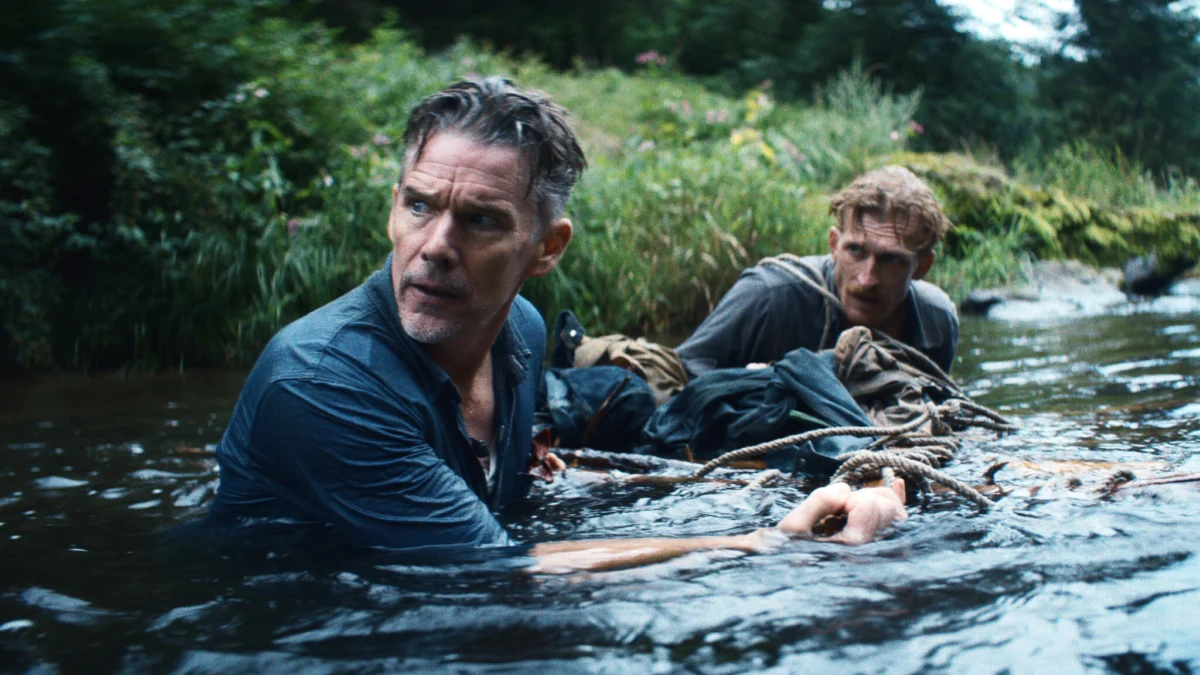
PARK CITY, Utah — Against the snowy backdrop of the Wasatch Range, the 2026 Sundance Film Festival played host to one of the most rugged and visceral cinematic events of the year. On January 26, 2026, at The Ray Theatre, the Premiere section unveiled The Weight, a harrowing survival drama directed by Padraic McKinley.
Starring Ethan Hawke, Russell Crowe, Julia Jones, Austin Amelio, and Avi Nash, the film transports audiences to the unforgiving wilderness of Oregon during the darkest depths of the Great Depression. Merging old-school adventure mechanics with deeply human stakes, The Weight quickly established itself as a major talking point of the festival, combining raw star power with a passionate defense of independent cinema.
Main Facts: Inside The Weight
At its emotional and narrative center, The Weight follows Samuel Murphy, played with a quiet, steely resolve by Ethan Hawke. The film opens in a heartbreaking fracture: Murphy is forcibly torn away from his young daughter and consigned to a remote, brutal labor camp where every waking hour is a high-stakes negotiation for survival.
The narrative catalyst arrives when a ruthless labor camp warden, portrayed with measured intensity by Russell Crowe, dangles a rare and perilous lifeline. Murphy is offered a shot at early freedom if he agrees to lead a small, desperate crew of convicts on a covert mission: smuggling gold across miles of treacherous, snow-choked wilderness. For Murphy, the gold is secondary; the true currency of the mission is the chance to mend his shattered family.
The supporting ensemble brings textured grit to the dangerous trek. Austin Amelio and Avi Nash infuse the convict crew with palpable tension and fragile camaraderie, while Julia Jones delivers a standout performance as Anna, the sole woman among the party. Jones noted during post-screening discussions that her character deliberately defies period-typical tropes, offering a dynamic and resilient presence that surprises both her fellow travelers and the audience.
Visually and atmospherically, the film is anchored by Matteo Cocco’s sweeping, immersive cinematography, which captures both the majestic beauty and the lethal indifference of the backcountry. This is further amplified by an unsettling, atmospheric score composed by brothers Latham and Shelby Gaines, ensuring the audience feels the claustrophobia and desperation of the journey.
Chronology of Production and Premiere
The journey of The Weight to the Sundance screen spans months of grueling physical production and decades of cinematic inspiration.
- Inspiration & Conception: Director Padraic McKinley and his creative team set out to resurrect the ethos of 1970s gritty adventure cinema, drawing direct inspiration from classics such as Sydney Pollack’s 1972 Jeremiah Johnson (starring Robert Redford) and William Friedkin’s 1977 masterpiece Sorcerer.
- Principal Photography: The film shot over a grueling five-month period in Germany. Rather than relying heavily on soundstages or digital environments, the production immersed its cast and crew directly into the elements.
- January 26, 2026: The Weight holds its world premiere in the Premieres section at The Ray Theatre in Park City, Utah, drawing a rapturous response from festival-goers and immediate critical acclaim.
- Post-Premiere Q&A: Director Padraic McKinley, Ethan Hawke, Julia Jones, Austin Amelio, Sam Hazeldine, and Padraic McKinley take the stage to discuss the ethos of the project, followed by a reflective meditation by Hawke on the state of independent film, sparked by a prompt from Sundance senior programmer John Nein.
Supporting Data and Production Realities
Recreating the physical hardships of Great Depression-era Oregon within the forests of Germany was no small feat. For the actors, the production was defined by authentic, sweat-and-soil immersion rather than comfortable studio conditions.
- Location Shoot: Spanning roughly five months, the production took place entirely outdoors in German woodlands.
- Physical Toll: Ethan Hawke humorously detailed the unglamorous realities of the shoot during the Q&A, noting the presence of ticks, Lyme disease vectors, and low-hanging branches—all of which contributed to the tactile, "earthy" feel of the finished product.
- Cinematic Lineage: The film explicitly models its aesthetic on the 1970s wave of American filmmaking, rejecting the frictionless perfection of modern CGI blockbusters in favor of practical action, physical exhaustion, and flawed, relatable protagonists.
- Festival Pedigree: Hawke’s relationship with the Sundance Film Festival spans decades, having brought various independent projects to Park City since the 1990s, positioning him as a seasoned elder statesman of the indie film community.
Official Responses and Creative Vision
The creative team behind The Weight was vocal about their desire to strip away modern cinematic artifice in favor of tactile storytelling.
Speaking directly to the audience after the credits rolled, director Padraic McKinley explained the core philosophy of the project. “We wanted to make this sort of old-school, adrenalized, adventure film,” McKinley said. “We wanted to dedicate ourselves to the ethos of those films.”
Ethan Hawke elaborated on this sentiment, emphasizing how classic cinema communicates through somatic experience rather than mere exposition.
“Classic films like these conjure a feeling,” Hawke shared on stage alongside McKinley. “There’s a grittiness to them, a sloppiness. And by sloppy, I mean earthy, salt, sole, sweat. You feel the movie rather than watch it… They’re about real people and how our lives are action-packed. I was really drawn to try to create a portrait of masculinity that I admired and respected.”
Hawke pointed to icons of his youth, such as Robert Redford and Paul Newman, noting that their characters provided a moral compass—a "North Star" defined by honor, dignity, and integrity. He noted that Murphy was designed as a spiritual descendant of those archetypes: a regular person fighting fiercely for what is right.
Reflecting on the grueling outdoor shoot, Hawke added, “We spent our summer outdoors running around the forest… and there’s ticks and there’s Lyme disease, and there’s logs in your face, but everybody was trying to take care of each other. And when you’re doing that and you believe in the movie, it’s so much fun. It’s a high that you chase.”
Julia Jones also weighed in on the uniqueness of her role. “One of the things I was the most drawn to was that she defied your expectations or anything you’ve ever seen in a female character and in this time period,” Jones remarked, highlighting the conscious effort to subvert historical genre cliches.
The impact of the film on viewers was immediate. When one audience member stood up during the Q&A to declare The Weight perhaps the most "badass" movie he had ever seen, a visibly touched Hawke responded: “To hear that you feel that way is so rewarding, because that’s the feeling that the movies that I love have given me, and we were trying to give that forward.”
Implications for Independent Cinema
As the post-screening conversation wound down, Sundance Film Festival senior programmer John Nein directed the discourse toward the broader landscape of independent film, asking Hawke how he viewed the current health of the indie sector.
Hawke’s response was impassioned, drawing a direct line between the weekend’s tribute to Sundance founder Robert Redford and the ongoing mission of independent storytelling.
“I was at the Redford tribute on Friday night, and it was like sticking your finger in an electric socket in a good way,” Hawke reflected. “It was like, I felt totally charged, and I felt that vibration that you get when somebody says the truth when you haven’t heard the truth in a long time.”
Hawke praised Redford’s original vision for the Sundance Institute—one centered not on corporate box-office metrics or political checklists, but on a genuine, agenda-free desire to listen to diverse human experiences. “He was talking about diversity of voices and not letting the industry run the art form, but the art form run the industry… It was a sincere desire to listen. With no agenda, but to go, ‘I need to hear you.’ He built this lightning rod and so many people cared.”
Emphasizing the vital role platforms like Sundance play in launching careers, Hawke concluded with a call to action for the creative community as the festival concluded its run in Park City.
“It’s not just that they got to make their work,” Hawke said of the generations of filmmakers supported by the Institute. “That’s very beautiful, but they also got to launch it into the world. It’s gonna be so important as we all say goodbye to Park City that we carry the fire that was created here—we carry it forward into all our lives, into all of what we’re doing.”
Through its old-school dedication to physical filmmaking, stellar ensemble performances, and uncompromising thematic weight, The Weight successfully captured that very fire, leaving Park City as one of the definitive cinematic achievements of the 2026 festival.
