
The Resurrection of Shadow: Inside Star Wars: Maul — Shadow Lord, Lucasfilm’s Grittiest Animated Venture Yet
Main Facts: A New Era for a Fan-Favorite Sith
Nearly three decades after his silent, menacing debut in Star Wars Episode I: The Phantom Menace, Darth Maul is carving out a new milestone in galactic history. Lucasfilm has officially announced Star Wars: Maul — Shadow Lord, a prestige animated series that cements the iconic horned zabrak as the only Star Wars villain—aside from Boba Fett—to headline his own dedicated television project.
Set in the tumultuous early days of the Galactic Empire, the fully serialized project bridges a crucial gap in the character’s storied timeline. Voiced once again by industry veteran Sam Witwer, who has breathed life into the character since his resurrection in 2008, Maul is no longer just a lethal weapon of vengeance. Instead, Shadow Lord finds the former Sith Lord stripped of his empire, his allies, and his power base following the devastating Siege of Mandalore.
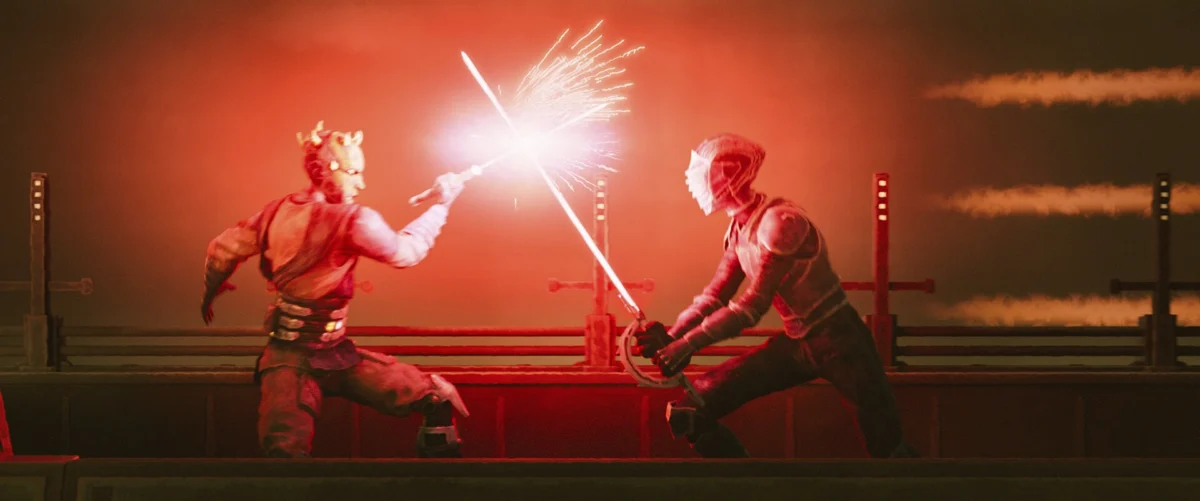
With a darker, more mature tone, a revolutionary painterly art style, and a serialized narrative structure that eschews traditional "mission-of-the-week" television tropes, Shadow Lord represents a bold creative leap for Lucasfilm Animation. The series features a desperate Maul seeking retribution against Emperor Palpatine (who discarded him for a younger apprentice, Anakin Skywalker) and the criminal syndicates that abandoned him. Complicating his crusade is an unexpected new obsession: the recruitment of a disillusioned Jedi Padawan named Devon.
Chronology: Fitting the Puzzle Pieces of Maul’s Journey
To understand the narrative weight of Star Wars: Maul — Shadow Lord, one must trace the character’s extraordinary evolutionary arc across the sprawling Star Wars timeline:

- 32 BBY (The Phantom Menace): Maul makes his dramatic debut as Darth Sidious’ deadly apprentice, slaughtering Jedi Master Qui-Gon Jinn before being sliced in half by Obi-Wan Kenobi and plummeting down a reactor shaft on Naboo. He is presumed dead.
- The Clone Wars Era (The Clone Wars): Having survived through sheer hatred and dark-side tenacity, Maul is discovered on the junk world of Lotho Minor by his brother, Savage Opress. Fitted with cybernetic legs by Mother Talzin, Maul builds a massive criminal empire (the Shadow Collective) and briefly captures Mandalore before being imprisoned by Sidious.
- The Early Imperial Era (Star Wars: Maul — Shadow Lord): [NEW SERIES] Set in the vacuum left by his fall during the Siege of Mandalore, Maul navigates a galaxy newly conquered by the Empire, nursing his grievances, evading imperial authorities, and attempting to forge a new path by taking on a Jedi Padawan.
- 10 BBY (Solo: A Star Wars Story): Maul is revealed as the hidden leader of the Crimson Dawn crime syndicate, operating from the shadows of Dathomir.
- 2 BBY (Star Wars Rebels): Stranded on the ancient Sith world of Malachor, an older, unhinged, and desperate Maul seeks an ancient superweapon to destroy the Sith once and for all. His story reaches its tragic end when he tracks down his old nemesis, Obi-Wan Kenobi, on Tatooine and is killed in a swift, poignant duel.
Supporting Data & Production: Redefining Animation Standards
Star Wars: Maul — Shadow Lord breaks technical boundaries that previous Star Wars animated series—such as The Clone Wars, Rebels, and The Bad Batch—have steadily pushed. According to executive producer Athena Yvette Portillo, the transition to a fully serialized format required a total overhaul of the studio’s traditional pipeline.
Unlike episodic cartoons that could be produced out of sequence without narrative friction, a serialized story demanded intense oversight regarding visual and tonal continuity.
"We didn’t want a situation where someone would say episode four looked better than the first," Portillo explained in an interview with IndieWire. "We would constantly go back to earlier episodes and pepper them with what we learn from later episodes. It’s like cooking. You’re taste testing the episodes, then going back in and adding spices to keep it consistent."
Director of Photography Joel Aron leaned heavily into mixed-media techniques to give Shadow Lord a distinct, tactile identity. Moving away from purely digital slickness, the production utilized oil-on-canvas matte paintings, physical brushstrokes on glass panes, and even real-world practical models for spaceships. This hybrid approach yielded a textured, painterly aesthetic that accelerates background rendering while giving the universe a gritty, lived-in texture reminiscent of live-action cinema.

Sound design played an equally vital role. Sound designer David W. Collins bypassed standard digital audio libraries by incorporating actor Sam Witwer’s genuine screams directly into the audio waveforms of the lightsaber swishes. The result is an acoustic profile that transforms lightsabers from elegant, hummed blades into violent, roaring fires cutting through atmosphere and flesh.
Official Responses and Creative Vision
The driving forces behind the series emphasize that Shadow Lord is designed to reframe how audiences view the galaxy’s underbelly during the transition from the Republic to the Empire.
Sam Witwer expressed profound satisfaction regarding the opportunity to further flesh out the character he has championed for over a decade. "It’s been a real surprise that the character continues to evolve and to grow," Witwer noted. "The fun of it is reinventing him every time that we bring him out and learning new things about him… I’ve always had a lot of questions about Maul, and now I feel like I finally have the full vision of his arc throughout Star Wars for the first time in my life."
Supervising Director Brad Rau highlighted Maul’s psychological complexity, describing him as a manipulative yet deeply tragic figure. "He’s a survivor, and dedicated to his causes," Rau said. "He’s also a manipulator, and a very charismatic one at that. He provides a kind of devil on the shoulder of our characters… He’s, in some regards, a relatable character, due to the losses he’s suffered, and the mistakes he keeps repeating."

Co-creator and showrunner Matt Michnovetz addressed how the series handles the looming shadow of the Galactic Empire, consciously choosing a different approach from Disney+’s live-action spy thriller Andor. Rather than placing the boot of the regime directly on the viewer’s throat from scene one, Shadow Lord keeps the Empire at a distance.
"We wanted to make it a menacing, strong, external force that would come in at the right time to push the story forward," Michnovetz stated. Some characters are painfully aware of the galactic disruption the Empire represents, while others remain blissfully—and dangerously—blinded by imperial propaganda promising absolute order.
Implications: A Mirror to Ahsoka and the Future of Star Wars Storytelling
The arrival of Star Wars: Maul — Shadow Lord carries significant implications for the broader canon. By positioning Maul as a mirror image of Ahsoka Tano—another Force-wielder stripped of her home, betrayed by institutions, and indoctrinated into a dogmatic order—Lucasfilm is exploring sophisticated thematic territory typically reserved for live-action prestige dramas.
While Ahsoka ultimately survived her trauma to champion the light, Maul’s trajectory is an inevitable march toward tragic isolation. Yet, the existence of Shadow Lord proves that storytelling in the Star Wars universe does not need to rely on the traditional binary of Jedi and Sith to capture the public imagination.

By anchoring its story in the grey areas of a lawless galaxy—featuring rigid Imperial detectives, morally compromised crime syndicates, and a broken man attempting to rewrite his legacy through an impressionable young Padawan—Star Wars: Maul — Shadow Lord promises to redefine what an animated journey in a galaxy far, far away can achieve. As long as Maul continues to endure, the dark side has never looked so artistically compelling.
