
Into the Surreal: How Netflix’s ‘In Your Dreams’ Redefines Animated Storytelling Through Nostalgia and Chaos
Main Facts
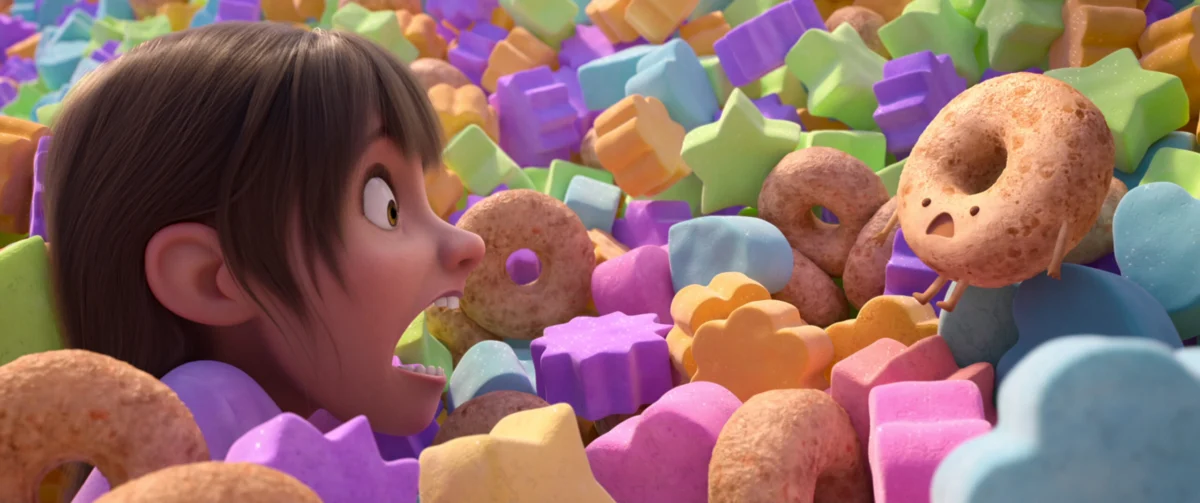
Just as certain absurdities are reserved exclusively for the subconscious—such as showing up unprepared for a final exam on the very last day of school or escaping a suburban neighborhood overrun by the undead—the medium of animation remains uniquely equipped to bring the impossible to life. Netflix’s new animated feature, In Your Dreams, embraces this boundless creative freedom with a delightful, chaotic energy. Directed by Erik Benson and Alex Woo, the film serves as both a whimsical adventure and a deeply imaginative exploration of family dynamics.
The narrative centers on siblings Stevie (voiced by Jolie Hoang-Rappaport) and Elliot (voiced by Elias Janssen). When the pair stumbles upon a mysterious book detailing the legendary Sandman (voiced by Omid Djalili)—the elusive master of dreams—they discover he might possess the world-changing power to alter their reality. Specifically, they hope to use his magic to save their parents’ marriage, a storyline featuring voice performances by Simu Liu and Cristin Milioti. What starts as a desperate bid to fix their family quickly transforms their nightly slumber into a high-stakes, surreal odyssey.
Behind the scenes, the project represents a massive collaborative effort in visual world-building. Co-director Alex Woo drew heavily on the cinematic touchstones of his youth to construct the film’s aesthetic foundation. Growing up split between Hong Kong and the West, Woo immersed himself in both Western adventure classics and Eastern animation, resulting in a vibrant pastiche that bridges Hollywood nostalgia with anime dynamism.
Chronology
The developmental timeline of In Your Dreams reflects the iterative, highly malleable nature of modern feature animation. Long before the film reached Netflix queues worldwide, the creative team spent years establishing the visual language and "grammar" of the dream world.

- Early Conceptions and Influences: Directors Erik Benson and Alex Woo spent early brainstorming sessions curating a list of childhood cinematic inspirations, drawing heavily from the stylistic playbooks of Steven Spielberg (E.T., Hook, The Goonies), Jim Henson (Labyrinth), and Hayao Miyazaki (My Neighbor Totoro).
- The Script and Storyboard Phase: The core narrative involving Stevie, Elliot, and their estranged parents (Liu and Milioti) was mapped out, alongside the framing device of tracking down the Sandman (Djalili).
- Animation and Iteration: Throughout production, the team experimented heavily with the pacing, physics, and tone of the dream sequences. Early iterations leaned aggressively into nightmare territory to test the boundaries of audience intimidation versus trauma.
- Late-Stage Enhancements: Even deep into production, the team utilized animation’s unique capacity for pixel-level precision to add late-stage narrative layers, including Stevie’s witty introductory voiceover designed to catch viewers off guard and establish a meta-narrative tone.
- Release: In Your Dreams officially debuted on Netflix, bringing its blend of family drama and dream-state chaos to global audiences.
Supporting Data
The technical and creative construction of In Your Dreams relies on specific artistic choices that set it apart from standard contemporary family fare.
- Cast & Voice Talent:
- Stevie: Jolie Hoang-Rappaport
- Elliot: Elias Janssen
- The Sandman: Omid Djalili
- Parents: Simu Liu and Cristin Milioti
- Key Visual References:
- Spielbergian "zolly" shots (zoom-in, dolly-out perspective warps)
- Dragon Ball Z-style power-up sequences
- Sailor Moon-esque antic transformation sequences
- Miyazaki-inspired background spirits evolving into Goonies-style menaces in Breakfast Town
- Production Medium: Digital feature animation distributed exclusively via streaming platform Netflix.
Official Responses and Creative Insights
In an interview with IndieWire, co-director Alex Woo opened up about the painstaking process of establishing visual rules for a world with no physical limitations.
"Every film has its own grammar and language, and you have to set up certain rules and pay them off," Woo explained. "The rules of how dreams work and how you go in and out of dreams, all that stuff needs to be established because you can’t take it for granted."
He noted that the seamless transitions between the waking world and the subconscious were among his favorite elements in the entire production. "They’re just purely cinematic," he added.

Discussing his rich tapestry of references, Woo embraced the idea that modern filmmaking is a form of cultural remixing. "Art’s all remix, right? I thought a movie about the dream world was the perfect venue to pull all of these references and movies that I loved and put them in there because you can do so many types of worlds in a dream movie. You have so much latitude, aesthetically and creatively. So it was kind of the perfect movie for me to create a sort of love letter to all these films that I grew up with."
Woo also addressed the fine line between thrilling children and inadvertently terrifying them. Rather than playing it safe from the outset, the team deliberately pushed the envelope during early test screenings.
"I didn’t want to soft pedal anything because, when I was a kid, I really liked kind of being scared at the movies," Woo said. "There’s something thrilling about it, but of course, there’s a line beyond which it becomes traumatizing. But you just don’t know where that line is until you test it out. We had early iterations of the film where we really pushed the intensity of the nightmares because I wanted to see how far we could go with it."
That willingness to adjust and iterate right up until the final cut extended to structural choices as well. Woo highlighted how a late-stage addition—Stevie’s witty, fourth-wall-leaning voiceover guide at the very beginning of the movie—completely changed how viewers process the film.

"We all had that sit-up moment when [the voiceover] comes in and you do that freeze frame. You talk to the audience. Suddenly, people are like, Oh, this is not just a straightforward animated movie," Woo said. "There’s layers to this."
Implications
In Your Dreams arrives at a fascinating crossroads for the animation industry, illustrating the distinct structural advantages animation holds over live-action filmmaking. While live-action productions are largely bound by physical reality, safety regulations, and the constraints of on-set photography, animated features permit a level of micro-management down to the individual frame and pixel. This pixel-level precision enabled Benson, Woo, and their team to continuously refine the film’s tone, pacing, and visual gags right up until the delivery deadline.
Furthermore, the film highlights a broader trend in contemporary family entertainment: the embrace of multi-generational appeal through nostalgic pastiche. By channeling the spirits of 1980s and 90s adventure cinema—ranging from Amblin Entertainment blockbusters to Studio Ghibli masterpieces—In Your Dreams successfully captures the attention of millennial and Gen X parents while delivering a fast-paced, visually arresting comedy-adventure for their children.
By balancing genuine emotional stakes (such as childhood anxiety over a dissolving marriage) with surreal, boundary-pushing dream logic, Netflix and the creative team have crafted a project that proves the subconscious is the ultimate canvas. In Your Dreams is currently streaming on Netflix, inviting audiences of all ages to test the limits of their own imaginations.
