
The Cinematic Revolution in Live Broadcast: RED Digital Cinema Targets IBC 2026
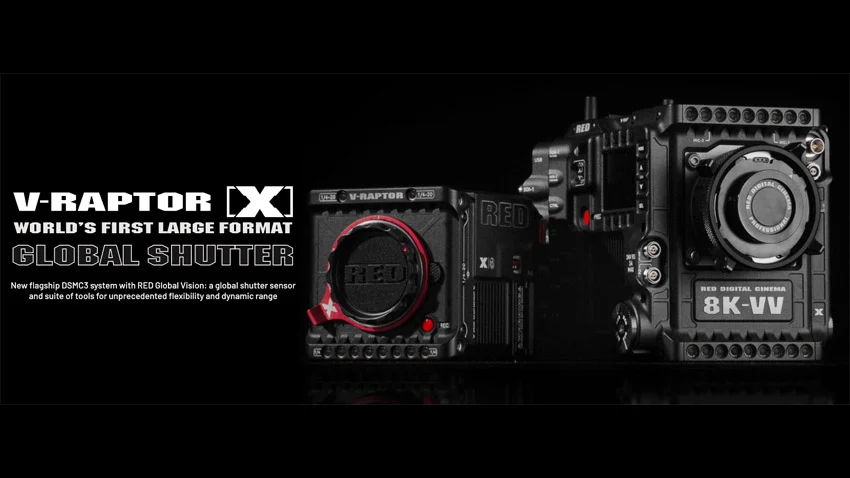
The lines between the polished, pre-recorded aesthetic of Hollywood cinema and the high-octane, split-second demands of live sports and entertainment are blurring. As broadcasters and streaming giants vie for viewer attention, the demand for "premium" visual quality has moved beyond mere resolution. At IBC 2026, RED Digital Cinema is set to make a definitive statement, demonstrating that its high-end cinema platforms are no longer just tools for the film set, but the new standard for the broadcast arena.
From September 11 to 14, RED will transform stand 11.C35 in Amsterdam into a microcosm of the future of live production. With a full-scale boxing ring as the centerpiece, the company plans to showcase its V-RAPTOR ecosystem, proving that 8K resolution, 240fps super-slow motion, and immersive spatial experiences can exist within a standard live-broadcast workflow.
The Main Facts: RED’s Vision for "Cine-Broadcast"
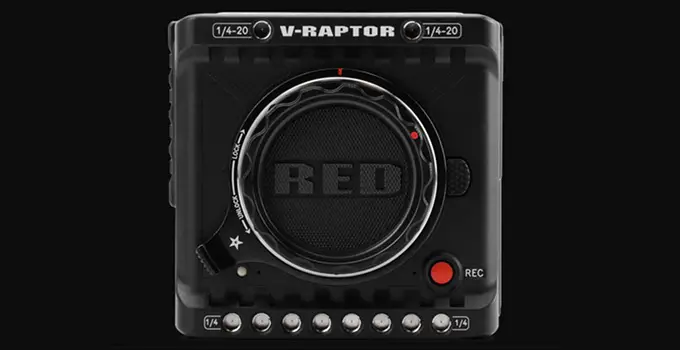
At the heart of RED’s IBC 2026 presentation is the V-RAPTOR camera platform. By integrating the V-RAPTOR XL [X] and V-RAPTOR [X] into a live-production environment, RED is challenging the dominance of traditional broadcast sensors.
The centerpiece of the booth is a high-stakes, real-time demonstration: a live boxing ring setup equipped with overhead V-RAPTOR cameras. These units are fitted with dual-fisheye spherical lenses, capturing 8K video at 50fps. Through "RED Connect," this footage is streamed over fiber in real-time directly to Apple Vision Pro headsets, offering a 180-degree immersive viewing experience.
Beyond the immersive aspect, RED is tackling the "bread and butter" of sports broadcasting: the replay. By utilizing the V-RAPTOR’s ability to capture 4K at 240fps, the booth will demonstrate seamless, super-slow-motion playback integrated into a standard control desk environment. This setup allows for Steadicam coverage and traditional shoulder-mounted broadcast workflows, routing all feeds through standard RCPs and switching equipment.
Chronology: A Trajectory Toward Integration
The journey toward this year’s IBC showcase did not happen overnight. It is the culmination of years of R&D and strategic partnerships.
- Early 2024–2025: RED began aggressively testing its Cine-Broadcast modules in high-profile sports environments. During this period, the company established foundational workflows with major broadcasters, including CBS Sports and NBC Sports Group, to ensure their cinema-grade sensor technology could "talk" to existing broadcast infrastructure.
- Mid-2025: High-impact deployments followed, most notably during the "Ultimate Monolith Show" featuring David Guetta at the Stade de France. This event proved that the V-RAPTOR could handle the rigors of massive, live, multi-camera concert production.
- Late 2025: Partnerships with industry leaders like Fuse Technical Group cemented the camera’s reputation for reliability. Tours for artists such as Jay-Z, Rush, and Zach Bryan utilized RED gear, proving the hardware could survive the demands of intensive live touring and stadium-scale environmental stressors.
- September 2026 (IBC): This marks the formal "coming out" party for the mature Cine-Broadcast ecosystem, where RED transitions from a niche provider to a primary broadcast infrastructure participant.
Supporting Data: Why Cinema Cameras Matter in Live Sports
The shift toward cinema cameras in broadcast is driven by a data-backed need for "image differentiation." Traditional broadcast cameras are optimized for ease of use, speed, and standard dynamic range. However, modern streaming platforms and premium pay-per-view services are pushing for a "film look"—shallower depth of field, superior color science, and the high dynamic range (HDR) latitude that only large-format cinema sensors can provide.
Key Performance Metrics
- Resolution: 8K/50fps for immersive spatial video.
- Frame Rate: 4K/240fps for high-fidelity slow-motion replays, a critical requirement for sports officiating and viewer engagement.
- Dynamic Range: The V-RAPTOR’s sensor offers roughly 17+ stops of dynamic range, allowing operators to capture detail in both deep stadium shadows and bright, direct stage lighting simultaneously—a feat standard broadcast sensors often struggle to match.
- Workflow Flexibility: By incorporating the Cine-Broadcast module, RED ensures that these cameras are not isolated islands but are fully integrated into industry-standard control rooms using fiber-optic signal transmission.
Official Responses and Strategic Positioning
RED’s strategy is clear: they are not fighting the broadcast camera; they are evolving it.
"The goal is not to replace the broadcast camera but to expand the vocabulary of the live director," a spokesperson noted during the lead-up to the event. By providing a "complete cinematic production workflow"—complete with DIT (Digital Imaging Technician) carts, live color grading, and anamorphic lens support—RED is empowering directors to make creative decisions in real time that were previously restricted to post-production.
Furthermore, RED’s participation in the SVG Europe Summit on September 10 highlights their commitment to the broadcast industry’s thought-leadership. By joining Gravity Media to discuss the "Six Kings Slam" broadcast, RED aims to analyze how the cinematic visual style was achieved, providing a blueprint for future broadcasters looking to emulate that high-end aesthetic.
Implications: The Future of Live Media
The implications of RED’s IBC 2026 showcase are significant for several sectors of the media industry:
1. The Death of the "Broadcast Look"
For decades, the "broadcast look" was defined by a deep depth of field and high-contrast, over-sharpened images. As audiences move toward 4K and 8K displays, the "cinematic look"—characterized by buttery bokeh, organic texture, and subtle color grading—is becoming the expectation for premium sports. RED is effectively raising the barrier to entry for what qualifies as "premium" coverage.
2. The Rise of Spatial Broadcasting
The demonstration of 8K streaming to Apple Vision Pro is a signal that RED is betting heavily on the convergence of live event production and extended reality (XR). By capturing 180-degree immersive footage, they are preparing for a future where the "second screen" experience is an immersive headset, allowing fans to feel as if they are sitting ringside.
3. Workflow Convergence
By partnering with over a dozen companies, including EVS, Mo-Sys, and Atomos, RED is ensuring its hardware plays well with others. The "closed" nature of the cinema world is opening up. The fact that RED cameras will appear on 17 different partner stands at IBC indicates that the industry is rapidly accepting the V-RAPTOR as a standard, modular component of the modern control room.
A Broader Ecosystem: Beyond the Booth
While the boxing ring is the main attraction, the true test of RED’s success will be the ubiquity of its gear across the IBC show floor. The list of partners—ranging from lens manufacturers like Laowa and Sigma to motion control experts like Motion Impossible and stYpe—suggests that RED has successfully integrated its platform into the entire broadcast infrastructure.
Whether it is a handheld KOMODO-X rig for agile, roaming coverage or a V-RAPTOR XL [X] mounted on a Dinky Dolly for cinematic dolly shots, the goal is to provide a unified image quality across every angle of a production.
Conclusion: Bridging Two Worlds
RED Digital Cinema’s presence at IBC 2026 is more than a trade show exhibit; it is a manifestation of a shift in production philosophy. The company is effectively proving that the "cinematic" and the "live" no longer require separate hardware silos.
By pushing the boundaries of frame rate, resolution, and real-time connectivity, RED is providing broadcasters with a new set of creative tools. As viewers become more discerning, the pressure to produce content that feels "filmic" will only increase. For directors and producers, the V-RAPTOR ecosystem represents a path forward—a way to maintain the speed and efficiency of a live broadcast while delivering the artistic depth of a major motion picture.
As the industry gathers in Amsterdam, the message from stand 11.C35 is unequivocal: the future of live production is cinematic, it is immersive, and it is happening now.
