
Into the Labyrinth Anew: Guillermo del Toro’s Modern Masterpiece Returns in 3D and 4K
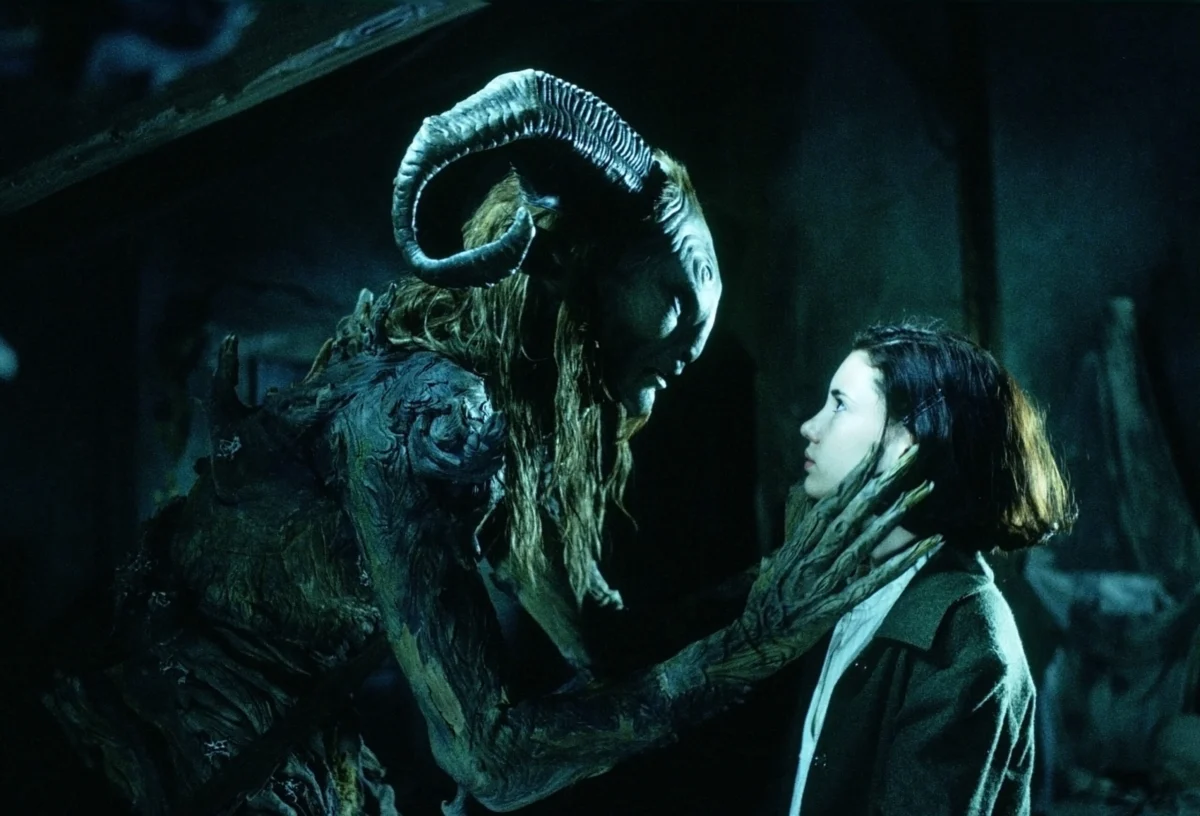
Main Facts: The Return of a Dark Modern Classic
Twenty years after its initial theatrical run established it as a towering achievement in dark fantasy, Guillermo del Toro’s Pan’s Labyrinth is returning to North American cinemas. Scheduled for release on October 9—fittingly, the auteur’s birthday—this is not merely a standard repertory screening or a quick-and-easy catalog transfer. Del Toro has reunited with his most trusted artistic collaborators to mount an ambitious, multifaceted overhaul of the film.
The project introduces a brand-new 3D conversion, an updated color grade, and a completely reimagined sound mix. While the 2006 original famously bridged gritty historical realism with macabre fairy-tale wonder, this new theatrical iteration leverages two decades of technological advancements in cinema. The goal is simple yet daunting: to deepen the film’s immersive qualities, heighten its emotional resonance, and invite audiences back into its haunting world with unprecedented clarity and depth.
Starring Ivana Baquero as Ofelia—a young girl navigating a mythical, terrifying quest in the shadow of the Spanish Civil War—Pan’s Labyrinth won three Academy Awards upon its debut and captivated audiences with its uncompromising blend of staggering beauty and unflinching horror. Now, a new generation of cinemagoers, alongside lifelong fans, will have the opportunity to experience the film on the big screen in a format that its creators promise will breathe vibrant, terrifying new life into the dark corners of the Underworld.
Chronology: From 2006 Realism to 2026 Immersion
To understand the magnitude of this new release, it helps to trace the trajectory of the project from its conception to its current theatrical rollout.

- Summer and Fall 2006: Pan’s Labyrinth premieres at the Cannes Film Festival to widespread critical acclaim before rolling out globally. Its stunning practical effects, sweeping orchestral score, and brutal historical backdrop cement its status as a modern classic.
- February 2007: The film triumphs at the 79th Academy Awards, taking home Oscars for Best Art Direction, Best Cinematography, and Best Makeup, signaling a high-water mark for international dark fantasy.
- The Intervening Years: Over the next twenty years, the film is released on standard-definition DVD, high-definition Blu-ray, and various streaming platforms. While beloved, the digital source elements begin to show their age relative to modern display technologies.
- Late 2025 / Early 2026: Guillermo del Toro conceives the idea to revisit the film. Rather than a routine 4K remaster, he envisions a more radical theatrical experiment: converting the movie into 3D while upgrading its audio and visual color palettes. He recruits a dream team of longtime collaborators: sound designer Scott Gershin, SDFX Studios’ 3D supervisor Aaron Parry, and Company 3 CEO/colorist Stefan Sonnenfeld.
- Mid-2026: The creative team spends months meticulously crafting the new mix, smoothing out historical visual effects "hotspots," expanding the soundscape into Dolby Atmos, and mapping stereoscopic depth.
- October 9, 2026: Pan’s Labyrinth returns to North American theaters in its new 3D and 4K incarnation on Guillermo del Toro’s birthday.
Supporting Data: The Anatomy of a Remaster
Revitalizing a masterpiece that relies so heavily on tactile practical effects and distinct atmospheric lighting requires precise technical interventions across audio, visual, and stereoscopic departments.
- Audio Enhancement: Sound designer Scott Gershin accessed the original stems, only to find that the digital audio technology of 2006 sounded distinctly dated by mid-2020s standards. Utilizing Dolby Atmos, Gershin and his team augmented the foley and background ambiences. Notably, background elements like the rusty cars in the film’s opening sequence were given richer, more period-accurate sonic profiles.
- Stereoscopic Depth: Aaron Parry of SDFX Studios oversaw the 3D conversion. While 3D is historically associated with blockbuster action fare, Parry and del Toro leveraged stereoscopic depth to establish a psychological chasm between the harsh real world of post-Civil War Spain and Ofelia’s surreal, terrifying fantasy realm.
- Color Grading and Visual Correction: Stefan Sonnenfeld at Company 3 approached the color grade with a delicate touch. Crucially, the filmmakers fought to preserve the original 35mm film grain and texture. However, Sonnenfeld was also given the rare opportunity to "massage" visual effects hotspots and minor continuity errors that had plagued del Toro for two decades, utilizing modern digital tools to blend imperfect CGI seamlessly into the overall canvas.
Official Responses: Behind the Scenes with Del Toro’s Inner Circle
The creative team behind the restoration emphasizes that the project was driven by a deep reverence for the original text. Rather than attempting to rewrite the director’s vision, the collaborators acted as cinematic restorers breathing air into a sacred artifact.
Sound designer Scott Gershin drew a colorful analogy to describe his approach to the audio update: "If you’re restoring a Model T, you get Model T parts. You don’t get modern parts." Gershin noted that his primary objective was to craft a sonic landscape that mirrored what viewers imagined they heard two decades ago. "The digital technology being used at the time definitely had its own sound," he explained. "From a sonic standpoint, we wanted the film to be the film you thought you heard 20 years ago."
Once Gershin saw the early 3D tests, however, he realized the sound had to scale up to match the visuals. "Guillermo just said, ‘Listen, would you be willing to go back into the film and modernize it, make it a little more theatrical?’ Then I saw the 3D, and it looked amazing. I realized we needed to increase the level of the audio to match the picture."

Aaron Parry, who previously collaborated with del Toro on his 3D sci-fi epic Pacific Rim, pointed out that Pan’s Labyrinth was uniquely suited for stereoscopic experimentation. "A lot of people think of 3D as something you put on an action movie," Parry said. "But fantasy and drama play so well with a dimensional approach… Guillermo just wanted to bring people deeper into the story, and I think 3D was his solution." Parry emphasized that del Toro was fiercely protective of the film’s organic texture: "He wanted to really say, this is the film, but playing it in 3D is going to add so many more layers of fear and anxiety and mystery."
Stefan Sonnenfeld echoed these sentiments regarding the delicate balance between preservation and correction. "Guillermo had a few hotspots in the film that he never really got to address," Sonnenfeld revealed. "Part of that had to do with technology, in terms of crude visual effects, and part of it had to do with the tools that were available at the time. We massaged some of those scenes with the tools we have now that are common, everyday things."
Beyond the technical achievements, all three collaborators shared a deep appreciation for the creative environment fostered by del Toro. Sonnenfeld praised the director’s infectious enthusiasm and collaborative spirit: "Guillermo is one of the most kind, generous, intellectual, enjoyable people that ever sits in my room. That’s what’s important to me these days. I really want to spend time with somebody I care about who appreciates filmmaking, who appreciates the art and empowers all of us to do what we do."
Implications: Setting a New Standard for Catalog Re-releases
The theatrical re-release of Pan’s Labyrinth in 3D and 4K carries broader implications for how studios approach the preservation and re-exhibition of modern cinematic masterworks.

For years, catalog titles returned to the big screen primarily through flat digital restorations or standard 4K upgrades. By introducing a dimensional 3D component supervised directly by the original filmmaker, del Toro and his team are challenging conventional wisdom about how older films can find new life. Rather than exploiting nostalgia with a simple high-definition up-res, this release treats the film as a living, breathing work of art capable of evolving alongside cinematic technology.
Furthermore, the project demonstrates that 3D technology—when placed in the hands of an auteur who understands spatial storytelling—is not merely a commercial gimmick for blockbusters, but a legitimate narrative tool. By using stereoscopic depth to physically separate the stark cruelty of Francoist Spain from the mesmerizing claustrophobia of the Faun’s domain, the 3D conversion underlines the thematic duality at the heart of the narrative.
As theaters prepare to welcome Ofelia, the Pale Man, and the Faun back to the silver screen on October 9, this ambitious restoration proves that true fairy tales never truly die. They simply find new ways to reach into the dark and pull us deeper into their marvelous, terrifying embrace.
