
The Race for Gold: Analyzing the 2027 Oscar Contenders for Best Cinematography
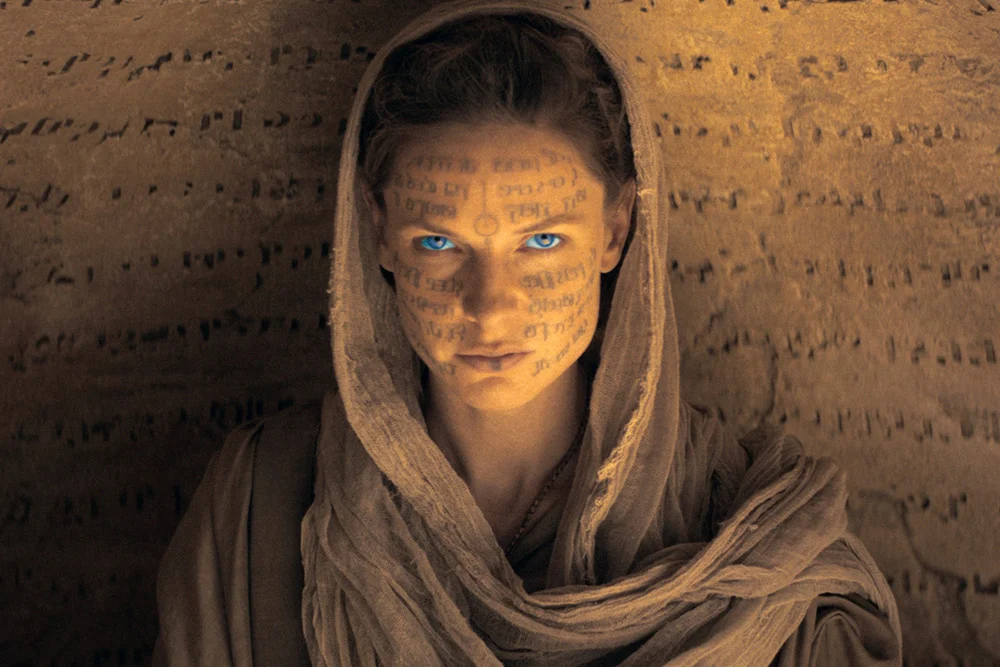
As the leaves turn and the autumn awards season reaches a fever pitch, the industry’s eyes are firmly fixed on the 99th Academy Awards. While the conversation often gravitates toward Best Picture or the acting categories, the race for Best Cinematography remains the heartbeat of the technical awards. Following a historic milestone last year, when Autumn Durald Arkapaw became the first woman to claim the statuette for her evocative work on "Sinners," the 2027 landscape presents a different narrative. Current projections suggest a field dominated by seasoned masters and high-profile studio tentpoles, as the industry navigates a period of significant transition in visual storytelling.
The State of the Race: Masters and New Visions
The current frontrunner in the cinematography race is none other than Hoyte van Hoytema. Having secured an Academy Award for his work on Christopher Nolan’s Oppenheimer in 2024, van Hoytema’s reunion with the director for the colossal project The Odyssey has generated immediate buzz. The film, which has already been lauded for its ambitious scale and technical precision, places van Hoytema in a position to potentially secure his second Oscar in just three years—a feat that would solidify his status as one of the most influential cinematographers of the 21st century.
However, the path to the podium is anything but clear. Linus Sandgren has emerged as a formidable challenger. Stepping into the shoes of Greig Fraser for the final chapter of Denis Villeneuve’s Dune trilogy, Sandgren faces the monumental task of maintaining the visual language established by his predecessor. Fraser, meanwhile, has not stepped away from the spotlight; he remains a heavy hitter in this year’s race with his work on the space opera Project Hail Mary. This creates a fascinating sub-plot: a direct competition between the legacy of a franchise and the inventive new directions brought by its successor.
Notable Contenders and Veteran Presence
Beyond the big-budget spectacles, the field remains crowded with industry stalwarts. Three-time Oscar winner Emmanuel Lubezki is once again in the conversation. Despite a polarized reception for his latest project, Digger, the Academy has historically shown a deep affinity for Lubezki’s singular visual style. His ability to craft immersive, fluid camera movements continues to garner respect among peers, proving that even in the face of narrative criticism, his technical prowess remains undeniable.
The international landscape is also well-represented this year. Łukasz Żal is garnering significant acclaim for his work on the monochromatic drama Fatherland. The film, which relies heavily on high-contrast black-and-white imagery to evoke its period-specific tension, stands in stark contrast to the saturated, expansive palettes of the season’s blockbusters. Additionally, Dion Beebe is being closely watched for his vibrant and kinetic camerawork on the musical biopic Michael. Beebe’s success in balancing the intimacy of the character study with the grand scale of the musical sequences has made him a dark horse in the current prediction models.

Chronology of the 99th Academy Awards Season
For those following the trajectory of the awards season, the coming months are packed with critical milestones that will refine the list of potential nominees.
- November 15, 2026: The Governors Awards take center stage, honoring legends Glenn Close and Ridley Scott with honorary Oscars. This event serves as a major networking hub and often acts as a barometer for the sentiment of the Academy’s voting body.
- December 7–11, 2026: The crucial preliminary voting window for the Oscar shortlists opens across 12 categories, including cinematography.
- December 15, 2026: The Academy announces the official shortlists, narrowing the field and providing a clearer look at the frontrunners for the final nomination phase.
- December 31, 2026: The official eligibility period for the 99th Academy Awards concludes.
- January 11–15, 2027: The formal nominations voting window takes place, during which branch members cast their ballots for the final five slots in each category.
- January 21, 2027: The official Oscar nominations are revealed in a global broadcast, ending months of speculation and setting the stage for the final campaign push.
- March 14, 2027: The 99th Academy Awards ceremony is held at the Dolby Theatre at Ovation Hollywood, hosted by Conan O’Brien, and broadcast live to over 200 territories.
Technical Evolution and Industry Implications
The lack of female representation among the current frontrunners for Best Cinematography is a subject of significant industry discussion. Following the breakthrough success of Arkapaw in 2026, many had hoped to see a sustained momentum in the inclusion of female cinematographers at the highest level of studio filmmaking. However, the current "awards buzz" cycle appears to have regressed toward a reliance on established, often male-dominated, legacy cinematographers.
This trend highlights a broader tension in the industry: the conflict between the desire for fresh, diverse perspectives and the safe, reliable choices necessitated by high-budget, "tentpole" cinema. As studios continue to prioritize billion-dollar franchises, the cinematographers who are entrusted with these projects are often those who have already proven their ability to handle large-scale productions. Consequently, the cinematography branch of the Academy often faces criticism for favoring spectacle over experimentation.
Furthermore, the influence of streaming and international co-productions—such as Fatherland—continues to diversify the aesthetic of the nominees. As digital capture technology continues to evolve, the distinction between "prestige" cinema and genre filmmaking is blurring. Cinematographers are increasingly required to blend visual art with advanced VFX integration, a skill set that has become just as valuable as traditional lighting and composition techniques.
Official Predictions and Fluidity
It is important to note that the predictions provided by the Variety Awards Circuit, led by chief awards editor Clayton Davis, are fluid. These rankings are based on a synthesis of industry buzz, critical response, and historical trends within the Academy. They do not serve as personal endorsements, but rather as an analytical reflection of the current competitive landscape.

As the race enters its final stretch, the "buzz" factor often takes precedence over objective quality. Campaigns, guild screenings, and public appearances by directors and cinematographers can significantly shift momentum in the weeks leading up to the nomination voting. For cinematographers, the challenge is to communicate the "how" behind the "what"—explaining to the Academy members how their specific choices in lighting, lens selection, and camera movement enhanced the narrative arc of the film.
The Road Ahead
As we approach the 99th Oscars, the narrative for Best Cinematography is one of prestige versus innovation. Will the Academy reward the established brilliance of a Hoyte van Hoytema, or will they recognize the unique visual identity of a project like Fatherland? Will the legacy of Dune prove too strong for the competition, or will a newcomer surprise the field?
The coming weeks will offer clarity. With the Governors Awards acting as the first major stop, the industry will begin to see which films have the necessary momentum to carry them to the finish line. For those following the race, the key will be to monitor the guild awards and the critical precursors, as these bodies often align with the Academy’s eventual choices.
Ultimately, the 2027 Best Cinematography race serves as a testament to the enduring power of the image in cinema. Whether through the stark, monochromatic lens of a historical drama or the sprawling, high-concept visuals of a space odyssey, these artists are the architects of our cinematic experience. As the industry gathers in March to celebrate the best of the year, the winner will join a pantheon of visionaries who have defined what it means to see—and to feel—through the camera.
