
The Fractured Legacy: Why ‘The Social Reckoning’ Fails as a Sequel to ‘The Social Network’

In the pantheon of 21st-century cinema, few films have cast a shadow as long or as defined as David Fincher’s 2010 masterpiece, The Social Network. With a razor-sharp screenplay by Aaron Sorkin, a haunting, Oscar-winning score by Trent Reznor and Atticus Ross, and a definitive performance by Jesse Eisenberg, the film became a cultural touchstone—a modern-day Citizen Kane for the digital age. It was a project defined by harmony; every frame, every edit, and every line of rapid-fire dialogue served a singular, cohesive vision.
Now, over a decade later, the release of The Social Reckoning—a project that attempts to serve as a thematic and narrative successor—has arrived with a thud rather than a bang. By attempting to capture the lightning of the original, The Social Reckoning inadvertently proves that the success of The Social Network was a triumph achieved in spite of Sorkin’s tendencies, not solely because of them. It is a film that misses the mark on every conceivable level: narratively, tonally, and structurally.
The Chronology of a Failed Vision
To understand the failure of The Social Reckoning, one must first look at the expectations set by its predecessor. The Social Network concluded with Mark Zuckerberg alone in a conference room, refreshing a browser window while waiting for his ex-girlfriend, Erica Albright, to accept a friend request. It was a perfect, melancholy metaphor for a man who built a global infrastructure for connection while remaining fundamentally incapable of maintaining a single human bond.
For years, the industry whispered about a potential sequel. As Facebook metastasized into Meta and became the center of global political and social controversies, the premise for a follow-up seemed not only logical but necessary. However, the production of The Social Reckoning faced immediate hurdles, most notably the absence of David Fincher’s meticulous directorial hand.

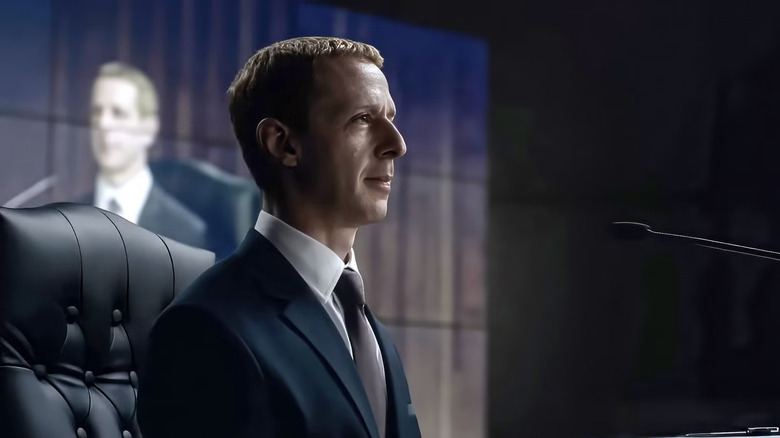
When Aaron Sorkin opted to direct the project himself, the project shifted from a potential character study to an exercise in self-indulgence. The film tracks the whistleblower era of Frances Haugen (played by Mikey Madison) and the investigative work of journalists like Jeff Horwitz (Jeremy Allen White), all while centering on a significantly older, more detached Mark Zuckerberg (Jeremy Strong). Where the original film utilized a dual-timeline structure to build tension, The Social Reckoning uses its timeline to force-feed the audience moralizing exposition.
Supporting Data: A Comparison of Cinematic Craft
The disparity between the two films is best observed through their approach to dialogue and characterization. In The Social Network, Sorkin’s dialogue was a weaponized tool used to highlight the intellectual insecurity and social maneuvering of its protagonists. In The Social Reckoning, the dialogue serves as a soapbox.
The Decline of Nuance
- The Original (2010): Characters spoke in rapid, rhythmic volleys that felt like a fencing match. The brilliance lay in the subtext—what was not said was often more important than what was.
- The Sequel (2024): Characters deliver monologues about the ethics of free speech, the responsibility of tech giants, and the nuances of algorithmic radicalization. It lacks the "show, don’t tell" ethos that defines great cinema, opting instead for a didactic lecture series.
Furthermore, the performances—while featuring stellar actors like Jeremy Strong—feel hollow. Strong’s portrayal of Zuckerberg is a static, robotic imitation that lacks the twitchy, desperate humanity Eisenberg brought to the screen. When a film treats its subject matter as a pamphlet rather than a drama, the characters cease to feel like human beings and begin to feel like mouthpieces for the screenwriter’s current political frustrations.
The Sorkin Problem: The Danger of Self-Direction
One of the most persistent debates in Hollywood is whether a screenwriter should ever direct their own work. Sorkin’s track record provides a clear answer. When paired with a strong, detail-oriented director—such as Bennett Miller in Moneyball or Fincher in The Social Network—Sorkin’s bombastic, heightened reality is tempered. His best work is a collaboration where the director acts as an editor, pruning the excess and grounding the dialogue.

In The Social Reckoning, that filter is entirely absent. The film is plagued by what can only be described as "classic Sorkin nonsense." A prime example is the film’s narrative bookends. The prologue introduces a young woman, played by Portia Doubleday, who is radicalized by Facebook algorithms. In a move that defies narrative logic and leans into extreme self-indulgence, the film reveals in its final act that this same character was a participant in the January 6th insurrection.
This attempt to connect the platform’s technical failings directly to a singular, monumental American tragedy feels less like a narrative choice and more like a desperate grab for gravity. It forces a groan from the audience, not because the subject matter isn’t serious, but because the execution is so clumsy that it cheapens the very real-world consequences it attempts to critique.
Official Responses and Critical Reception
The industry reaction has been largely unified in its disappointment. Critics across major outlets have pointed out that The Social Reckoning fails to earn its place in the canon. Sister publications, including Looper and SlashFilm, have highlighted the film’s inability to reconcile its desire to be an important political thriller with its failure to be a coherent piece of entertainment.
The consensus is clear: the film treats its audience with condescension. It assumes that the viewers need to be lectured on the dangers of the internet, rather than invited to experience a compelling, human-centric story about the people who built it. By eschewing the emotional core of the first film, The Social Reckoning becomes a cold, detached, and ultimately forgettable experience.
The Implications for Future "Legacy" Sequels
The failure of this film serves as a cautionary tale for the industry. When a studio attempts to resurrect a legacy film, they often focus on the wrong elements—the "brand" or the "concept"—rather than the alchemy that made the original work. The Social Network succeeded because of the friction between the script and the director. By removing the friction, Sorkin created a film that is entirely frictionless, sliding off the viewer’s consciousness without leaving a mark.
The implications for the careers of those involved are significant as well. There is a growing sentiment among critics that Aaron Sorkin, for all his talent, has reached a point where he requires a strong creative counterweight. Without someone to say "no," his writing drifts into the territory of The Newsroom—a project so convinced of its own importance that it loses sight of its storytelling obligations.
Conclusion: A Lesson in Restraint
The Social Reckoning is not just a bad sequel; it is a disappointment that highlights the importance of the director’s role in the filmmaking process. While The Social Network remains a timeless examination of ambition, loneliness, and the digital frontier, its successor is a hollow shell that fails to offer any new insight.
It is a reminder that some stories, once told with perfection, should be left alone. When a filmmaker attempts to revisit a masterpiece without the original team that made it possible, they often end up undermining the very legacy they seek to honor. The Social Reckoning will likely be remembered as a footnote in the history of unnecessary sequels, a project that thought it was speaking truth to power but ended up only speaking to itself. For those who still hold the 2010 original in high regard, the best advice remains the simplest: watch the original again, listen to the Reznor/Ross score, and leave The Social Reckoning to the annals of cinematic missteps.
