
David Gordon Green’s ‘Joe’: A Gritty, Atmospheric Southern Gothic Anchored by Nicolas Cage’s Tightly Wound Performance
Main Facts
Director David Gordon Green continues his deliberate flight from commercial Hollywood filmmaking with Joe, a bleak, brutal, and atmospheric exploration of Southern small-town masculinity, economic desperation, and moral ambiguity. Adapted by screenwriter Gary Hawkins from the late Larry Brown’s acclaimed 1991 novel, the film blends the director’s signature stylistic unevenness with visceral, unsettling violence and moments of dark, cynical humor.
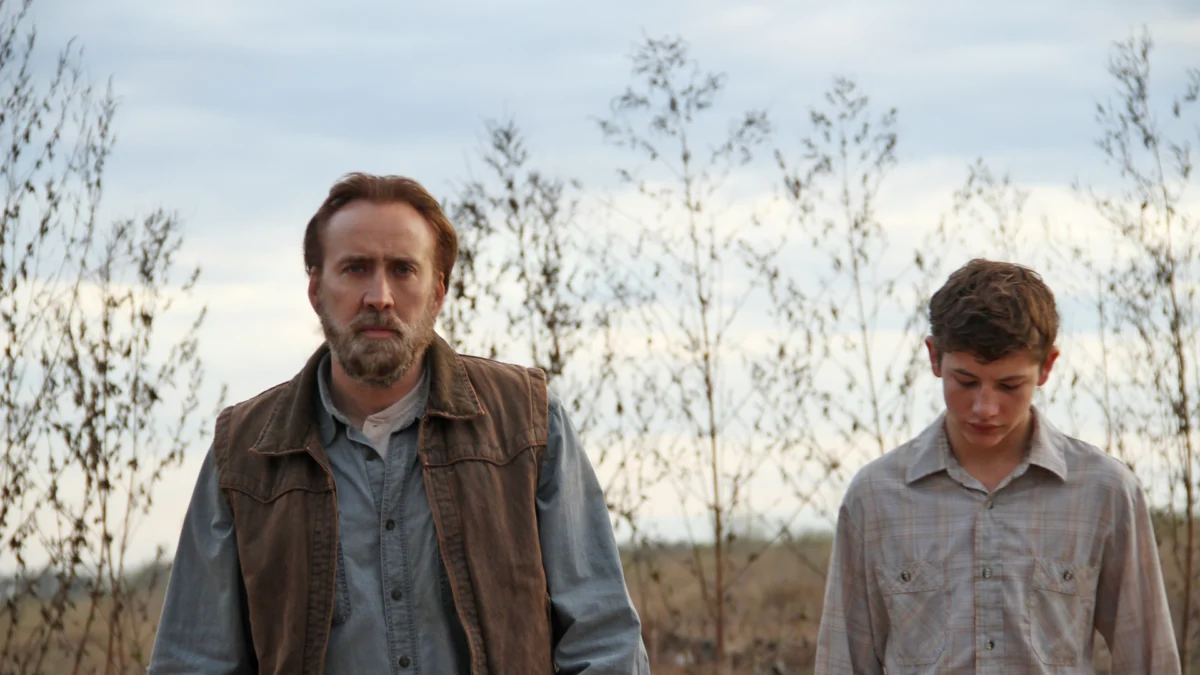
At the center of the narrative is Joe Ransom, portrayed with a grizzled, tightly wound intensity by Nicolas Cage. Joe is a complex archetype: a hard-drinking, gambling ex-convict with an alarming capacity for violence, yet also a community pillar who commands the fierce loyalty of a crew of local day laborers. The plot crystallizes when Joe takes under his wing a hardworking, polite teenage boy named Gary Jones (Tye Sheridan). Gary is struggling to survive under the abusive reign of his alcoholic, parasitic father, Wade (played with harrowing naturalism by the late non-professional actor Gary Poulter).

While Joe offers rich, authentic rural textures, visually arresting cinematography by Tim Orr, and a haunting score by David Wingo and Jeff McIlwain, critics note that its familiar narrative beats and predictable plotting occasionally dilute its narrative momentum. Nevertheless, stellar performances from its lead actors and non-professional supporting cast elevate the film into a compelling, if heavy-handed, modern Southern gothic tragedy.
Chronology
The trajectory of Joe spans its literary origins, its development and casting phases, its production schedule across Texas, and its eventual festival circuit premiere:

- 1991: Author Larry Brown publishes his gritty Southern novel Joe, establishing a reputation for raw depictions of working-class struggles, flawed characters, and moral decay in Mississippi.
- Pre-Production and Adaptation: Screenwriter Gary Hawkins adapts Brown’s novel for the screen, modernizing elements while retaining the core thematic focus on fatherhood, survival, and retribution. David Gordon Green signs on to direct, pivoting back to low-budget independent drama following mainstream studio comedies like Your Highness and The Sitter.
- Casting Phase: Nicolas Cage is cast as the complex antihero Joe Ransom, bringing star power and an unpredictable edge to the arthouse project. Rising young star Tye Sheridan is brought on to play Gary Jones, following his acclaimed breakout roles in The Tree of Life and Mud. Real-life day laborers and local non-professional actors—including Gary Poulter—are cast in supporting roles to maximize regional authenticity.
- Principal Photography: Filming takes place across rural locations in Texas. During production, memorable sequences are captured, including scenes involving local "tree poisoners" and a daring, unproctored stunt where Nicolas Cage handles a live venomous snake.
- March: Tragically, non-professional actor Gary Poulter passes away prior to the film’s release, making his terrifying, critically praised performance as the abusive father Wade his first and final screen credit.
- Festival Premiere: Joe premieres on the international film festival circuit, drawing comparisons to Green’s earlier Southern-gothic thriller Undertow (2004) and his character-driven drama Snow Angels (2007). Reviewers highlight Cage’s powerhouse performance alongside the film’s striking, if familiar, thematic preoccupations.
Supporting Data
The production of Joe relies heavily on a blend of Hollywood star power, regional casting choices, and atmospheric design elements to establish its grim aesthetic:
- Cast & Crew:
- Nicolas Cage as Joe Ransom (grizzled beard, paunch, tattoos, unpredictable yet deeply decent).
- Tye Sheridan as Gary Jones (the resilient, hard-working teenager seeking paternal guidance).
- Gary Poulter as Wade Jones (the irredeemable, abusive alcoholic father in a posthumous debut performance).
- Ronnie Gene Blevins as Willie (the ne’er-do-well antagonist seeking revenge after a brawl).
- Adriene Mishler as Connie (Joe’s part-time girlfriend).
- Director: David Gordon Green.
- Cinematographer: Tim Orr (utilizing a mobile, observant camera style).
- Composers: David Wingo and Jeff McIlwain (delivering a moody, metaphysical score).
- Screenwriter: Gary Hawkins, adapting Larry Brown’s 1991 source material.
- Production Context:
- Shot entirely on location in Texas, utilizing the actual landscape to reflect the characters’ hardscrabble existences.
- Employs real day laborers to form Joe’s all-black lumber crew, adding hyper-realistic texture to the forestry and tree-poisoning sequences.
- Thematic Elements:
- Exploration of class struggle, rural poverty, patriarchal abuse, and modern Southern gothic motifs.
- A runtime of approximately two hours, characterized by slow-building tension, sudden outbursts of violence, and dark comedic interludes.
Official Responses
Reaction to Joe among critics and filmmakers reflects a deep appreciation for its acting masterclass while acknowledging its narrative conventions:

- On David Gordon Green’s Direction: Critics have praised Green’s commitment to returning to his indie roots following studio comedies like Your Highness and The Sitter. Observers note that while his visual style—bolstered by Tim Orr’s patient cinematography—captures the raw atmosphere of rural life, the film’s reliance on familiar white-trash gothic tropes can feel overly calculated. As noted in early reviews, the director "extends his flight from the commercial mainstream with a patiently observed, often unsettlingly violent drama that can’t help but feel overly familiar in some of its particulars."
- On Nicolas Cage’s Performance: Industry analysts and festival reviewers universally spotlight Cage as the film’s strongest commercial and artistic asset. Reviewers emphasize that his portrayal of Joe Ransom strikes a delicate balance between a terrifying capacity for violence and a profound, fundamental decency. His "tightly wound performance" is credited with grounding the film’s more uneven narrative digressions.
- On the Supporting Performances: The casting of non-professional actors, particularly the late Gary Poulter, has drawn widespread critical fascination. Poulter’s naturalistic, chilling portrayal of the abusive father Wade was lauded as a haunting cinematic achievement, while Tye Sheridan’s understated, sensitive screen presence was recognized for anchoring the emotional core of the father-son dynamic established between Gary and Joe.
Implications
The release and critical reception of David Gordon Green’s Joe carry several important implications for the trajectory of independent cinema, the careers of its primary creators, and the ongoing viability of the Southern gothic genre:
1. The Arthouse Viability of A-List Talent
While Nicolas Cage remains a globally recognized cinematic icon, his involvement in Joe underscores a broader trend of major stars utilizing indie-film platforms to showcase raw, character-driven acting. However, critics suggest that despite Cage’s powerhouse performance, the film’s grim subject matter and slow-burn pacing face challenges in drawing mainstream audiences ("average Joes") away from multiplexes and into arthouse theaters. This highlights the ongoing financial divide between commercial studio fare and gritty, independent auteur cinema.

2. David Gordon Green’s Career Trajectory
Joe represents a crucial pivot point in David Gordon Green’s career. Having alternated between sensitive indie dramas (George Washington, All the Real Girls), commercial comedies (Pineapple Express), and studio romps, Green’s return to Southern gothic territory signals a renewed dedication to earthy, atmospheric character studies. The film proves that while Green retains his distinct visual eye and ability to draw magnetic performances from non-professional actors, he also faces the critical challenge of transcending the very genre formulas he frequently revisits.
3. The Evolution of Regional Storytelling and Exploitation Tropes
The film contributes to the ongoing conversation surrounding how rural poverty and blue-collar struggles are depicted in modern media. By drawing directly from Larry Brown’s literary universe and casting local non-professional laborers and actors, Joe achieves an undeniable level of ethnographic authenticity. Yet, the film also invites critique regarding the marginalization of female characters in hyper-masculine, violent environments—pointing to a broader cinematic struggle to modernize traditional Southern gothic narratives without relying solely on testosterone-fueled cycles of retribution and despair.
