
The Death of Sherwood Forest at the Box Office: Why Paul Greengrass’s ‘The Uprising’ and the Modern Robin Hood Curse Failed
Main Facts: The Box Office Collapse of ‘The Uprising’
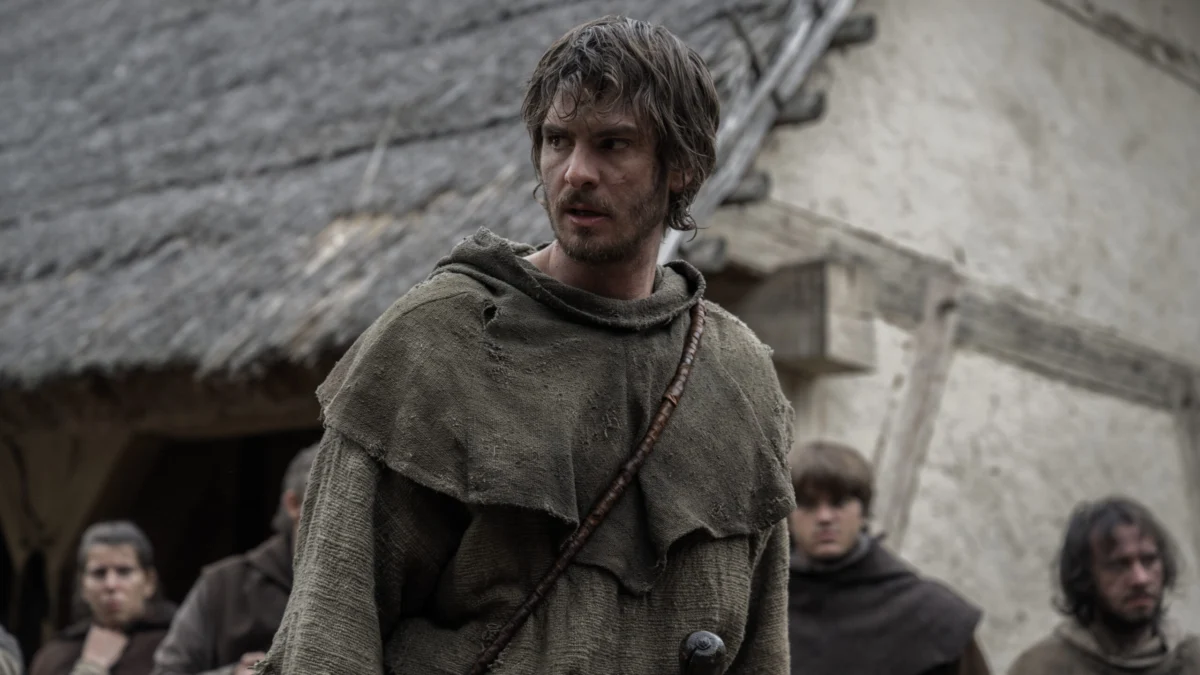
Hollywood’s long-standing romance with the legendary outlaw of Sherwood Forest has run aground once again. Last month, in an eleventh-hour bid to generate mainstream interest, Focus Features executed an aggressive and abrupt pivot in its marketing campaign for Paul Greengrass’s historical drama The Uprising. Originally sold as a gritty, ground-level epic about the English Peasants’ Revolt of 1381, the studio rebranded the feature as a de facto Robin Hood origin story, complete with promotional materials appending the subtitle The Rise of Robin Hood.
The desperate gambit certainly generated industry headlines, but it ultimately failed to move the needle where it mattered most. This weekend, The Uprising debuted to a dismal $3.25 million across 2,068 North American theaters. For a motion picture carrying a modest production budget of $20 million, this opening frame is nothing short of catastrophic. The numbers look even bleaker when considering the star power attached to the project: headliner Andrew Garfield is both an Academy Award nominee and the former face of a billion-dollar superhero franchise (The Spider-Man films).
Compounding the weak opening is a lukewarm "B-" CinemaScore from opening-night audiences, signaling that toxic word-of-mouth will likely stunt any potential legs at the box office. While Focus Features will undoubtedly take a financial hit, its fiscal exposure was mercifully calculated. The indie studio acquired domestic distribution rights for $11 million, pouring millions more into marketing and prints. Even so, the domestic and international returns mean the studio will struggle to recoup its investment, rendering The Uprising yet another casualty in a string of misfires for medieval cinema.
Chronology: A History of Hollywood’s Robin Hood Reboots
To understand how The Uprising landed in this precarious position, one must look back at how the cinematic landscape has treated the legendary archer over the decades. The trajectory of Sherwood Forest on the silver screen reads as a cautionary tale of diminishing returns.
The Glory Days: 1991
In the early 1990s, the archetype was still a golden ticket. Kevin Costner’s Robin Hood: Prince of Thieves (1991) stormed theaters as a massive summer blockbuster. Buoyed by his consecutive triumphs in Dances With Wolves and Field of Dreams, Costner—despite famously dropping his British accent midway through the film—carried a $60 million production to a staggering $390.5 million global haul. It stood as the third-highest-grossing film of that year, proving that audiences were eager for grand-scale medieval heroics.
The Prestige Swing: 2010
Nearly two decades later, Hollywood attempted a prestige reinvention. Ridley Scott reunited with his Gladiator star Russell Crowe for a gritty, historical-realism take simply titled Robin Hood (2010). Universal Pictures backed the endeavor with a hefty $237 million budget, envisioning a sweeping cinematic trilogy. However, audiences were cold to the grim, politically dense interpretation. The film limped to a disappointing $321.7 million worldwide, prompting the studio to quietly scrap all plans for sequels.

The Gritty Gen-Z Attempt: 2018
Hoping to capture a younger demographic, Lionsgate rolled the dice on a youthful, stylized, and fast-paced aesthetic in 2018. Starring a 29-year-old Taron Egerton alongside Jamie Foxx, this iteration of Robin Hood was designed to look like a hyper-kinetic action movie disguised as a period piece. Costing $100 million to produce, the film cratered domestically and grossed a meager $86.5 million globally, cementing the notion that standard action-hero tropes were failing to modernize the folklore.
The Modern Double-Blow: 2026
The current year has proven particularly brutal for outlaws. Alongside Focus Features’ gambit with The Uprising, A24 threw its hat into the ring with The Death of Robin Hood. Boasting a comparable $20 million budget, A24’s project limped to a paltry $9.5 million globally, including just $5.4 million domestically. With both films faltering in the same calendar year, industry analysts are openly questioning if the cultural capital of Robin Hood has officially expired.
Supporting Data: The Demographics and Economics of Medieval Cinema
A deeper dive into contemporary box office data reveals stark shifts in audience behavior, particularly regarding younger demographics.
- The Generation Gap: Data from recent theatrical runs suggests that Gen Z moviegoers possess little to no affinity for traditional folklore heroes. While older generations grew up on Errol Flynn swashbucklers, television adaptations, or Costner’s 1991 blockbuster, younger audiences view the character as archaic or narratively exhausted.
- The Nolan Exception: In the current cinematic climate, historical epics and distant-past dramas face an uphill battle at the ticket counter. Industry analysts note that historical spectacles are virtually unsellable unless directed by an auteur of Christopher Nolan’s caliber (exemplified by the massive global success of Universal’s The Odyssey). Standard period pieces without modern, high-concept hooks routinely struggle to attract casual moviegoers.
- Budgetary Safeguards: Focus Features’ strategy with The Uprising highlights a broader shift in indie-studio risk management. By capping its acquisition cost at $11 million rather than financing the full $20 million production, Focus insulated itself from catastrophic corporate losses. Nevertheless, the underperformance highlights the harsh reality that even mid-budget prestige pictures are failing to clear profitability hurdles.
Official Responses and Creative Rationales
Faced with mounting criticism over the late-stage marketing pivot, executives and filmmakers have defended their choices, pointing to the narrative realities of the project itself.
Industry insiders note that Focus Features likely evaluated pre-release tracking data weeks before the premiere. Recognizing that a straightforward, bleak historical drama about the Peasants’ Revolt of 1381 would struggle to draw a general audience, executives asked a pragmatic question: Why not pivot toward the most recognizable adjacent IP?
Though critics slammed the marketing shift as "ham-fisted" due to the sudden introduction of the Rise of Robin Hood subtitle, studio defenders argue it stopped short of false advertising. Director Paul Greengrass has openly acknowledged that the structural architecture of The Uprising naturally paves the way for the legendary archer’s formation. The narrative climax of the film purposefully sets up the iconic outlaw’s next chapter, operating as a true origin story rather than a standalone historical vignette.

"We built a world that explains how these grassroots uprisings birthed the legend," a source close to the production noted during the film’s press cycle. "It was an organic evolution of the text, not a studio fabrication."
Implications: What This Means for the Future of Hollywood
The disastrous box office opening of The Uprising carries significant ripple effects for both specialty studios and major Hollywood players.
1. The Death of the Mid-Budget Historical Drama
For years, the mid-budget film ($15M–$40M) has been squeezed out by massive IP-driven blockbusters and micro-budget horror. The Uprising proves that even with an acclaimed director like Paul Greengrass and an A-list star like Andrew Garfield, historical dramas can no longer rely on cinematic pedigree alone to draw crowds. Studios will likely become even more risk-averse, pulling back on greenlighting original or niche period pieces.
2. The Exhaustion of Classic Public Domain IP
The repeated failures of Robin Hood adaptations—from Ridley Scott’s expensive misfire to Taron Egerton’s action-heavy reboot, and now A24 and Focus Features’ 2026 double-feature collapse—prove that public domain status does not guarantee commercial viability. Simply retelling a familiar story with a "gritty" or "dark" twist no longer fools modern audiences who demand genuine novelty rather than recycled folklore.
3. The Limits of Marketing Gymnastics
Focus Features’ eleventh-hour attempt to rebrand The Uprising as a Robin Hood movie demonstrates the desperation studios feel when tracking numbers flash red. However, the strategy backfired, confusing potential arthouse audiences while failing to trick mainstream action fans. The lesson for distributors is clear: you cannot market a film out of a fundamental lack of audience appetite.
Ultimately, as The Uprising fades from multiplexes, fans of the legendary archer may have to accept a sobering reality. For the foreseeable future, Sherwood Forest is closed for business, and the legendary outlaw has officially been retired from the big screen.
