
The "What If" of the Final Frontier: How Strange New Worlds Almost Ended with Season Four
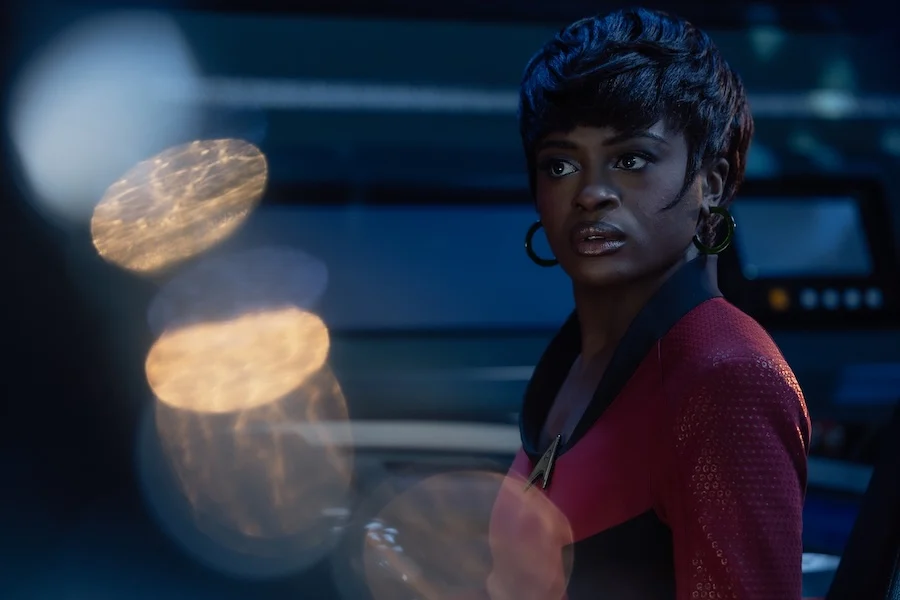
In the ever-evolving landscape of modern television, few shows occupy as precarious and celebrated a space as Paramount+’s Star Trek: Strange New Worlds. As a prequel series tasked with bridging the narrative gap between the era of Captain Pike and the legendary five-year mission of Captain James T. Kirk, the series has consistently navigated a tightrope of canonical expectations and creative freedom. However, behind the scenes, the production team has been operating under a different kind of pressure: the uncertainty of television renewal cycles.
In a candid interview with Space.com, showrunners Akiva Goldsman and Henry Alonso Myers revealed that the high-stakes, time-travel-heavy season four finale, "Tomorrow’s Enterprise," was originally penned as a potential series closer. This disclosure offers a fascinating look into the “safety net” storytelling method employed by the Strange New Worlds writers’ room—a strategy designed to ensure that even if the network pulled the plug, the series would go out on a high note, providing a sense of closure to the crew of the U.S.S. Enterprise.
The Architecture of an Ending
The revelation that "Tomorrow’s Enterprise" was engineered to serve as both a seasonal climax and a series finale provides a new context for the episode’s density. Season finales in the Star Trek franchise often rely on "reset button" mechanics or cliffhangers, but for the Strange New Worlds team, the stakes were existential.
“It was almost the episode to end the show with,” Akiva Goldsman explained. “We didn’t know whether we were going to have a season 5. So, we built a thing that was going to serve as a potential season finale. Fortunately, as we were still breaking it, we ended up with our season 5. So we then reengineered a bunch of things to not end the show.”
This "reengineering" process is a hallmark of modern streaming television, where production schedules and renewal announcements often move at different speeds. By crafting an episode that could function as a definitive end, the writers ensured they wouldn’t be caught off guard by a cancellation, effectively protecting the legacy of the show from the abruptness that has plagued other sci-fi series in recent years.
Chronology of a Creative Pivot
The decision to treat season finales as potential end-points is not a new development for the Strange New Worlds production team. According to the showrunners, this has been an ongoing philosophy since the series began.
The chronology of this specific creative pivot is telling:
- Initial Conception: The team began mapping out the narrative trajectory for the season four finale, focusing on themes of legacy, time travel, and the inevitable passage of the torch to the The Original Series (TOS) era.
- The "End-of-Show" Contingency: As the script for "Tomorrow’s Enterprise" began to take shape, the writers consciously integrated plot devices that could serve as a series conclusion. This involved highlighting the future trajectories of various characters, effectively providing a glimpse of their ultimate destinies.
- Renewal Realization: Mid-way through the scripting phase, the team received word that a fifth season had been greenlit.
- The Re-engineering: The script was adjusted. Elements that felt too "final" were softened or recalibrated to maintain the status quo of the current timeline, allowing the show to continue into its fifth season without the narrative burden of having already concluded.
The Influence of "Frequency" and Time Travel Philosophy
One of the most compelling aspects of the Strange New Worlds production process is how the team approaches time travel—a trope that has been central to the franchise since the 1960s. Henry Alonso Myers noted that the team intentionally seeks to reinvent the mechanics of time travel for each iteration to avoid stagnation.
"Every time we hit it, we try to approach time travel completely differently," Myers stated. "This is that rare season where we’ve got two [episodes involving time travel], and they could not be more different in the time travel genre."
For "Tomorrow’s Enterprise," the creative team drew specific inspiration from the 2000 film Frequency. The concept was to facilitate a dialogue across time, specifically focusing on the communications officer. The idea of a character having a profound, life-altering discussion with their future or past self serves as the emotional anchor for the episode. This approach moves away from the "temporal cold war" tropes often found in Star Trek and instead pivots toward the intimate, character-driven storytelling that has defined Strange New Worlds.
Emotional Cores and the "Star Trek" Identity
The showrunners emphasized that the ultimate goal was never just to provide fan service or lore-building. Instead, the focus was on the internal growth of the characters. Myers articulated the philosophy behind the episode: “There’s always something for you to learn from who you’re going to become, and there’s always something for you to learn from the person who you used to be.”
This sentiment strikes at the very heart of the Star Trek experience. The franchise is, at its core, about discovery—not just of new worlds, but of the self. By using time travel as a mirror, the writers allowed the characters to confront their own potential, their regrets, and their future, all while keeping the audience in suspense.
"We get to tell a show about who we used to be, and for that, everything’s a surprise for them," Myers added. "People going through this journey have no idea what they’re going to become."
Implications for the Future of the Franchise
What does this mean for the upcoming fifth season? While the showrunners were tight-lipped about the specific changes made during the "reengineering" phase, the implications are significant. It suggests that the writers have a clear, predetermined roadmap for where these characters are heading.
The glimpses into the future of the crew members—particularly those who do not appear in The Original Series—may still be reflective of the long-term vision the showrunners have for their arcs. Even though the finale was altered to prevent the show from ending, the "seeds" of those destinies were likely left in the soil. Fans can reasonably assume that while the immediate "series finale" threat has been averted, the emotional, character-defining beats that were meant for the final episode will likely manifest in the final season.
As we look toward the release of the final season, the narrative of Strange New Worlds remains one of the most compelling stories in science fiction. By balancing the cold, hard reality of television production with a deep, reverence for character development, the showrunners have managed to create a series that feels both planned and spontaneous.
The "What If" scenario of the season four finale serves as a reminder of the fragility of serialized television. It highlights the dedication of the creative team, who, even under the shadow of a potential cancellation, prioritized the integrity of their characters. Whether the upcoming conclusion lives up to the weight of "Tomorrow’s Enterprise" remains to be seen, but one thing is clear: the crew of the Enterprise is in capable hands.
As the countdown to the final season begins, viewers are left with the anticipation of seeing how these threads of time and character will finally be woven together into a coherent, lasting legacy. If the previous seasons are any indication, the final journey of Strange New Worlds will be one that explores the final frontier with the same boldness and heart that defined the original crew, proving that even when a show is built to end, the stories it tells can last forever.
