
From Page to Projection: Author Maha Harada’s Cinematic Metamorphosis
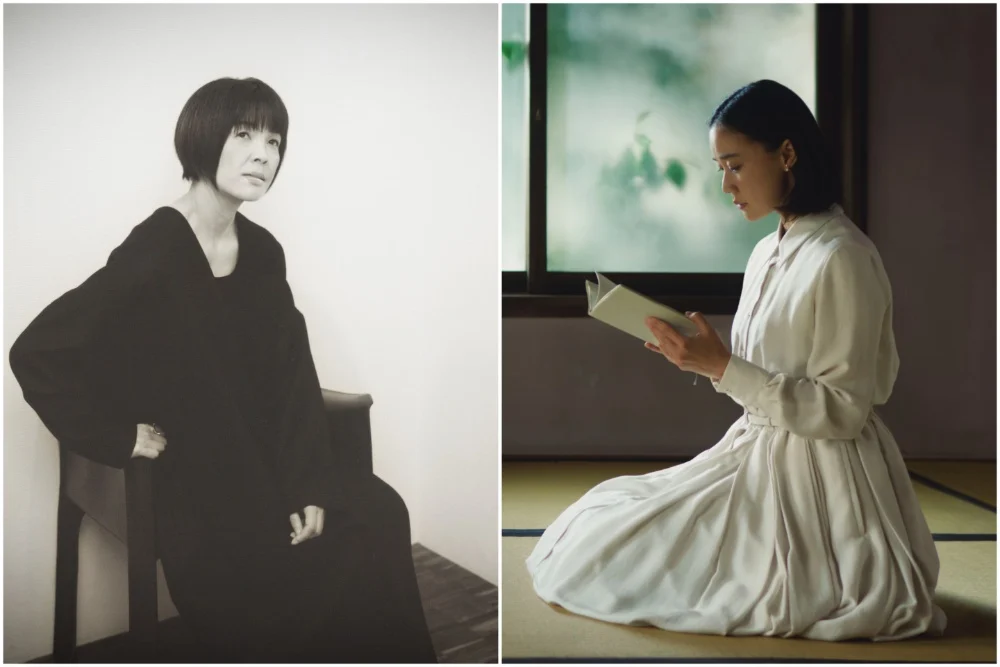
For two decades, the literary world has known Maha Harada as a master of the written word—a best-selling Japanese novelist who meticulously constructed intricate worlds through prose. Now, at 64, Harada is stepping out from behind the desk and into the director’s chair. Her feature directorial debut, In My Father’s Room, serves not merely as a change of medium, but as a profound expansion of her artistic philosophy. Adapted from her own short story, An Unnecessary Man, the film has already garnered significant international attention, marking a triumphant entry into the global film circuit.
The Journey to the Screen: A Natural Progression
The transition from novelist to filmmaker might strike some as a radical pivot, but for Harada, it feels like a continuation of a life-long preoccupation with visual storytelling. Long before she considered directing, Harada honed her eye as a museum curator. This professional background fundamentally altered how she approached the page.
"When I write fiction, I tend to depict scenes and the characters’ inner lives as if I am looking through a camera lens," she explains. This spatial awareness made the adaptation of An Unnecessary Man feel remarkably organic. Set in a town where Harada once resided, the film retains a visceral sense of place, rooted in her own intimate memories. She characterizes the narrative as a universal, grounded exploration of the father-daughter dynamic—a story deliberately eschewing melodrama, convoluted schemes, or artificial suspense in favor of a quiet, human truth.
Chronology: From Literary Acclaim to Festival Competition
The project’s momentum has been swift, signaling the industry’s high expectations for Harada’s directorial voice.
- The Literary Origin: Harada’s short story, An Unnecessary Man, establishes the emotional bedrock of the project, drawing heavily from the author’s own life experiences with her father.
- The Development Phase: The script development marked Harada’s initial struggle with the limitations of prose when transposed to cinema. Through a process of rigorous editing and collaboration with her assistant director, she learned to strip away "stage directions" and descriptive narration in favor of visual economy.
- Production: Collaborating with cinematographer Yoshio Kitagawa, known for his work on Evil Does Not Exist, Harada sought to bridge the gap between traditional Japanese aesthetics—specifically the tea ceremony (chanoyu)—and the spiritual, minimalist intensity of Mark Rothko’s paintings.
- Sales and Distribution: Ahead of its festival premiere, the sales agent Bitters End secured distribution deals across France, Korea, Taiwan, and Hong Kong, proving that the film’s themes possess a resonance that transcends borders.
- Festival Circuit: The film is currently slated for competition at the prestigious San Sebastian Film Festival, followed immediately by an appearance at the Busan International Film Festival.
Supporting Data: The Anatomy of a Personal Narrative
At the heart of the film lies the story of Satomi, a museum worker who gains a profound, belated understanding of her father, Yuichi, only after his death. The character of Yuichi is a poignant reflection of Harada’s own father—a man who dealt in art books, possessed a love for cinema and gambling, and was, in her words, "always causing trouble."
Yet, it was this same "troublemaking" father who introduced a ten-year-old Harada to Picasso and took her to screenings of Gone with the Wind and The Castle of Sand. It was a formative education that only fully crystallized in her mind after he had passed away.
The film serves as an interrogation of societal "usefulness." Yuichi is a man without money or status, yet Harada insists his life was an unmitigated success because he lived entirely on his own terms. "Whether or not you’re happy is something you decide for yourself," she asserts. By framing Yuichi’s solitary death not as a tragedy, but as the final act of a man who pursued what truly mattered to him, Harada challenges the audience to redefine their metrics of a life well-lived.
Official Perspectives: Crafting the Aesthetic
The visual language of In My Father’s Room is an exercise in restraint. Harada collaborated closely with Yoshio Kitagawa to ensure that the camera captured the silent, symbolic weight of the tea ceremony. She notes that Japanese museums collectively house ten Rothko paintings—acquisitions made by visionary curators long before the artist achieved mainstream astronomical prices. For Harada, pairing the quietude of the tea ceremony with the expansive color fields of a Rothko painting was a way to synthesize Eastern and Western sensibilities into a singular visual harmony.
The performances further reflect this minimalist approach. Yu Aoi, portraying Satomi, delivers a performance of profound interiority. Harada highlights a scene where Satomi returns home after being laid off; the simple act of leaving a water tap running becomes a vessel for overwhelming despair, a moment so potent that Harada admits she occasionally forgot to call "cut." Similarly, Issey Ogata’s portrayal of the father brings a "lived-in warmth" to the screen, particularly during the intricate, meditative sequences of the tea ceremony.
Implications: The Future of a Dual-Career Path
The implications of Harada’s move into directing are significant for both the literary and film communities. By entering the film industry at 64, Harada is actively dismantling the ageist prejudices that often dictate career mobility in the arts. She views this leap not as a late-in-life change, but as a testament to the fact that creativity does not have an expiration date.
Furthermore, the success of In My Father’s Room demonstrates a growing appetite for stories that prioritize emotional authenticity over high-concept spectacle. Harada’s ability to move between the novel and the screenplay offers a blueprint for other authors who may wish to adapt their own work but fear the loss of control inherent in the cinematic process.
"I have realized that a novel is, in many ways, an exercise in total control—every detail the reader sees is governed by the author," Harada reflects. "On a film set, you must allow your collaborators the room to interpret, to add their own vision." This realization led her to cut her script down until the dialogue was sparse, allowing the visuals and the actors’ presence to do the heavy lifting.
As for the future, Harada is not choosing between her two passions. She plans to continue writing novels while pursuing new directing projects. She acknowledges that the dual path will be "twice as hard," but with a smile, she adds that it will be "twice as wonderful."
For an artist who spent twenty years perfecting the art of building scenes on the page, the transition to the screen has been, in her own words, a "dreamlike experience." As the festival circuit beckons, Maha Harada stands at a unique crossroads, proving that whether through ink on paper or light on a screen, the most compelling stories are those that dare to find beauty in the ordinary. The film stands as a testament to her philosophy: that a life, like a story, is measured not by its utility, but by the integrity with which it is lived and the depth with which it is felt.
