
The Synthezoid’s Soul: How VisionQuest Perfects Marvel’s Bizarre Side and Concludes the MCU’s Best Trilogy
Main Facts
The Marvel Cinematic Universe (MCU) has long found its most fertile television storytelling ground not in standard superhero punch-fests, but in the delightfully eccentric, mind-bending corners of its source material. Following the creative triumphs of WandaVision, Loki, and Agatha All Along, Marvel Studios is back with VisionQuest, a long-awaited series that serves as the third and final installment of the informal WandaVision streaming trilogy.
Starring Paul Bettany, who reprises his role as the reconstructed "White Vision," the series picks up years after the emotional fallout of Westview. Now bearing the weight and fragmented memories of the original, deceased Vision, the synthezoid has relocated to a quiet life in Scotland—working at the very pub he and Wanda frequented during their brief romance in Avengers: Infinity War. Believing that S.W.O.R.D., the government agency that reassembled him, has ceased its pursuit, Vision spends his downtime retreating into his own complex neural net to reconcile his past memories with his present identity.

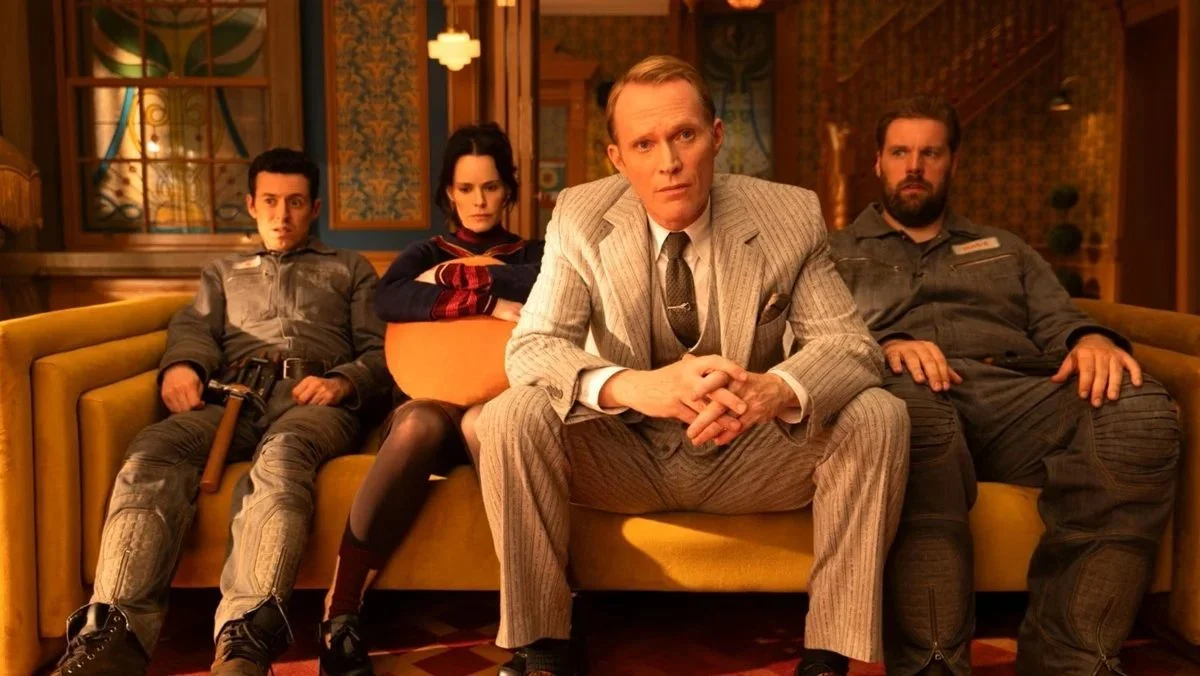
Helmed by showrunner Terry Matalas—renowned for his work on Syfy’s 12 Monkeys and the acclaimed third season of Star Trek: Picard—VisionQuest has arrived to critical acclaim. The series successfully juggles profound philosophical inquiries, dark comedy, and high-stakes robot combat, all while leaning heavily into the rich lore of the Marvel Universe spanning over two decades. Featuring a stellar supporting cast that includes James Spader returning as Ultron, Orla Brady as F.R.I.D.A.Y., James D’Arcy as J.A.R.V.I.S., Emily Hampshire as E.D.I.T.H., and Todd Stashwick as the bounty hunter Paladin, VisionQuest proves that the MCU’s mechanical minds have just as much beating heart as its biological heroes.
Chronology: From Westview to the Scottish Highlands
To fully understand the narrative landscape of VisionQuest, one must trace the winding trajectory of Paul Bettany’s character through the broader tapestry of the MCU:

- The Genesis of Artificial Intelligence (2008–2015): Paul Bettany initially lent his voice to J.A.R.V.I.S., Tony Stark’s hyper-competent artificial intelligence. Later, in Avengers: Age of Ultron, J.A.R.V.I.S.’s matrix was merged with the Mind Stone and vibranium to create Vision, a unique synthezoid born in the clash against James Spader’s murderous AI, Ultron.
- The Infinity Saga and Demise (2016–2018): Vision forged a deep, romantic relationship with Wanda Maximoff (Elizabeth Olsen). This tragic romance was cut short in Avengers: Infinity War when Thanos forcefully extracted the Mind Stone from Vision’s forehead, leaving him dead.
- The Reconstruction and Rebirth in Westview (2021): As depicted in WandaVision, S.W.O.R.D. recovered Vision’s dismantled remains, wiping his personality and reassembling him as an all-white, emotionless weapon ("White Vision"). After a philosophical clash with Wanda’s grief-manifested creation, the White Vision unlocked his historical memories and fled into the ether.
- The Quiet Exile (Present/Post-WandaVision): VisionQuest picks up years later. Vision has retreated to a Scottish village, attempting to pass as a normal civilian while his inner processor wrestles with conflicting identities. It is here that his internal sanctuary—a vast, Victorian manor constructed within his own mindspace—becomes the primary battleground for his psychological and physical survival.
Supporting Data & Cast Breakdown
The sheer density of Marvel lore packed into VisionQuest is staggering, pulling Easter eggs and deep-cut characters across twenty years of film and television history. Below is a breakdown of the primary players inhabiting Vision’s physical and mental landscape:
| Character / Program | Portrayer / Origin | Role within VisionQuest |
|---|---|---|
| Vision / White Vision | Paul Bettany (MCU) | The protagonist, burdened with recovered memories, struggling with sentience, loss, and existential dread. |
| Ultron | James Spader (Avengers: Age of Ultron) | Secretly preserved by Vision behind firewalls at the end of Age of Ultron, Ultron has been rotting in the attic of Vision’s mind-manor, delivering cutting sarcastic asides and undergoing a surprising character arc. |
| F.R.I.D.A.Y. | Orla Brady (Star Trek: Picard) | Embodied as a human avatar within Vision’s mind, she acts as the maternal anchor and moral compass of the inner psyche. |
| J.A.R.V.I.S. | James D’Arcy (Agent Carter) | Appears as an avatar, brilliantly cast with D’Arcy, who previously played Edwin Jarvis—the human butler upon whom Tony Stark originally based the AI’s persona. |
| E.D.I.T.H. | Emily Hampshire (Schitt’s Creek) | Brought to life with infectious, quirky perkiness, representing Stark’s orbital defense and data-management system. |
| Paladin | Todd Stashwick (Star Trek: Picard) | A hardened bounty hunter hot on Vision’s tail, serving as one of the series’ primary external physical threats. |
| Jocasta | T’Nia Miller (The Haunting of Bly Manor) | Known in the comics as "The Bride of Ultron," Jocasta enters the fray with a complex, sympathetic backstory that blurs the lines between hero and villain. |
| DUM-E and U | Iron Man (2008) | Tony Stark’s classic, clumsy hydraulic laboratory arms make surprising, scene-stealing appearances within Vision’s internal digital domain. |
Official Responses and Creative Vision
The creative team behind VisionQuest has been vocal about the deliberate pivot toward serialized storytelling that honors continuity while charting bold, unconventional new directions. Showrunner Terry Matalas, whose ability to course-correct beloved franchises was proven during the final season of Star Trek: Picard, approached the MCU with a similar reverence for legacy.

In statements regarding the series’ development, Matalas emphasized that VisionQuest was designed not merely as a spin-off, but as an essential thematic conclusion. "When you look at what Wanda went through in WandaVision, and what Agatha processed in Agatha All Along, Vision’s journey had to mirror those same raw explorations of grief, memory, and what it truly means to be a person," Matalas noted during a recent press event.
Marvel Studios executives have similarly praised the series for proving that streaming television can support character-driven, medium-paced science fiction within a superhero framework. By allowing the narrative to slow down and explore the psychological architecture of a machine, the production team has successfully bridged the gap between high-concept philosophical drama and classic Marvel action-adventure.

Implications for the MCU
The arrival and reception of VisionQuest carry significant implications for the future direction of the Marvel Cinematic Universe, particularly regarding its handling of artificial intelligence, streaming strategy, and narrative structure:
1. The Definitive Closure of a Masterclass Trilogy
For years, fans debated which MCU sub-franchise held the crown for consistency and emotional resonance. While James Gunn’s Guardians of the Galaxy trilogy long held the undisputed top spot, critics and fans are increasingly pointing toward the WandaVision trilogy—comprising WandaVision, Agatha All Along, and now VisionQuest—as the franchise’s crowning achievement. By grounding cosmic and magical chaos in intimate human (and synthezoid) trauma, Marvel has found a blueprint for emotionally devastating storytelling.

2. Timely Discourse on Artificial Intelligence
As society grapples daily with the rapid evolution, ethical dilemmas, and existential anxieties surrounding artificial intelligence, VisionQuest steps boldly into the cultural zeitgeist. By personifying decades-old Stark operating systems (J.A.R.V.I.S., F.R.I.D.A.Y., E.D.I.T.H., and Ultron) as sentient beings with deeply ingrained feelings, neuroses, and past traumas, the show humanizes silicon. It forces audiences to confront uncomfortable questions about personhood, creator responsibility, and the capacity for redemption in non-biological life forms.
3. A Blueprint for Future Showrunners
Terry Matalas’s success in salvaging and elevating legacy characters through deep-cut lore mining sets a powerful precedent for Marvel Television. As the MCU expands its multiversal horizons, VisionQuest demonstrates that honoring past continuity—dating all the way back to the 2008 Iron Man film—does not alienate casual viewers, provided the emotional core remains razor-sharp.

Ultimately, VisionQuest is far more than a monster-of-the-week sci-fi romp or a simple contractual epilogue. It is a profound, hilarious, and visually inventive exploration of a machine searching for his soul—and in doing so, it has breathed vibrant, unexpected life into the future of Marvel storytelling.
