
A Master’s Legacy: Virginia Film Festival to Honor James Gray with Outstanding Achievement in Directing Award
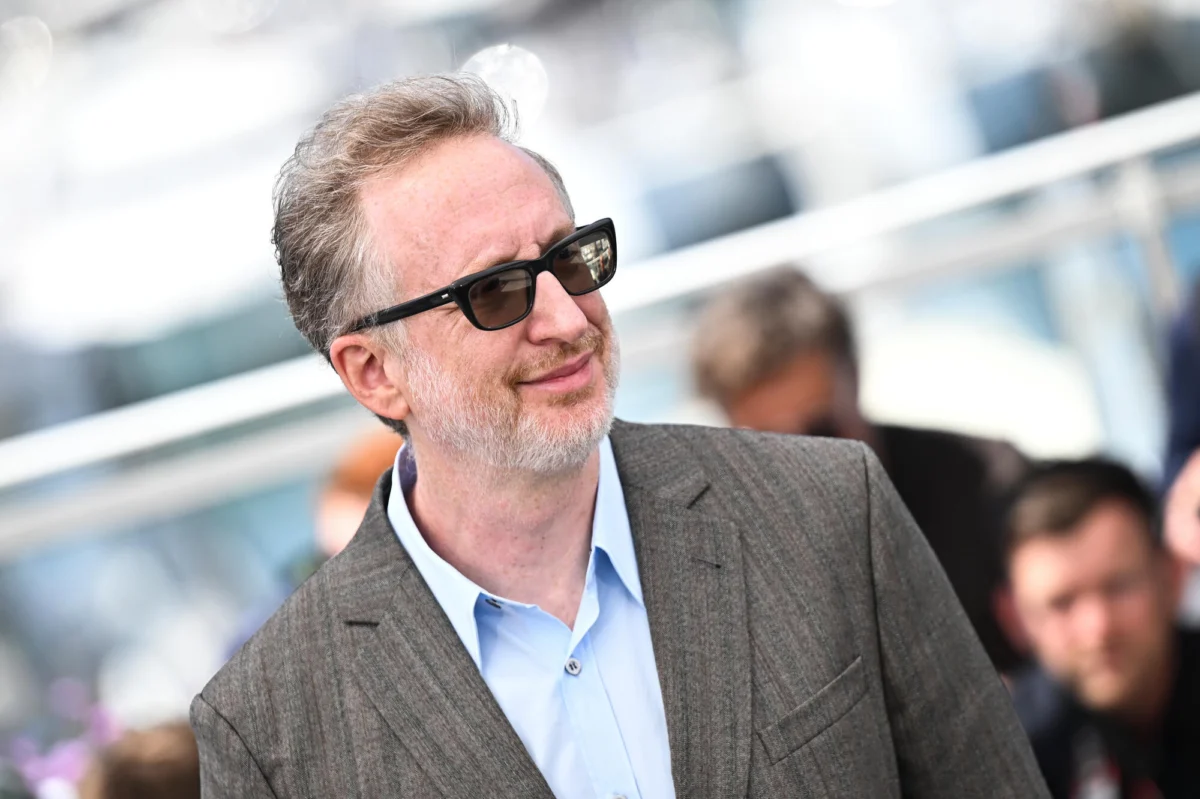
The Virginia Film Festival (VAFF), a cornerstone of the American cultural landscape and a program of the University of Virginia, has officially announced that it will bestow its prestigious Outstanding Achievement in Directing Award upon one of contemporary cinema’s most vital voices: James Gray. As the festival prepares to enter its 39th year, the selection of Gray serves as a profound acknowledgement of a career defined by rigorous intellectual inquiry, visual mastery, and an uncompromising dedication to the human condition.
The honor, which celebrates the entirety of Gray’s body of work, comes at a pivotal moment in the director’s trajectory. Beyond the formal recognition of his career, the festival will host a special screening of his latest feature, Paper Tiger, a film already generating significant critical buzz ahead of its North American premiere.
The Intersection of Film and Discourse: A Live ‘Screen Talk’
The celebration of Gray’s career will extend beyond the red carpet. In a unique collaboration between the Virginia Film Festival and IndieWire, the director will participate in a live recording of the acclaimed Screen Talk podcast on October 22.
The session, moderated by IndieWire Editor-at-Large Anne Thompson and Executive Editor Ryan Lattanzio, promises to be an intimate deep-dive into the craft and philosophy of a filmmaker who has remained a steadfast auteur in an industry increasingly dominated by franchise intellectual property. While the specific venue and time for the event are currently being finalized, organizers have confirmed that the conversation will be open to festival attendees, providing a rare forum for cinephiles to engage with a director whose work is as cerebral as it is emotional. The interview is slated to be broadcast across major podcast platforms the following Friday, offering a wider audience a window into the mind behind Ad Astra and Armageddon Time.
A Chronology of a Singular Career
To understand the gravity of this award, one must look back at the trajectory of James Gray’s filmography—a body of work that has matured with the grace and gravity of the classic cinema he so clearly admires.
The Early Years: Gritty Realism and Moral Ambiguity
Gray emerged on the scene in 1994 with Little Odessa, a film that immediately signaled the arrival of a director obsessed with the intersection of family loyalty and moral decay. Set against the backdrop of the Russian-Jewish community in Brighton Beach, Brooklyn, the film established the themes that would haunt his work for decades: the inescapable weight of heritage, the tragedy of ambition, and the stifling nature of the "American Dream."

The Mid-Career Evolution: Expanding the Canvas
As his career progressed through the early 2000s with films like The Yards and We Own the Night, Gray refined his visual language. He began to favor a style that balanced the grit of neo-noir with the operatic intensity of classical tragedy. By the time he reached Two Lovers (2008), the shift toward more interior, emotionally devastating character studies was complete. This period marked his transition from a director of crime dramas to a master of intimate, psychological landscapes.
The Recent Era: Genre-Bending Ambition
The last decade has seen Gray move into more expansive territory. The Lost City of Z (2016) demonstrated his ability to manage large-scale period production without losing the singular focus on the obsessed individual. With Ad Astra (2019), he took his existential inquiries to the literal edge of the solar system, proving that his thematic concerns—father-son dynamics, isolation, and the search for connection—are universal, regardless of the setting. His semi-autobiographical Armageddon Time (2022) returned him to his roots, grounding his perspective in the specific social and racial tensions of 1980s Queens, cementing his status as a chronicler of the American experience.
Supporting Data: The Paper Tiger Phenomenon
The centerpiece of the festival’s tribute is Paper Tiger, a film that arrives with immense expectation. Starring Adam Driver, Scarlett Johansson, and Miles Teller, the project is being heralded as a return to the thematic terrain that made Gray a critical darling.
- Production Context: The film is currently slated to open the New York Film Festival, a prestigious slot that serves as a launchpad for major awards-season contenders.
- Theatrical Distribution: Neon, the studio behind recent powerhouse releases, has secured a November 13 theatrical release date, signaling a strong belief in the film’s commercial and critical longevity.
- Auteur Consistency: Early reviews suggest that Paper Tiger synthesizes the technical precision of Ad Astra with the intimate, lived-in emotional realism of Armageddon Time, representing a distillation of everything Gray has learned over his three-decade career.
Official Responses: Celebrating the Auteur
The leadership of the Virginia Film Festival has expressed a deep, almost reverent appreciation for Gray’s contributions to the art form.
"James Gray is one of the most singular and deeply human filmmakers working today," stated Ilya Tovbis, the Artistic Director of the festival. "Across nine remarkable features, he has created emotionally rich, visually assured films that examine family, ambition, class, and the elusive promise of the American Dream. We are thrilled to welcome James to Charlottesville to celebrate his extraordinary career and to share Paper Tiger with our audiences."
Jody Kielbasa, the Executive Director of the VAFF, echoed this sentiment, highlighting the educational and cultural value of the tribute. "‘Paper Tiger’ is both an exhilarating new chapter in James Gray’s career and a powerful return to the New York terrain he has explored with such depth and specificity. This honor gives our audience a rare opportunity to hear directly from a master filmmaker about his process, his influences, and the personal vision behind one of the year’s most anticipated films."

The Broader Implications: Why Gray Matters Now
The decision to honor Gray is not merely a retrospective exercise; it is a statement on the importance of the auteur in a changing media landscape. At a time when the film industry is grappling with the rise of artificial intelligence in screenwriting and the consolidation of massive media conglomerates—such as the recent, seismic merger of Paramount and Warner Bros. Discovery—the presence of an uncompromising filmmaker like Gray serves as a touchstone.
Gray has been vocal about his concerns regarding the automation of art, often warning that the "algorithmic" approach to storytelling threatens to hollow out the soul of cinema. By elevating him, the Virginia Film Festival reinforces the value of the "human touch"—the idiosyncratic, flawed, and deeply personal perspective that a computer cannot replicate.
Furthermore, the partnership between the University of Virginia and the festival underscores the role of the institution in fostering artistic literacy. By providing a platform for Gray to speak on his process, the festival acts as a bridge between the high-stakes world of Hollywood and the academic environment of Charlottesville, ensuring that the next generation of filmmakers learns not just the technical skills of the craft, but the intellectual and emotional rigor required to sustain a career in the arts.
Looking Forward
As the 39th Virginia Film Festival approaches, the focus is squarely on the legacy of James Gray. It is a moment to pause and appreciate a filmmaker who has refused to conform to the commercial pressures of his era, choosing instead to build a consistent, challenging, and profoundly beautiful body of work.
The festival, which remains a program of the University of Virginia and the Office of the Provost and Vice Provost for the Arts, is presented this year by The Joseph and Robert Cornell Memorial Foundation. As the autumn leaves turn in Charlottesville, the event promises to be a highlight of the cinematic calendar, proving once again that in the hands of a master like James Gray, the movies remain our most vital mirror.
