
Digital Archaeology and the King of Pop: Marcus Batto’s Reconstruction of a Global Fever Dream
The digital landscape of 2026 is a hall of mirrors, increasingly distorted by algorithmic myopia, the saturation of artificial intelligence, and the slow decay of traditional search engines. As our digital past becomes a blurred mosaic of optimized advertisements and AI-generated filler, the task of reconstructing a single day in the life of the internet has moved from the realm of hobbyism into a vital form of cultural archaeology.
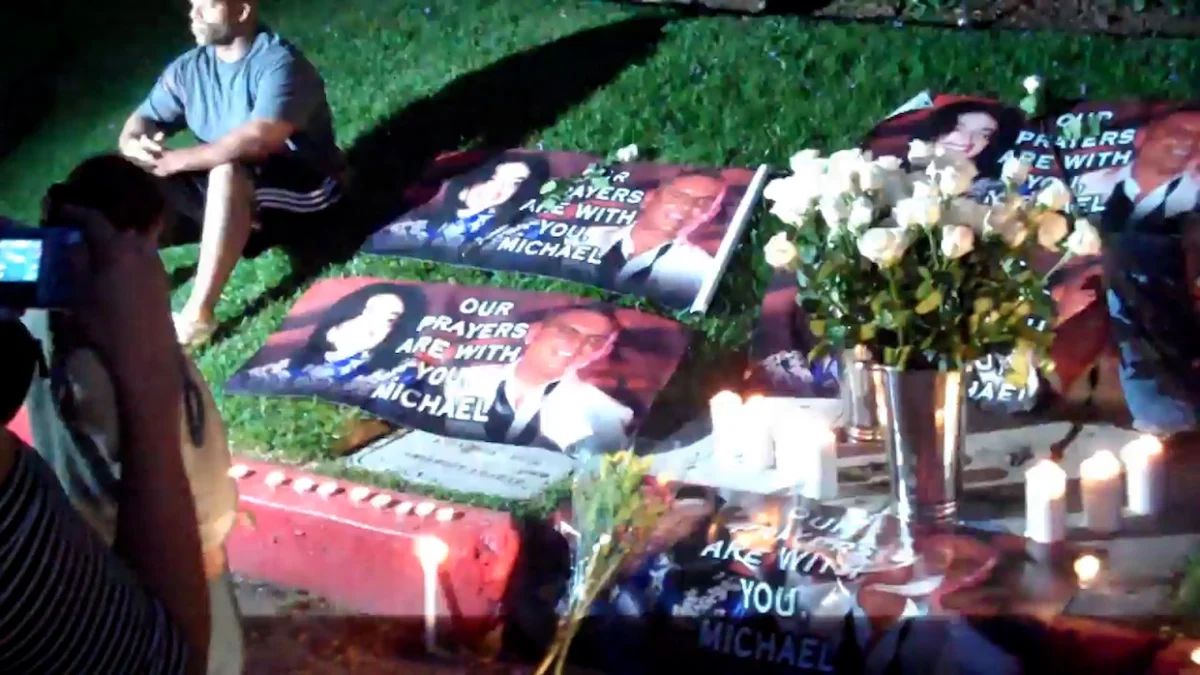
In his debut feature film, There’ll Likely Be Michael Jackson Vigils Throughout the Night, 31-year-old artist, archivist, and programmer Marcus Batto attempts the impossible. He has meticulously reconstructed June 25, 2009—the day of Michael Jackson’s death—exclusively through found footage scavenged from the depths of the internet. The result is more than a documentary; it is a haunting eulogy for a specific era of human connectivity that Batto suggests we can never truly reclaim.
Main Facts: The Vision of a YouTube Ethnographer
Marcus Batto does not identify as a traditional documentarian. Instead, he operates as a "YouTube ethnographer," a title that reflects his lifelong obsession with the platform’s formative first decade. Having grown up in the shadow of the first viral sensations—he was only twelve when "Charlie Bit My Finger" debuted—Batto’s work is deeply rooted in the aesthetic of the early social web.
There’ll Likely Be Michael Jackson Vigils Throughout the Night is the culmination of years of archival labor. The film functions as a 24-hour snapshot of a planet reacting in real-time to a singular cultural shock. By eschewing talking-head interviews and polished news broadcasts in favor of low-resolution vlogs, webcam confessions, and raw street footage, Batto captures the "unfiltered" reaction of a world that was just beginning to realize the power of its own digital voice.
Batto’s previous work set the stage for this ambitious project. His Certain Moments To Remember series (2020–present) focused on "bearing witness to subculture, shared experience, and social phenomena." Notable entries include a compilation of people dancing in front of iMacs at Apple Stores in 2011 and a documentary titled Honeycomb (2024), which explored the 2020–2022 epidemic of catalytic converter thefts through the lens of security cameras and vlogs. In Batto’s world, the act of "looting" rare metals from a car and "looting" rare footage from a forgotten YouTube channel are kindred spirits—both are about finding untapped value in the discarded.
Chronology: From the Death of an Icon to the Birth of an Archive
To understand the film, one must revisit the timeline of June 25, 2009, and Batto’s subsequent journey to preserve it.
June 25, 2009: The Event
On this day, the world learned that Michael Jackson had suffered cardiac arrest at his home in Holmby Hills. As the news broke, the internet experienced a surge of traffic that nearly crippled major sites like Google and Twitter. It was a moment of "diffuse energy harnessed in one direction," as Batto puts it.
2020–2023: The Archival Deep Dive
During the COVID-19 pandemic, Batto began the arduous process of "mining" the day. He utilized a "bottom-to-top" search method, sorting YouTube results by the lowest view counts to find the most intimate, obscure reactions. This led to a playlist of over 800 videos, ranging from emo teenagers sarcastically crying to fans gathering at the wrong Hollywood Walk of Fame star (mistakenly mourning at the star of British radio DJ Michael Jackson).
June 2025: The Work-in-Progress
A preliminary screening of the film was held, but Batto found it nearly impossible to stop "collecting." The obsession with the archive threatened to overwhelm the narrative, as new fragments of the day continued to surface from the digital ether.
2026: The Premiere
The film finally premiered, accompanied by a uniquely curated event that included the giveaway of refurbished third-generation iPod Touches. These devices were preloaded with the film and a specific playlist, serving as a physical "time capsule" for an era of portable media that has since been superseded by the cloud.
Supporting Data: The Mechanics of Digital Memory
Batto’s methodology is as much a technical feat as it is an artistic one. The film’s primary visual device is a rotating prism, where each side displays a five-by-four grid of twenty simultaneous videos. This "overwhelm" is intentional, mimicking the sensory overload of the modern internet scroll while maintaining a focus on a single historical point.
The Volume of Data
- Total Source Videos: Over 800 individual clips curated into a master playlist.
- Visual Complexity: Up to 20 videos playing simultaneously on screen during key segments.
- Global Reach: Footage spans multiple continents, featuring everything from incense swinging in a Spanish cathedral to refugees on lifeboats, all occurring within the same 24-hour window.
The Technological "Innocence"
Batto highlights a specific data point: the rise of the front-facing camera. In 2009, the "vlog" was a nascent genre. The footage Batto found is characterized by a lack of self-consciousness. Unlike the highly curated, filtered, and "monetized" content of 2026, the 2009 archives show people experimenting with technology for the first time, often recording for audiences in the single digits.
Official and Critical Responses: A Double Memorial
The film has been received as a "double memorial"—one for the King of Pop, and another for the internet’s lost innocence. Critics have compared Batto’s work to that of Mitchell and Kenyon, the 19th-century filmmakers who captured "local films for local people." Just as Mitchell and Kenyon’s footage of British factory children reveals a profound curiosity toward the camera, Batto’s footage reveals a similar "technological naivety" in the 2009 mourners.
Artistic Comparisons
The film is frequently discussed alongside Ian Bell’s WTO/99 (2025), another found-footage documentary that chronicled the 1999 Seattle anti-globalization protests. Both films struggle with the "boiling down" of massive archives into a coherent narrative. However, where Bell’s work is political, Batto’s is existential.
The Premiere Anecdote
In a moment of meta-commentary, Batto hired a Michael Jackson impersonator for the film’s premiere. The impersonator reportedly fell asleep halfway through the screening. When asked for his critique, he simply described the film as "okay." This reaction highlights the gap between the "icon" of Michael Jackson and the "data" of Michael Jackson—the film is less about the man and more about the digital wake he left behind.
Implications: The Acceleration of Audiovisual History
Batto’s work raises uncomfortable questions about the future of human memory. If 2009 represents a moment where the internet sounded like a "single chorus," 2026 represents a fractured, fleeting cacophony.
The Fleeting Nature of the Modern Web
When asked if a similar film could be made for a modern figure, Batto expressed skepticism. "It’s all so fleeting," he noted. "You can’t really hold it anymore." The modern internet, driven by ephemeral "stories," disappearing chats, and AI-driven feeds, does not leave behind the same "honeycomb" of data that the 2009 web did.
Digital Obsolescence
The film serves as a warning about the "blurring" of our digital past. As search engines fail and platforms delete old content to save on server costs, the window for this type of digital archaeology is closing. Batto’s film may be one of the last of its kind—a comprehensive look back at a time when we still believed the internet was a permanent record.
The Archival Ethic
Marcus Batto’s work suggests that the role of the filmmaker in the 21st century is evolving into that of a "salvage artist." Like the thieves in his documentary Honeycomb, Batto is waiting at the end of a product’s life cycle, ready to strip it for parts. He is mournful for the lost innocence of the early web, but he is also keenly aware that in the wreckage of the old internet, there are still precious metals to be found—if one knows where to look.
There’ll Likely Be Michael Jackson Vigils Throughout the Night stands as a testament to a world that was briefly united by a single event, captured by a million low-quality webcams, and saved from the brink of digital oblivion by a single, dedicated archivist. It is a film that demands we look at our screens not just as windows to the present, but as the graveyards of our very recent past.
