
The Method to the Madness: Jesse Eisenberg’s The Debut is a Masterclass in Theatrical Satire
By [Your Name/Editorial Staff]
The 64th Annual New York Film Festival (NYFF 2026) served as the grand stage for one of the most anticipated premieres of the year: The Debut, the latest directorial effort from Jesse Eisenberg. A biting, hilarious, and deeply uncomfortable examination of the "method" acting process, the film is a masterclass in tone, balancing the absurdity of community theater with the high-stakes emotional stakes of an existential crisis. Featuring a powerhouse performance from Julianne Moore, The Debut has arrived with the force of a thunderclap, earning a perfect 10/10 rating and establishing itself as an early frontrunner for the upcoming awards season.
The Premise: A Stage for Obsession
At its core, The Debut is a story about the intersection of untapped potential and unhinged obsession. The film follows Mona (Julianne Moore), a suburban housewife whose life is defined by the domestic vacuum of a marriage that has long since lost its luster. When the local community theater’s star, Serena Cherry (Bernadette Peters), is forced to withdraw from a production, a desperate casting call lands the role in Mona’s lap.
Mona is, by any objective metric, an amateur with little to no acting experience. However, what she lacks in technique, she compensates for with a raw, terrifying level of commitment. Guided—and eventually antagonized—by the production’s director, Jerry (Paul Giamatti), Mona decides that if she is to play a building superintendent who collects rent, she must become the superintendent. This simple creative choice serves as the catalyst for the film’s descent into chaotic brilliance.
Chronology of a Breakdown: From Suburbia to Method Madness
The film’s structure follows the linear trajectory of the production schedule, turning the countdown to opening night into a ticking clock of psychological disintegration.
Phase 1: The Casting
The initial scenes of The Debut capture the quintessential, low-stakes atmosphere of community theater. We see the familiar faces of a local troupe, including the talented Stef (Halle Bailey), who provides a grounded, soulful counterpoint to the impending absurdity. When Mona arrives, she is clearly out of her element. Her husband, distant and indifferent, barely acknowledges her new venture, which only fuels Mona’s need to prove her worth to an audience—any audience.
Phase 2: The Deep Dive
As rehearsals progress, Jerry, a director who is as cynical as he is ambitious, begins to push Mona. He demands that she "find the truth" in her character. For most, this would mean character study or voice coaching. For Mona, it means moving into a hotel to "live" the life of an overworked, underpaid building superintendent. She begins fixing toilets, scrubbing floors, and obsessing over the fictional rent of her neighbors. The comedy here is sharp and observational; we watch as the mundane nature of her role turns into a lifestyle choice that defies logic.
Phase 3: The Climax
The final act of The Debut is a masterclass in tension. As the lines between the play and reality blur, Mona begins to improvise, changing the script to suit her "method." Jerry, initially amused by her commitment, realizes too late that he has unleashed a force he cannot control. The film culminates in a chaotic, electric performance that leaves the audience breathless.
Supporting Performances and The Ensemble Cast
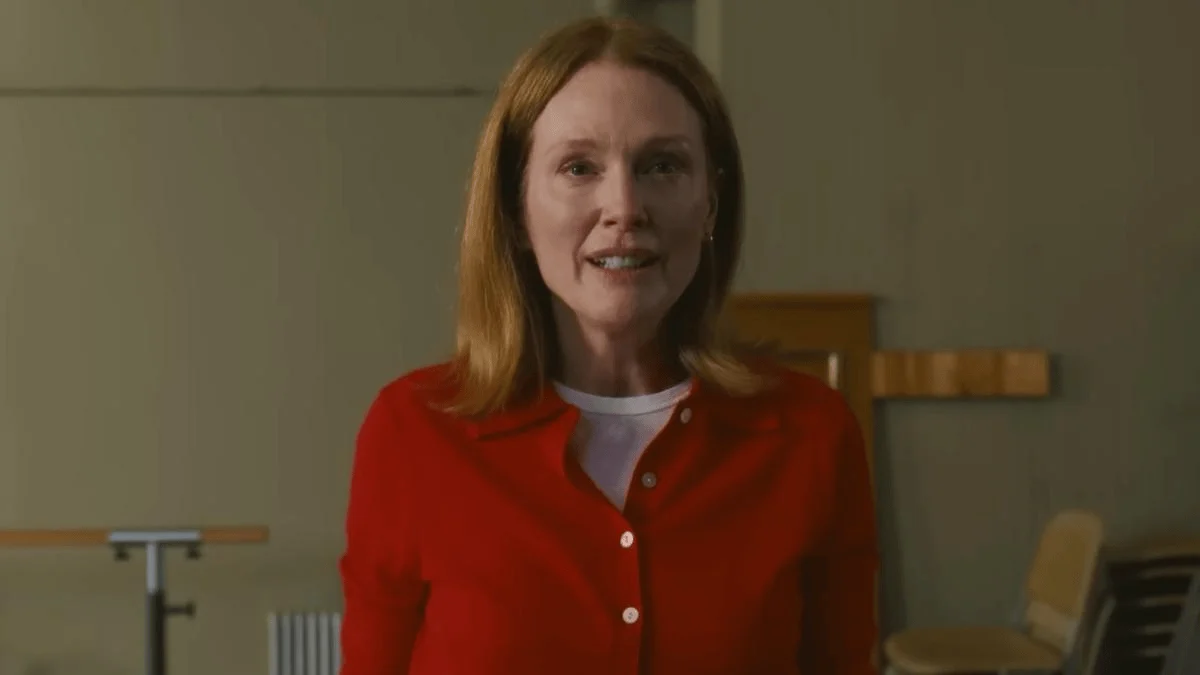
While Julianne Moore provides the film’s gravitational center, the surrounding cast is nothing short of extraordinary. Paul Giamatti’s portrayal of Jerry is a career-high performance. He plays the beleaguered director with a weary, intellectual exhaustion that serves as the perfect foil to Moore’s manic energy. The scenes between them—alternating between professional respect and total, unhinged resentment—are the heart of the film.
Halle Bailey, playing the pivotal role of Stef, delivers a breakout performance that proves her range extends far beyond her previous, more commercial work. She acts as the moral compass of the film, watching with growing concern as Mona spirals. Bernadette Peters, despite her limited screen time, brings a seasoned, theatrical gravitas to her scenes, grounding the film in the reality of the theater world.
![Film Review: THE DEBUT: Jesse Eisenberg's Look at Method Acting is Absolutely Perfect [NYFF 2026]](https://film-book.com/wp-content/uploads/2026/10/Julianne-Moore-The-Debut-01-1200x675-1.png)
The supporting ensemble—including K. Todd Freeman, Eldar Isgandarov, Susan Blommaert, Colton Ryan, and Jesse Eisenberg himself—provides the necessary texture to make the community theater feel lived-in and authentic. Every actor, from Lilli Cooper to Allegra Leguizamo, adds a layer of depth to a world that could have easily felt like a caricature.
The "Method" as a Narrative Device
Eisenberg’s screenplay functions as a meta-commentary on the film industry itself. By focusing on the "method," the film forces the audience to confront the absurdity of how we value art. Is it "art" if it destroys the person performing it? Is the suffering of the actor a necessary ingredient for the audience’s pleasure?
Mona’s physical transformation—culminating in an iconic scene involving an electrical accident that leaves her with a frizzy, horror-movie aesthetic—symbolizes the "frazzling" of her psyche. She starts the film as a repressed housewife and ends it as a force of nature. Eisenberg uses this transformation to ask the viewer if we are truly watching a performance, or if we are watching a breakdown being exploited for entertainment.
Implications and Critical Reception
The implications of The Debut are far-reaching. By positioning this story within the microcosm of community theater, Eisenberg makes the themes of artistic ego and personal validation accessible to everyone. It is a biting satire, but it is also deeply empathetic. We root for Mona because we recognize the human desire to be seen, to be understood, and to have a life that feels significant.
Critics at the New York Film Festival have been unanimous in their praise. The consensus is that this is not just a film about acting; it is a film about the human condition. The technical execution—the sharp editing, the claustrophobic cinematography, and the brilliant pacing—all point to a director who has fully arrived.
For Julianne Moore, this role is a definitive career highlight. It avoids the tropes of the "suffering housewife" that she has navigated with grace in past films like The Hours. Instead, she leans into the madness, creating a character that is at once repulsive, pathetic, and undeniably triumphant.
Conclusion: A Masterpiece in the Making
The Debut is a rare cinematic achievement. It is a film that demands to be discussed, dissected, and revisited. In a landscape often dominated by sequels and intellectual property, Jesse Eisenberg has delivered an original, bold, and unapologetically strange piece of art that reminds us why we go to the movies in the first place: to see the truth, no matter how uncomfortable it might be.
With its perfect blend of humor, tragedy, and performance art, The Debut stands as a 10/10 masterpiece. Whether you are a devotee of the theater or a casual moviegoer, this is a film that will stay with you long after the final credits roll. It is a testament to the power of the craft, the danger of the method, and the incredible, enduring talent of its cast.
As the industry looks toward the 2026 awards circuit, The Debut has set a benchmark that few, if any, films will be able to match. It is, quite simply, essential viewing.
