
Visionary British Director and Cinematographer Nicolas Roeg Passes Away at 90
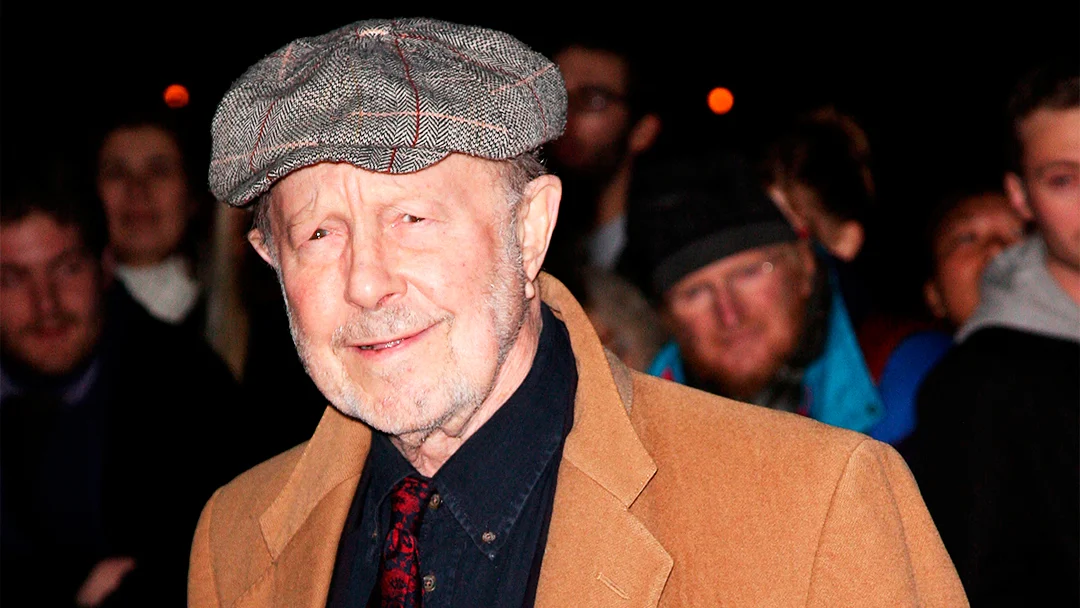
LONDON — Nicolas Roeg, the visionary British filmmaker and master cinematographer whose pioneering approach to narrative structure, psychological depth, and striking visual aesthetics redefined modern cinema, has died at the age of 90. His son, Nicolas Roeg Jr., confirmed that the legendary director passed away peacefully on Friday night.
Throughout a career that spanned more than half a century, Roeg transitioned from an apprentice film editor and celebrated lighting cameraman into one of the most daring, uncompromising, and influential directors of the 20th century. His avant-garde sensibilities and fractured editing techniques left an indelible mark on global cinema, directly shaping the visual vocabularies of subsequent generations of acclaimed filmmakers, including Danny Boyle and Steven Soderbergh.
Main Facts: A Maverick of Modern Film
Roeg’s filmography is a collection of challenging, hypnotic, and deeply atmospheric works that routinely tested the boundaries of conventional storytelling. Known for using non-linear editing to reflect the psychological and emotional states of his characters, Roeg crafted films that prioritized sensory experience and thematic resonance over straightforward narrative progression.
His most notable directorial efforts include:
- "Performance" (1970): Co-directed with Donald Cammell and starring rock icon Mick Jagger, this psychosexual gangster drama explored identity and counterculture, initially shocking studio executives before earning status as a British cinema classic.
- "Walkabout" (1971): A mystical survival drama set in the harsh Australian outback, following two abandoned children aided by an indigenous youth on his coming-of-age journey.
- "Don’t Look Now" (1973): A haunting, grief-stricken occult thriller set in the atmospheric canals of Venice, starring Julie Christie and Donald Sutherland.
- "The Man Who Fell to Earth" (1976): A cerebral science fiction masterwork utilizing music legend David Bowie’s otherworldly persona to explore alienation, capitalism, and human frailty.
- "The Witches" (1990): A dark, terrifying, yet universally acclaimed fantasy adaptation of Roald Dahl’s children’s novel, starring Anjelica Huston.
Despite frequent resistance from major studios who struggled to comprehend his avant-garde pacing and unconventional narrative structures, Roeg’s distinct artistic vision secured his legacy as a cinematic pioneer. In 1994, his contributions to visual culture were officially recognized when he was made a fellow of the British Film Institute. Later, the London Film Critics Circle honored him with the Dilys Powell Award for Excellence in Film in 2011, and he published his memoirs, The World Is Ever Changing, in 2013.
Chronology: From London Apprentice to Cinematic Innovator
Early Life and Ascent as a Master Cinematographer (1928–1968)
Born Nicolas Jack Roeg in London in 1928, his entry into the film industry was a classic case of working from the ground up. Following his military service—where he gained early technical experience functioning as a military projectionist—Roeg entered the movie business in 1947 as an office boy and apprentice editor.
By 1950, he had secured a position at MGM’s London Studios, steadily ascending the ranks from clapper boy and assistant camera operator to a premier lighting cameraman. During the 1950s, he built a solid technical reputation working on notable studio projects such as Bhowani Junction and The Trials of Oscar Wilde, alongside lower-budget productions like Jazz Boat, The Great Van Robbery, and Information Received.
Roeg’s breakthrough as a major visual stylist came when he served as a second-unit cinematographer on David Lean’s 1962 epic masterpiece, Lawrence of Arabia. His subsequent work as a primary director of photography cemented his reputation among the top-tier visual craftsmen of the decade. His lensing credits during this fertile period included:
- Roger Corman’s gothic horror The Masque of the Red Death (1964)
- François Truffaut’s dystopian sci-fi classic Fahrenheit 451 (1966)
- Richard Lester’s comedies A Funny Thing Happened on the Way to the Forum (1966) and Petulia (1968)
- John Schlesinger’s sweeping period drama Far From the Madding Crowd (1967)
The Directorial Breakthrough and 1970s Masterpieces (1970–1979)
Having mastered the camera, Roeg stepped into the director’s chair with Performance (1970). Co-directed with Donald Cammell, the film featured Mick Jagger as a reclusive rock star whose London home is invaded by a violent East End gangster played by James Fox. Warner Bros. executives were reportedly so alarmed by the film’s cross-cutting, drug-fueled narrative, and fluid boundaries of gender and identity that they shelved it for nearly two years. When it was finally released after a mandatory studio recut, it found modest box office success; over decades, however, its radical structure and hypnotic atmosphere earned it widespread critical acclaim.
Roeg immediately followed this triumph with Walkabout (1971), a visually stunning exploration of isolation and cultural collision in the Australian desert. Starring Jenny Agutter and Roeg’s own son, Luc, as stranded urban siblings, and featuring David Gulpilil in a transformative performance, the film utilized fractured editing to evoke a sense of timeless, mystical dread and wonder.
In 1973, Roeg directed Don’t Look Now, widely considered one of the finest horror and psychological thrillers ever produced. Starring Julie Christie and Donald Sutherland as a grieving married couple in Venice attempting to recover from the accidental drowning of their daughter, the film relied on associative editing—most famously cutting back and forth between a violent present and tragic memories—to create an overwhelming sense of impending doom. Although its theatrical run was somewhat eclipsed by the monumental commercial success of The Exorcist that same year, Don’t Look Now has since surpassed it in the estimation of many cinephiles and critics.
Roeg continued his streak of challenging, high-concept cinema with The Man Who Fell to Earth (1976). Adapting Walter Tevis’s 1963 novel about an extraterrestrial who arrives on Earth seeking water to save his dying home planet, Roeg cast David Bowie in the lead role. Bowie’s fragile, ethereal presence mirrored the character’s profound alienation. Paramount executive Barry Diller was famously displeased with the final cut, leading to an independent release that ultimately blossomed into a legendary cult classic.
Diverse Explorations and Later Career (1980–2007)
As Roeg entered the 1980s and 1990s, his filmmaking evolved to explore more intense human relationships, psychological obsessions, and literary adaptations, though frequently meeting with mixed commercial fortunes.
- "Bad Timing" (1980): A disturbingly intimate romantic tragedy exploring a destructive obsession between a psychoanalyst (Art Garfunkel) and a young American woman (Theresa Russell, who would become Roeg’s second wife and frequent collaborator).
- "Insignificance" (1985): An imaginative adaptation of Terry Johnson’s play imagining a fictional encounter between Albert Einstein, Marilyn Monroe, Joe DiMaggio, and Senator Joseph McCarthy in a New York hotel room.
- "Eureka" (1983): A sweeping, thematic drama starring Gene Hackman as a gold prospector who achieves immense wealth at the cost of spiritual and familial ruin.
- "The Witches" (1990): Roeg’s most commercially accessible later project, produced by Jim Henson. While widely praised as a masterpiece of dark children’s fantasy, author Roald Dahl was reportedly horrified by the studio-mandated changes to his original ending.
As the theatrical landscape shifted in the late 1990s and 2000s, Roeg increasingly turned toward television and smaller-scale projects. He directed television films including Heart of Darkness (1993) starring Tim Roth and John Malkovich, Full Body Massage (1995), and Samson and Delilah (1996), alongside the critically acclaimed BBC-produced political drama Two Deaths (1996). His final feature film as a director was the little-seen 2007 thriller Puffball: The Devil’s Eyeball.
Supporting Data: Selected Filmography & Accolades
- Birth Name: Nicolas Jack Roeg
- Date of Birth: August 15, 1928
- Date of Death: November 23, 2018
- Key Cinematography Credits: Fahrenheit 451 (1966), Far From the Madding Crowd (1967), Petulia (1968)
- Key Directorial Credits: Performance (1970), Walkabout (1971), Don’t Look Now (1973), The Man Who Fell to Earth (1976), Bad Timing (1980), The Witches (1990)
- Honors: British Film Institute Fellowship (1994), Dilys Powell Award for Excellence in Film (2011)
- Marriages: Susan Stephen (m. 1957–1977), Theresa Russell (m. 1982–c. 1990s), Harriet Harper.
- Children: Nicolas Roeg Jr., Luc Roeg, Sholto J. Roeg, Waldo Roeg, Max Roeg, and Statten Roeg.
Official Responses and Tributes
Following the announcement of his passing, the global film community united in mourning, sharing heartfelt tributes that underscored Roeg’s immense impact on the medium.
Filmmakers and actors who worked alongside him, as well as those inspired by his daring visual style, took to social media and press outlets to express their admiration:
- Danny Boyle, whose own kinetic editing style in films like Trainspotting clearly bears Roeg’s fingerprints, praised the director as a giant of British film: "Nicolas Roeg didn’t just make films; he made you experience cinema in a fundamentally different way. His editing wasn’t just a technical choice; it was a profound translation of human consciousness."
- The British Film Institute (BFI) released a statement celebrating his legacy: "Nicolas Roeg was one of the rare filmmakers who changed our perception of what cinema could achieve. His fearless visual language, psychological acuity, and uncompromising artistic integrity established him as a true pioneer of British art."
- Duncan Jones, son of David Bowie, paid homage to Roeg’s work with his late father: "So sad to hear that Nicolas Roeg has passed away. What a massive loss. One of our greatest directors. He brought out a side of my father that remains astonishing in ‘The Man Who Fell to Earth’."
Implications: The Enduring Legacy of an Auteur
Nicolas Roeg’s death marks the closing chapter for a rare breed of British auteur who successfully bridged the gap between commercial filmmaking and radical, avant-garde experimentation. At a time when studio systems favored linear narratives and predictable formulas, Roeg consistently treated the screen as a canvas for memory, emotion, and subconscious association.
His influence on contemporary cinema cannot be overstated. The non-linear narrative structures, sonic associations, and atmospheric editing that characterize modern psychological thrillers and independent dramas owe an enormous debt to Roeg’s pioneering 1970s run. By proving that audiences could emotionally engage with fractured storytelling, he expanded the vocabulary of visual narrative.
As film historians, scholars, and cinephiles revisit masterpieces like Don’t Look Now and The Man Who Fell to Earth, Roeg’s work stands as a testament to the power of film as a deeply immersive, psychological art form. He leaves behind not only a grieving family—survived by his third wife, Harriet Harper, and his six children—but a towering cinematic legacy that will continue to inspire, challenge, and captivate audiences for generations to come.
