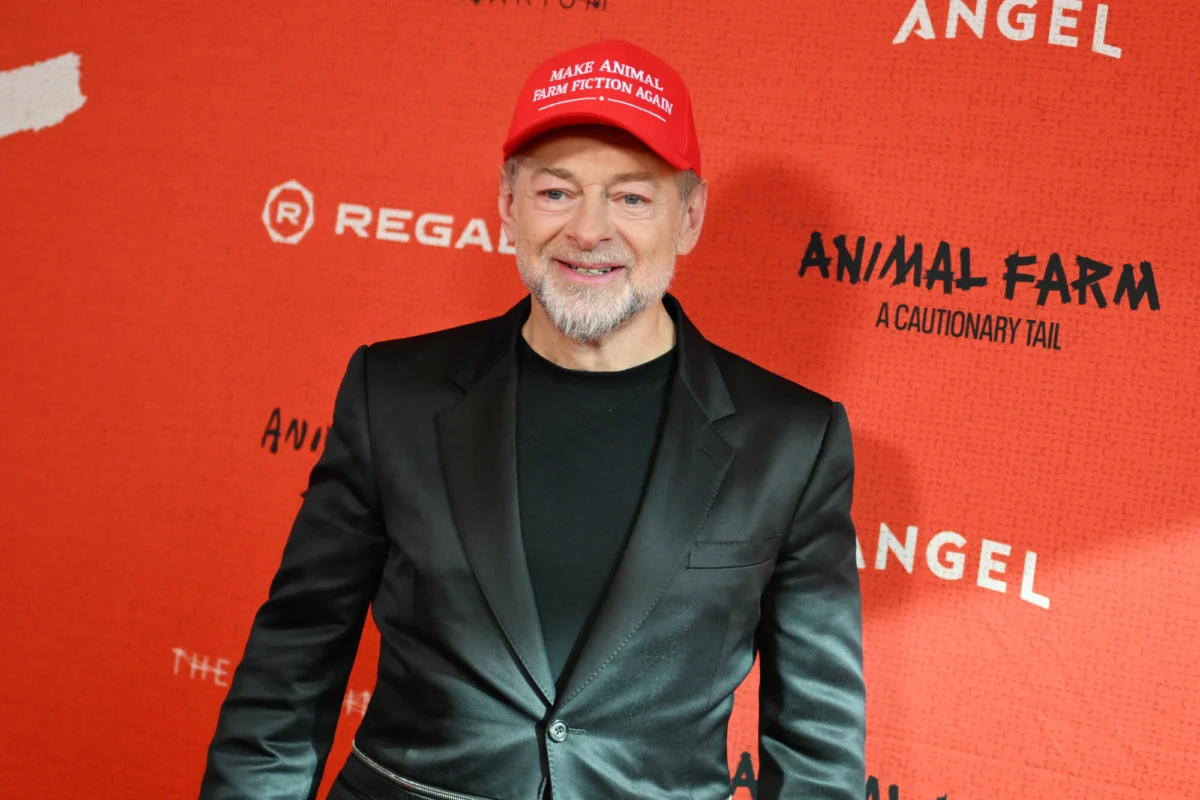
Reimagining Orwell: Inside Andy Serkis’s Radical, Animated Journey with “Animal Farm”
Main Facts
George Orwell’s AnimalFarm has endured for nearly eight decades as a definitive literary cautionary tale. Long understood as a biting allegory for how absolute power corrupts revolutionary idealism—specifically satirizing the Soviet Union’s tragic slide into mid-century authoritarianism—the novella remains a touchstone of political philosophy. Yet, visionary filmmaker and performance-capture pioneer AndySerkis has approached the classic text with an entirely unprecedented cinematic vision.
Released by Angel Studios, Serkis’s newly minted adaptation of Animal Farm deliberately shuns the grim, photorealistic approach typical of modern high-budget VFX spectacles. Instead, Serkis has crafted an animated feature that blends traditional stylistic elements with a broad, accessible tone. Complete with unexpected stylistic flourishes, humor, and a narrative urgency designed to engage younger viewers without sacrificing thematic weight, this version of Animal Farm reimagines Orwell’s barnyard for a contemporary generation.
The film boasts an all-star voice cast, featuring Seth Rogen as the manipulative pig Napoleon, Laverne Cox as the visionary revolutionary Snowball, Glenn Close as Freida Pilkington, and Serkis himself stepping into the role of the tyrannical Farmer Jones.
Beyond its thematic choices, the production stands out as a fascinating technological and artistic experiment. The project originally began its life years ago as a motion-capture venture before completely pivoting into full animation. In doing so, Serkis and his creative team discovered that to achieve the exact emotional resonance and visual innocence they desired, the project had to shed the constraints of photorealism entirely.
Chronology
The long and winding road to bringing Serkis’s Animal Farm to the screen spans well over a decade of shifting industry standards, technological leaps, and creative reevaluations.
Early Development and the Motion-Capture Era
Initially conceived in the early 2010s, the project was envisioned as a performance-capture film—a medium Serkis helped revolutionize through his iconic work on franchises like The Lord of the Rings, Planet of the Apes, and King Kong. Early conceptual designs leaned heavily into gritty realism. The animals were designed to look starving and haggard, with visible rib cages, while the pigs were portrayed with grotesque, gluttonous, and deeply intimidating features.
The Pivotal Pivot to Animation
As development progressed, Serkis and the creative team realized that a hyper-realistic, motion-capture aesthetic carried a severe creative limitation. The sheer brutality of the visual renderings made the cruelty inflicted upon the animals overwhelmingly grim. Recognizing that such an unforgiving aesthetic would alienate family audiences, Serkis made the bold executive decision to transition the film entirely into traditional animation. This pivot allowed the production to strip away the shackles of photorealism, opening the door to a more expressive, stylized visual language.
Worldbuilding and Production
With the transition to animation finalized, production entered a rigorous multi-year phase of digital worldbuilding. Collaborating closely with production designer Amos Sussigan and specialized layout and story teams, Serkis immersed himself in the painstaking, meticulous pace of animation. Unlike live-action shoots that capture moments in fleeting days, Serkis found himself guiding scenes through countless departments over the span of several years, utilizing scratch tracks, storyboards, and iterative animatics to slowly construct every blade of grass and piece of farm machinery from scratch.
Theatrical Release
Following years of meticulous fine-tuning, the animated feature finally premiered in theaters nationwide, distributed by Angel Studios, inviting audiences of all ages to reexamine Orwell’s timeless critique of power, corruption, and idealism.
Supporting Data and Production Insights
The transformation of Animal Farm from a gritty motion-capture concept into an animated family-accessible feature offers a rare window into the mechanics of modern hybrid filmmaking. Serkis drew heavily on his extensive background directing video games and VFX-heavy live-action blockbusters, such as Mowgli: Legend of the Jungle and Venom: The Last Dance, to navigate the pipeline.
Navigating the Animation Pipeline
According to Serkis, while there is significant crossover between the previz, character design, and storyboarding of live-action blockbusters and the architecture of real-time engines like Unreal Engine, animation demands a fundamentally different temporal discipline.
The Pacing of Animation: In live-action filmmaking, a director shoots pages on a given day and generally has a tangible version of the scene by nightfall. In animation, however, a single scene must be held in the director’s mind across various stages of completion for years. It passes through layout artists, character animators, lighting technicians, and background painters, requiring immense patience and long-term vision.
Killing Darlings Early: Budgetary constraints and narrative pacing often force directors to cut scenes while they are still in the animatic or storyboard phase—long before they ever hit a traditional editing timeline or final sound mix.
The Voice Actor’s Creative Freedom
Despite the grueling timeline of animation, Serkis ensured that his voice cast enjoyed an unprecedented level of creative liberty. Working primarily in front of a microphone without the technical encumbrances of camera resets, lens changes, or lighting setups, actors like Seth Rogen and Laverne Cox were given the space to experiment endlessly.
Iterative Performance: Serkis praised the microphone booth as a uniquely liberating environment. Actors could run through dozens of alternative takes, adjusting cadence, emotional weight, and comedic timing on the fly.
Translating Naturalism: Serkis emphasized that despite the animated format, the production relied on tight close-ups and naturalistic human acting choices translated onto creature-like faces, ensuring the audience could viscerally connect with the characters’ internal struggles without feeling that the animators had to overperform the material.
Official Responses and Creative Vision
Andy Serkis has been remarkably candid about the artistic compromises and ideological philosophies that shaped his Animal Farm. Rather than leaning into a purely bleak, cynical interpretation of Orwell’s text, Serkis sought to strike a delicate balance between political allegory and accessible fable.
Balancing Innocence and Realism
Reflecting on the early, aggressive designs of the animals, Serkis explained to IndieWire why a stylistic pivot was entirely non-negotiable:
"The very early designs for the animal characters were much more unforgiving and brutal. When animals looked like they were starving, you could see their rib cages; the pigs were a lot more gluttonous and just looked meaner. There is a version of that film that could exist, but we wanted to reach out to a younger audience."
Serkis characterized the final product as “a cautionary tale that has a whole heap of innocence around it.” By softening the edges of the character designs, the creative team established a safety margin that allows viewers of all ages to process the darker implications of the narrative—specifically how Napoleon (Seth Rogen) systematically co-opts the radical equality initially preached by Snowball (Laverne Cox).
Empathy Through the Lens
Serkis also highlighted his intentional framing choices, noting how crucial it was for the audience to bond emotionally with the animated figures:
"I wanted the audience to reach out to the characters and to really feel — when the camera’s pushing in on a character’s face — what they’re going through. And not to feel that the animators had to overperform it, as such. That was a really interesting part of the process."
By treating his voice cast as collaborative animators, Serkis managed to bridge the gap between human emotional truth and stylized animal animation.
Implications
Andy Serkis’s Animal Farm arrives at a fascinating cultural crossroads, carrying significant implications for both the adaptation of classic literature and the evolution of modern animation technology.
Redefining Family-Friendly Political Allegory
Orwell’s Animal Farm has traditionally been treated as dense, politically sobering material, often restricted to middle-school reading lists or stark cinematic adaptations that lean heavily into political cynicism. By deliberately scaling down the photorealism and injecting elements of humor, accessibility, and classic fable-telling, Serkis has opened up a dialogue about authoritarianism for a demographic that might otherwise be unreached. While some critics may view the softening of Orwell’s sharpest political edges as a dilution of the text, the film undeniably expands the reach of the author’s core warnings regarding power and corruption to younger minds.
The Evolution of Hybrid Filmmaking
From a technical standpoint, Serkis’s journey underscores the fluidity of modern Hollywood pipelines. The pivot from motion-capture to traditional animation highlights a growing industry realization that technological capability (such as hyper-realistic VFX) should not always dictate artistic choices. Sometimes, the pursuit of emotional truth requires a deliberate retreat from photorealism.
Furthermore, Serkis’s unique pedigree—moving fluidly between motion-capture performance, live-action blockbuster direction, game-engine workflows, and traditional animation—positions him as a trailblazer in boundary-less filmmaking. As studios increasingly experiment with cross-medium adaptations, Animal Farm serves as a testament to the creative dividends that come from embracing new production workflows, enduring years of iterative worldbuilding, and trusting actors to find truth inside an empty recording booth.