
The Prism of Memory: Remembering Nicolas Roeg and the Haunting Legacy of a Cinema Revolutionary
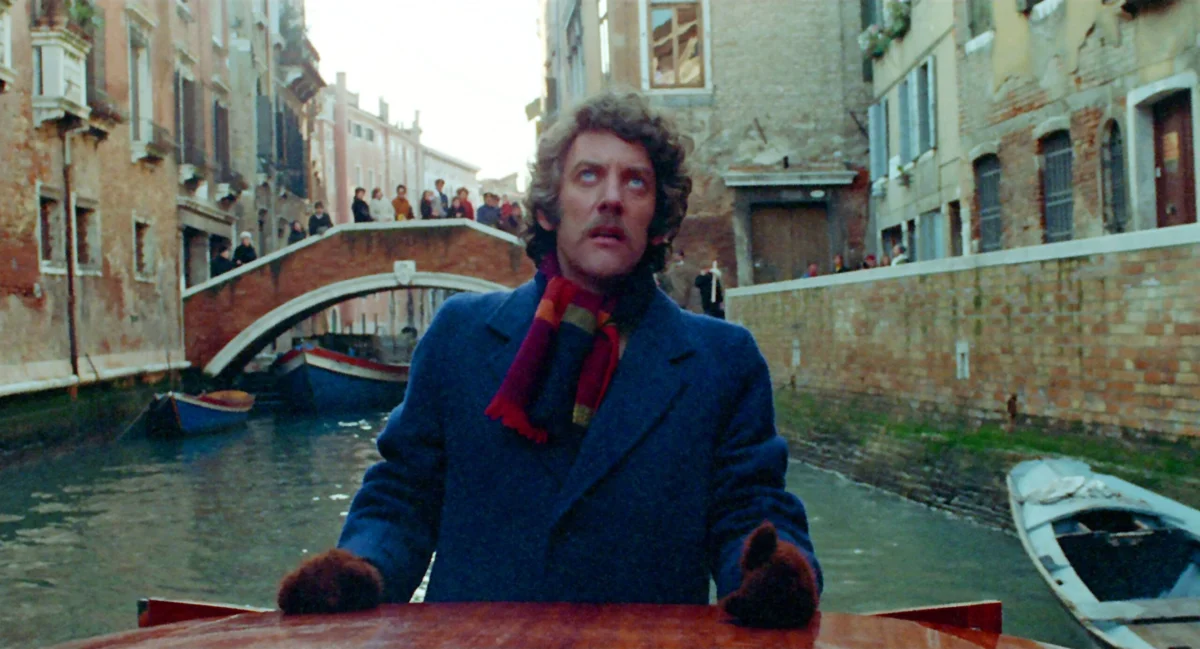
The 1970s represented the undisputed heyday of what was then referred to with characteristic Victorian understatement as the "love scene"—those writhing arenas of nude intimacy that moviegoers experienced with a mixture of voyeuristic awe and lingering fascination. These were moments of celluloid connection so potent they were discussed in hushed tones for years, or even decades, after the house lights came up. Yet, with the notable exception of the bruising, confrontational close encounters in Bernardo Bertolucci’s Last Tango in Paris, no love scene from that decade was as celebrated, as hotly debated, or as universally swooned over as the one that materialized a year later in Don’t Look Now.
The splendidly creepy 1973 psychological chiller stands today as arguably the finest film directed by Nicolas Roeg, a visionary titan of British cinema who passed away on Friday at the age of 90. Roeg’s departure marks the loss of a rare breed: an uncompromising visual poet who bent time, memory, and cinematic structure to his own idiosyncratic will, leaving behind a compact yet incandescent body of work that continues to cast a long, hypnotic shadow over modern filmmaking.
Main Facts: A Master of the Cinematic Mind-Game
Nicolas Roeg’s passing prompted an outpouring of critical reassessment regarding his contributions to the art form. Beginning his career as a cinematographer before stepping behind the director’s chair, Roeg possessed an uncanny ability to turn celluloid into a canvas of psychological impressionism. His distinct aesthetic—characterized by rapid, associative editing, fractured timelines, and a deep preoccupation with erotic and existential obsession—redefined how stories could be told on screen.
At the center of his legacy is Don’t Look Now, a film that epitomizes his genius. Its central stars, Donald Sutherland and Julie Christie, were viewed in 1973 as symbols of cinematic glamour. Yet, under Roeg’s direction, they were grounded into something far more visceral: an ordinary, deeply human middle-class couple struggling to navigate the suffocating grief of their young daughter’s accidental drowning.
While stationed in Venice while Sutherland’s art restorer character repairs an aging church, the couple share a love scene that is lavishly romantic, profoundly naked, graphic, and unmistakably orgasmic. Backed by the gentlest of soft-rock chords, the scene achieved legendary status. Rumors inevitably swirled about whether the actors were doing more than simply acting—gossip that surprisingly was never aggressively spun for box-office exploitation. They were treated, simply and professionally, as actors embodying characters in the throes of deep emotional reclamation.
However, the true masterstroke of the scene was entirely structural—a signature Roeg gambit. Roeg chose to intercut the ecstatic, sweat-drenched intimacy with shots of the couple quietly getting dressed afterward, their faces settling back into the humdrum exhaustion of everyday life. This brilliant editorial sleight of hand, originally conceived in part to mollify cautious censors, entirely inverted the scene’s meaning. It served as a poetic declaration: passion may feel transcendent, but it is ultimately tethered to the inescapable gravity of ordinary existence.
Chronology: From the Camera Lens to the Director’s Chair
To understand Roeg’s cinematic vocabulary, one must trace a trajectory that bridged classical British filmmaking with the countercultural explosion of the late 1960s and 1970s.
The Apprenticeship (1950s–1960s)
Born in London, Roeg spent 23 years working within the British film industry as a camera operator and cinematographer before ever helming a feature. He cut his teeth on monumental productions, serving as a second-unit cinematographer on David Lean’s Lawrence of Arabia. Though he famously clashed with Lean during the production of Doctor Zhivago, Roeg was steadily forging a distinct visual philosophy. His impressionistic, Thomas Hardy-on-sedatives camerawork for John Schlesinger’s Far from the Madding Crowd (1967) and the fashion-forward, Godard-meets-Carnaby-Street vibrancy of Richard Lester’s Petulia (1968) demonstrated a burgeoning mastery of light, mood, and fractured framing.
The Directorial Debut: Performance (1970)
In 1968, Roeg finally secured the opportunity to co-direct (alongside Donald Cammell) his own original concept: Performance. Set in a murky, hallucinatory London underworld, the psychodrama paired the aristocratic elegance of actor James Fox with the feral, lurid charisma of rock icon Mick Jagger. The studio, Warner Bros., was so unnerved by the film’s ominous ellipticity that they shelved and recut it, finally releasing it in 1970. While the narrative could occasionally be decipherable only through repeated viewings, Performance possessed an unforgettable underworld griminess. The film’s hypnotic centerpiece—Jagger performing "Memo from Turner"—offered a chilling preview of the anarchic energy Stanley Kubrick would capture a year later in A Clockwork Orange.
The Australian Odyssey: Walkabout (1971)
Sandwiched between Performance and Don’t Look Now was Walkabout, Roeg’s idiosyncratic take on a survivalist journey. Set against the punishing expanse of the Australian Outback, the film chronicled the profound, wordless connection forged between a wandering Aboriginal youth (David Gulpilil) and two stranded siblings (Jenny Agutter and Luc Roeg, the director’s young son). While the narrative framework of survival and cross-cultural contact was relatively conventional, Roeg’s luminous, mythic imagery elevated the material into a profound meditation on humanity and alienation.
The Sci-Fi Masterpiece: The Man Who Fell to Earth (1976)
Seeking a broader canvas, Roeg directed what would become one of the final grandly scaled science-fiction epics of the pre-Star Wars era. The Man Who Fell to Earth served as the definitive cinematic vehicle for the silky, decadent, otherworldly mystique of David Bowie. Playing an extraterrestrial searching for water for his drought-stricken home planet, Bowie’s character is slowly, fatally consumed by the vices of human civilization. Transforming into a wealthy corporate entrepreneur, an alabaster-skinned addict, and a listless consumer staring blankly at multiple television screens simultaneously, Bowie offered a prophetic portrait of late-20th-century media saturation. Acting as an ideological precursor to Ridley Scott’s Blade Runner, the film asked audiences to experience science fiction not as high-tech adventure, but as a dark, feverish dream.
The Later Years and Contraction (1980–1990s)
Roeg’s meteoric run as an uncompromised auteur hit a sudden commercial wall with 1980’s Bad Timing: A Sensual Obsession. Starring Art Garfunkel as a possessive psychiatrist and Theresa Russell as his emotionally fractured lover, the film explored male toxicity and psychological sadism with blistering intensity. Barely seen upon release, the film effectively marginalized Roeg from mainstream financing. Though he continued to direct into the late 1980s and 1990s—delivering charming philosophical capers like Insignificance (1985) and the Roald Dahl adaptation The Witches (1990)—his career never regained its former cultural dominance.
Supporting Data: Critical Reception and Box-Office Realities
| Film | Release Year | Key Cast | Critical / Cultural Reception |
|---|---|---|---|
| Performance | 1970 | James Fox, Mick Jagger | Initially shelved and recut by Warner Bros.; later celebrated as a landmark countercultural psychodrama. |
| Walkabout | 1971 | Jenny Agutter, David Gulpilil | Universally praised by critics; established Roeg’s distinct eye for landscape and visual anthropology. |
| Don’t Look Now | 1973 | Donald Sutherland, Julie Christie | Widely regarded as a masterpiece of modern gothic horror; famous for its revolutionary editing and controversial love scene. |
| The Man Who Fell to Earth | 1976 | David Bowie, Candy Clark | Developed a massive cult following; preserved as a touchstone of 1970s alienated cinema. |
| Bad Timing | 1980 | Art Garfunkel, Theresa Russell | Met with critical shock and commercial indifference; marked the end of Roeg’s golden era of uncompromised studio features. |
Official Responses and Industry Tributes
Following the news of Roeg’s passing, the global film community—from actors and directors to critics and historians—rushed to pay homage to a man whose visual grammar reshaped modern cinema.
Prominent filmmakers noted how deeply indebted contemporary non-linear storytelling is to Roeg’s pioneering edits. Edgar Wright, Danny Boyle, and Christopher Nolan have frequently cited Roeg as a crucial influence, specifically pointing to how Don’t Look Now manipulated spatial and temporal continuity to evoke sheer psychological terror.
Film preservationists and archives underscored that Roeg’s eye was unique to British cinema, bridging the gap between kitchen-sink realism and avant-garde European art house aesthetics. While mainstream Hollywood largely sidelined him after the commercial failure of Bad Timing, his peers recognized him as a cinematic purist who refused to dilute his singular vision for mass consumption.
Implications: The Road Not Taken and the Shape of Modern Cinema
The legacy of Nicolas Roeg invites a tantalizing historical "what if." One can easily envision an alternative universe where Roeg successfully fused his avant-garde editing techniques and fractured temporal loops with the machinery of commercial escapism. Had major studios embraced his structural audacity rather than recoiling from it, the blockbuster landscape of the late 20th century might have looked vastly different—infused with a darker, more prismatic poeticism.
Yet, to lament Roeg’s later commercial marginalization is to misunderstand the volatile nature of his genius. Don’t Look Now was never a precious, highbrow artifact intended solely for film festivals; it was packaged and distributed as a horror film. It proved that complex, psychologically destabilizing art could terrify audiences not through cheap jump scares, but by tapping into a profound tear in the cosmic fabric.
Looking back across his seminal run of films—from the greasy, menacing swagger of Mick Jagger in Performance to the terrifying silhouette of a red-hooded figure in the canals of Venice, from Donald Sutherland clinging desperately to a decaying church scaffold to David Bowie channel-gawking into the abyss of human media—Nicolas Roeg’s work remains an invitation to step outside conventional time. His films remind us that the past is always present, that climax is merely prelude, and that human beings are forever caught in an inescapable circle of fate, seeking in every conceivable way to understand, and perhaps escape, the confines of this earth.
