
Echoes of Glasnost: How a Soviet Underground Rock Icon’s Quest for Western Stardom Captured a Shifting World
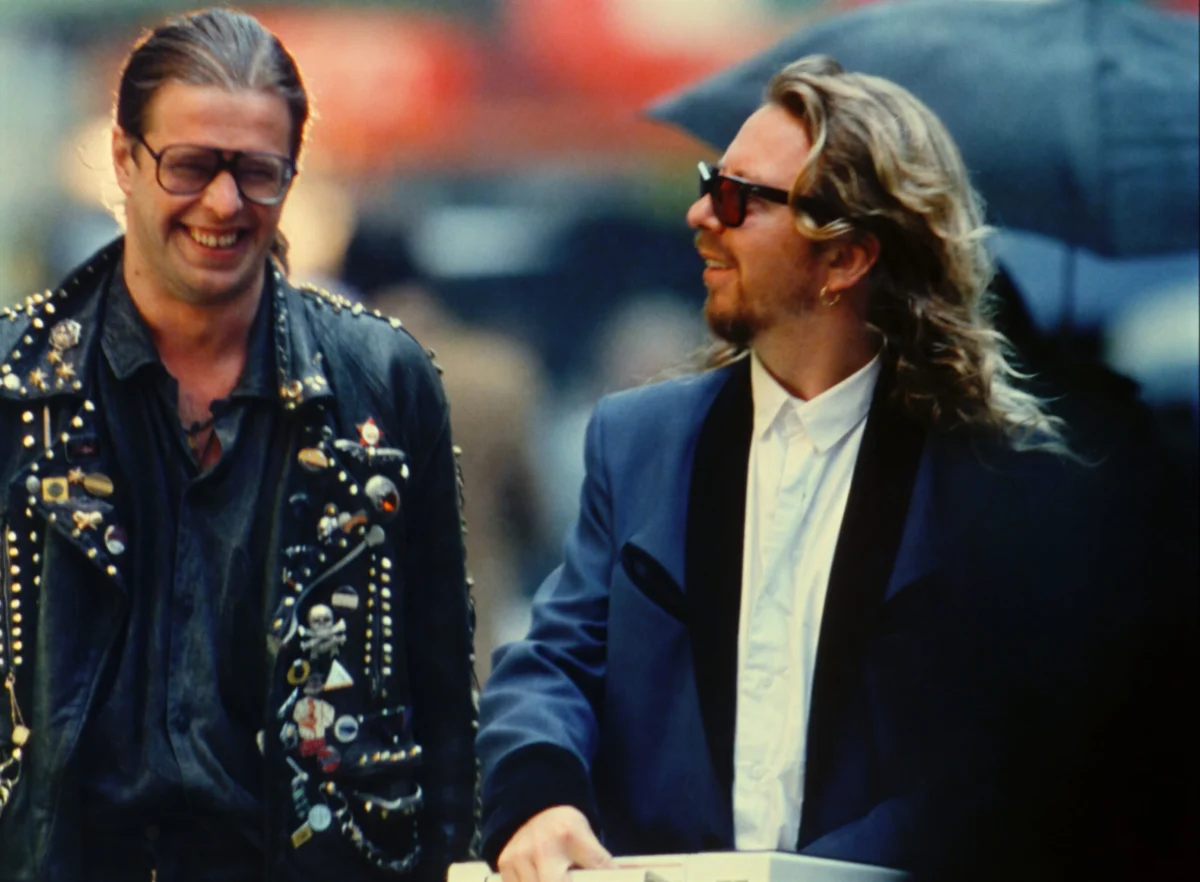
In an era defined by strained diplomatic relations and geopolitical friction—particularly regarding the ongoing conflict in Ukraine—it can be challenging for younger generations to fathom a time when relations between Washington and Moscow carried a note of cautious optimism. Yet, the late 1980s ushered in a brief, transformative epoch of unprecedented transparency, defined globally by Mikhail Gorbachev’s policies of glasnost (openness) and perestroika (restructuring).
As the teetering Soviet Union began to loosen its tight grip on cultural expression, long-prohibited Western artists like Billy Joel and Uriah Heep were permitted to perform behind the Iron Curtain. Capitalizing on this thaw, a visionary underground folk-rock artist from Leningrad named Boris Grebenshchikov caught the eye of American artist managers Kenny Schaffer and Marina Albee. Their ambitious push ultimately convinced CBS Records to groom Grebenshchikov for Western crossover stardom in 1989.
That fleeting historical moment was immortalized by acclaimed director Michael Apted and producer Steven Lawrence in their 1989 documentary, The Long Way Home. Following decades spent languishing in archives, the film has returned to the spotlight via a newly remastered, expanded edition currently streaming across major platforms—offering a striking window into a bygone era of cultural collision and political hope.
The Genesis of a Cross-Cultural Experiment
Finding the right artist to bridge the vast cultural divide between the Soviet underground and the Western music industry was no small task. However, producer Steven Lawrence knew immediately that Grebenshchikov was the ideal candidate.

“Their choice of Boris was the best possible choice because he was fluent in English, he had movie star looks, he was encyclopedic about Western rock and roll and folk music, and he had the temperament to handle the challenge,” Lawrence recalls. Furthermore, managing a solo artist—even one backed by his pioneering Soviet band, Aquarium—proved logistically and politically simpler than managing an entire rock ensemble like Gorky Park, who received a promotional push from Jon Bon Jovi and Richie Sambora the same year.
Lawrence’s fascination with Soviet counterculture was not new. He had previously directed and produced the MTV short film Tell Tchaikovsky the News: Rock In Russia, which featured Grebenshchikov. Lawrence subsequently filmed the rocker’s historic first visit to the United States in December 1987, capturing his initial introduction to Eurythmics co-founder and producer Dave Stewart.
Enter Michael Apted, the acclaimed filmmaker behind Oscar-nominated narrative features like Coal Miner’s Daughter and Gorillas in the Mist, alongside the monumental, multi-decade Up documentary series. After hearing about Grebenshchikov’s journey from a mutual friend, Apted became captivated by the narrative potential and persuaded Lawrence to let him helm the project. Apted brought along Lawrence’s core MTV collaborators, editor Susanne Rostock and cinematographer Peter Gilbert.
“He was so impressed with Susanne’s editorial talents that he subsequently hired her to cut eight more of his documentaries,” Lawrence notes, reflecting on Apted, who passed away in 2021.

Chronology of a Cross-Border Collaboration: From Leningrad to Los Angeles
Throughout 1988, the documentary crew shadowed Grebenshchikov, Aquarium, and producer Dave Stewart as the aspiring Soviet superstar traversed Montreal, London, and Los Angeles to record his first English-language album.
The production was rife with culture clashes and interpersonal drama. In one particularly revealing scene, the members of Aquarium arrive in Montreal to record, only for creative and personal squabbles to erupt. None of them had ever worked inside a professional Western recording studio, and the pressure of transitioning from underground obscurity—having struggled for recognition since the early 1970s—began to mount.
Despite these growing pains, the stakes continued to rise. In June 1988, Grebenshchikov shared a stage with Crosby, Stills & Nash at the IPPNW Concert for Peace in Montreal. Yet, as the project crystallized around Grebenshchikov as a potential solo breakout artist, tensions grew within his camp.
Back home in the Soviet Union, public reaction was deeply polarized. While many citizens felt immense national pride that one of their own was attempting to conquer the West, others viewed the endeavor with skepticism bordering on betrayal. Underground bands in the USSR were finally tasting official freedom, securing performance permits and releasing records through the state-run Melodiya label. A Soviet cultural representative featured in the film marveled at Grebenshchikov’s potential, openly wondering if he might soon rival Michael Jackson in global renown.

Grebenshchikov faced immense psychological pressure. This was his first time recording on a major label whose roster included icons like Bruce Springsteen, Bob Dylan, and Miles Davis, utilizing a high-gloss production style far removed from his lo-fi Soviet roots.
Despite the stress, the sessions yielded magical creative collaborations with Eurythmics vocalist Annie Lennox, Pretenders frontwoman Chrissie Hynde, and legendary percussionist Ray Cooper. The documentary reaches its emotional and sonic climax in Leningrad, where Grebenshchikov, Aquarium, Cooper, and members of the Eurythmics performed two massive concerts at a local sports stadium. Because the venue lacked proper acoustic infrastructure, the crew had to import outside audio gear to pull off the shows.
Supporting Data and Behind-the-Scenes Realities
The production of The Long Way Home also serves as a subtle historical barometer of the changing political climate inside the USSR. Lawrence notes a distinct difference in government surveillance compared to his MTV shoot just a year prior, when the crew was closely watched and accompanied by an embedded Aquarium “groupie” acting as a government minder.
“With the time Boris was in the U.S. and the U.K., I don’t recall any real surveillance of him,” Lawrence says. “I can’t say unequivocally that he was on his own, but I think he was making his own decisions, writing his own story, and just being the artist who he is, working to make the best possible album.”

Collaborating with Dave Stewart proved to be a high point of the production. Stewart developed a genuine friendship with Grebenshchikov, guiding him through the labyrinth of Western studio engineering.
“There’s a certain point in the film where Boris is in L.A. with Dave and Dave’s engineer Manu Guiot, and they’re trying to finish the tracks and start to mix the album. There’s a lot of drama around that,” Lawrence explains. “This was Boris’s first experience dealing with that level of a recording studio, so in some respects he was like a kid in a candy shop and he was learning.”
Official Responses and Commercial Realities
Following its completion, The Long Way Home received theatrical rollouts internationally across 1989 and 1990, followed by a VHS release in 1991. However, commercial realities proved harsh. When Grebenshchikov failed to ignite the American charts as a crossover pop-rock sensation, CBS Records—partnered with Granada TV in the U.K.—pulled back on marketing the documentary in the United States. Furthermore, after the 1989 release Radio Silence underperformed commercially, the label opted out of funding a second English album, despite interest from George Harrison to produce it.
Reception varied sharply overseas, particularly in the United Kingdom. “Michael was so respected [there] as the director who had been making the Up films,” Lawrence recalls. “It was treated differently there, and then after the early 1990s, it disappeared. I did not want it to vanish, and that’s when I made the effort, starting in 2025, to bring it back.”

Implications and Legacy: Rediscovering a Lost Chapter
While Grebenshchikov’s crossover ambitions in America fell short, his career in his homeland continued to soar. He attained legendary status in Russia, though his outspoken opposition to the war in Ukraine eventually led him to emigrate to London. The expansive 14-minute epilogue added to the newly remastered edition of The Long Way Home brings his remarkable journey full circle.
Rescuing the film was an uphill battle. For over three decades, the sole surviving 16mm print sat in Lawrence’s basement after the original negative was lost. Utilizing a surviving videotape containing the stereo mix alongside advanced digital restoration technology, the production team achieved a stunning high-definition transfer. Accompanied by a new 5.1 surround mix by John Bowen, the documentary looks and sounds better than ever.
As Lawrence reflects on the film’s modern re-release, his primary hope is to educate younger audiences who have no living memory of the Soviet Union or the fragile euphoria of the late-Cold War era.
“This film offers an opportunity for people in the U.S. and the West in general to get to know one of the best singer-songwriters of the last 50 years,” Lawrence concludes. “He’s not a household name, but I think the film will engage people and get them interested in Boris Grebenshchikov.”
