
The Plastic Soul of Gotham: Unpacking the Ending and Future of Clayface

Warning: This article contains major spoilers for the film "Clayface" and discusses narrative arcs within the broader DC Universe.
In the landscape of modern cinema, the body horror subgenre has long served as a visceral mirror for our deepest anxieties. From the claustrophobic dread of John Carpenter’s The Thing to the transformative trauma of David Cronenberg’s The Fly, the genre relies on a fundamental betrayal: the body as a vessel that can be compromised, mutated, and eventually lost.
The latest entry into this dark pantheon, Clayface, represents a bold departure for DC Studios. Directed by James Watkins with a screenplay by genre veterans Mike Flanagan and Hossein Amini, the film eschews the spandex and spectacle of traditional superhero tropes. Instead, it offers a haunting, character-driven romantic tragedy rooted in the grim streets of Gotham City. By reframing a classic Batman villain through the lens of Cronenberg-esque science fiction, Clayface forces audiences to confront the question of whether a man can survive the total dissolution of his own identity.

The Genesis of a Monster: Who is Matt Hagen?
To understand the tragedy of Clayface, one must look past the shifting, malleable exterior of the titular creature and examine the man underneath: Matt Hagen (Tom Rhys Harries).
The film strips away the comic book artifice, grounding Hagen’s transformation in the cold, clinical reality of an illicit human trial. Following a career-ending disfigurement at the hands of Gotham’s criminal underworld, a desperate Hagen seeks out Dr. Caitlyn Coor (Naomi Ackie). Coor, a brilliant but ostracized scientist struggling against the crushing weight of academic and financial failure, utilizes experimental A.I.-powered nanites to "repair" Hagen.
What ensues is not merely a physical mutation, but a psychological fracture. The film suggests that Hagen’s descent into cold-blooded murder was not merely a side effect of his new, elastic physiology, but perhaps the manifestation of a darkness long dormant. Growing up in "The Narrows"—a neighborhood synonymous with systemic poverty and criminal influence—Hagen was conditioned to hide his true self behind masks long before the nanites allowed him to do so literally. As his ability to mimic others grows, so does his detachment from his own humanity, leading to a chilling exploration of whether morality is a tether or merely a performance.

The Descent: Chronology of the Final Act
The film’s climax is a masterclass in tension, serving as the breaking point for the film’s central "romance." As Detective John Borrelli (Max Minghella) closes in on the string of murders committed by Hagen, the protagonist attempts to survive by assuming the identities of those around him.
The turning point occurs when the mask slips. Upon witnessing the death of the man she was engaged to, Dr. Coor realizes the monster she has unleashed. In a moment of tragic clarity, she utilizes a failsafe kill switch embedded in her research tablet. As the nanites reach a critical mass of instability, the physical form of Clayface literally disintegrates, washing away into the city’s sewer system—a symbolic end to his reign of terror.
However, the film’s final sequence subverts the traditional "villain defeated" trope. We see a homeless man, discarded by society, perform a subtle, recognizable gesture—a curtsey that echoes a moment shared between Matt and Caitlyn. The implication is clear: Hagen survives, but he is fundamentally broken. The film concludes on a haunting note of psychological isolation; Hagen manifests a vision of Caitlyn to keep him company, revealing that while he has the power to become anyone, he is doomed to exist in a reality of his own making, utterly alone.

Supporting Data: The DC Universe Connection
While Clayface acts as a standalone psychological horror piece, it is anchored within the burgeoning DC Universe (DCU) helmed by James Gunn and Peter Safran. This presents a unique narrative challenge: how does a tragic, self-contained character like this fit into a larger, interconnected cinematic universe?
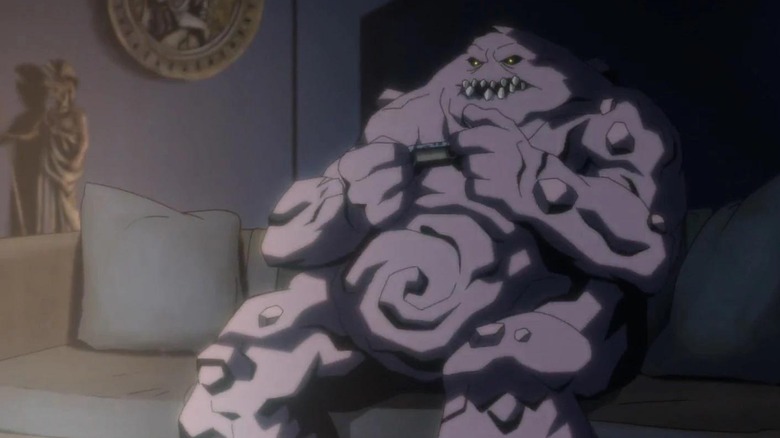
Crucially, fans have already seen this version of Matt Hagen in the animated series Creature Commandos, voiced by Alan Tudyk. James Gunn has confirmed that the events of the live-action film take place in the recent past of the current DCU timeline. This confirmation creates an intriguing contrast. In Clayface, Hagen is a moody, gothic anti-hero defined by loss and obsession. In Creature Commandos, he is depicted as a crude, manipulative, and often sadistic figure.
This discrepancy is not a continuity error, but an intentional creative choice. By allowing characters to shift in tone and temperament depending on the project, DC Studios is leaning into the idea of "identity" as a fluid concept—a theme that is thematically perfect for a character whose entire physiology is based on change.

Official Perspectives: The Philosophy of the DCU
The implications of this strategy are significant for the future of comic book adaptations. During recent press junkets, the DC Studios team has emphasized that the goal is not to create a rigid, monolithic continuity, but to allow filmmakers the freedom to explore different facets of these iconic characters.
This approach has been seen elsewhere in the new DCU. Rick Flag Sr. (Frank Grillo) acts as a moral, if flawed, anchor in Superman, yet appears as a more antagonistic figure in Peacemaker Season 2. Similarly, the Lex Luthor portrayed by Nicholas Hoult varies wildly in temperament between his appearances. By treating these characters as "archetypes" rather than static entities, Gunn and Safran are encouraging a "director-first" approach that prioritizes the needs of the specific narrative over the constraints of a shared universe.
For Clayface, this is an invitation to reinvention. The character is no longer tethered to a single origin or personality trait. His future appearances, whether in a Batman feature or a high-stakes team-up in Lanterns, will likely depend on the tone of the specific project. He is, by definition, the perfect chameleon for a cinematic universe that refuses to be boxed in.
Future Implications: Will the Real Matt Hagen Please Stand Up?
The question of whether Matt Hagen will "return" is, in many ways, beside the point. The film Clayface effectively serves as a death knell for the man Matt Hagen used to be. The tragic, lovesick creature we follow through the film’s runtime is a relic of a specific time and place.
If we see Clayface again in future DCU projects, he will likely be a new iteration—a reflection of the trauma he has endured, filtered through the lens of a new writer or director. The most profound way for the DCU to respect the work done by Watkins, Flanagan, and Amini is to let the version of Matt Hagen we saw in the film remain exactly where he is: lost in his own delusions, lurking in the shadows of Gotham, forever changed by the very power he sought to master.
Ultimately, Clayface succeeds because it refuses to treat its lead as a mere plot device. It is a film about the terrifying prospect of losing oneself, and by establishing that the character can be anyone and anything, the DCU has ensured that Clayface will remain one of the most unpredictable and compelling threats in their stable. Whether he returns as a monster, a pawn, or a shadow of his former self, one thing is certain: he will never be the same.
