
Beyond the Mask: Inside the Vault of the ‘Spider-Man: Brand New Day’ Digital Release
The Marvel Cinematic Universe has long been defined by its meticulous post-production process, where entire narrative arcs are often reshaped, condensed, or entirely excised to maintain the tight pacing required for a blockbuster theatrical release. For fans of the wall-crawler, the recent digital debut of Spider-Man: Brand New Day has provided more than just a home viewing experience; it has offered a rare, unfiltered look into the “what-ifs” of the filmmaking process.
As the film makes its transition from theaters to home media, the accompanying supplemental materials—ranging from lighthearted gag reels to somber, deleted medical sequences—have sparked a renewed conversation about the editorial choices that define our favorite heroes. With an extended cut already in the works for a future theatrical re-release, the digital edition serves as a fascinating blueprint for what may be coming next.
The Digital Expansion: A Deep Dive into Unseen Footage
The digital release of Spider-Man: Brand New Day acts as a comprehensive "behind-the-curtain" event. While audiences are accustomed to the standard array of trailers and static interviews, this release goes further by providing context for the tonal shifts that occurred between the script’s final draft and the theatrical cut.
The Gag Reel and the Chemistry of Chaos
Central to the bonus features is a high-energy gag reel that highlights the palpable chemistry between lead actor Tom Holland and his ensemble cast. Beyond the standard production mishaps and broken props, the reel offers a glimpse into the improvisational spirit on set. A particularly viral highlight features an unscripted exchange between Holland and Jon Bernthal, whose portrayal of Frank Castle—The Punisher—has been a cornerstone of the film’s grittier tone.
Furthermore, the release includes expanded footage of the now-infamous bathroom sequence between Peter Parker and Yelena Belova. While the theatrical version focused on the tension of the scene, the extended raw footage reveals a more nuanced, character-driven interaction that suggests the original vision for their dynamic was significantly more layered than what made the final cut.
Chronology: From Concept to Cutting Room Floor
To understand why these scenes were removed, one must examine the evolution of Spider-Man: Brand New Day through the lens of its production timeline.
The Hospital Sequence: A Narrative Shift
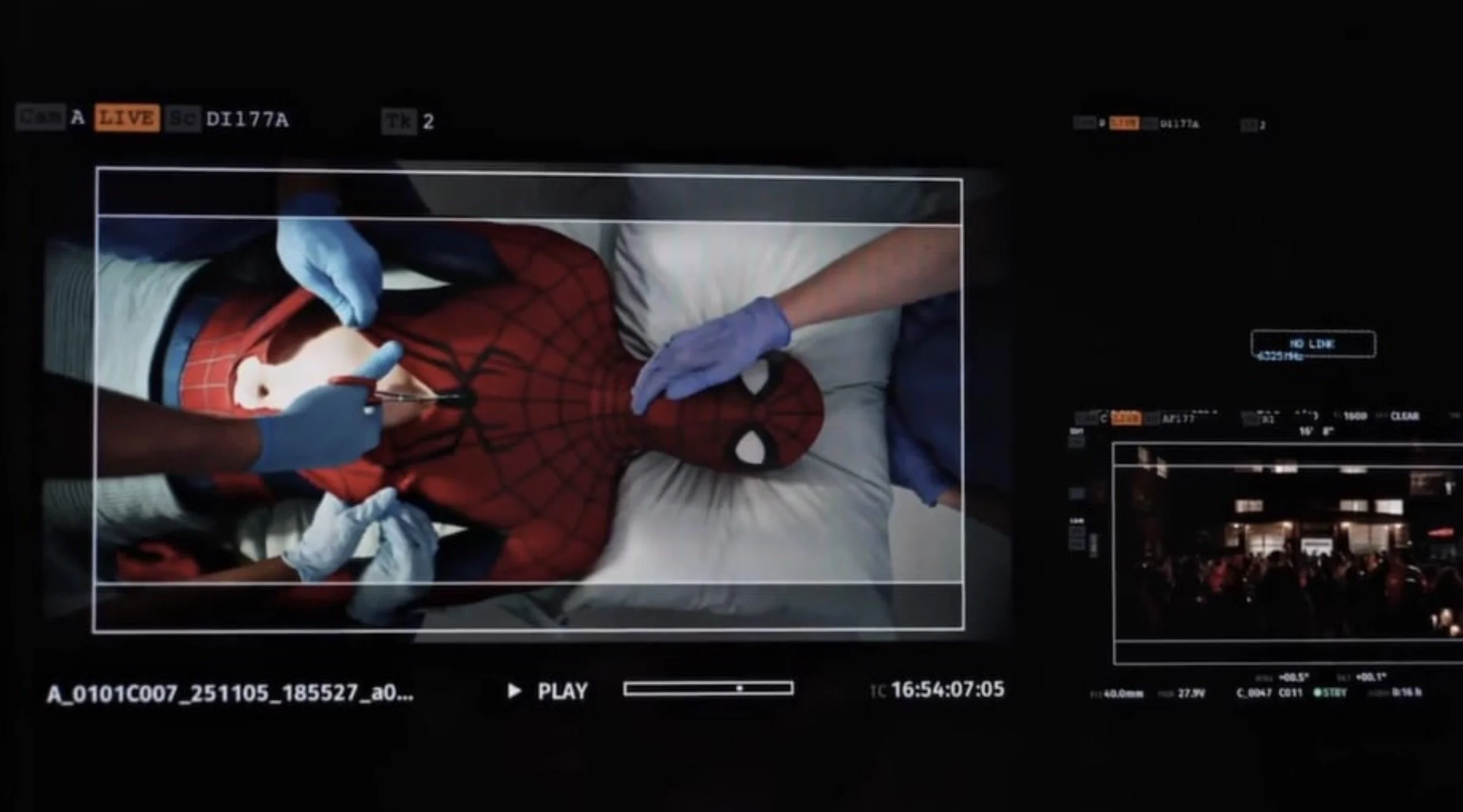
Perhaps the most significant revelation in the deleted scenes is the extended hospital sequence. In the finished film, the transition from the battle in the streets to Peter’s recovery is relatively swift. However, the deleted footage paints a much bleaker picture of the aftermath.
The sequence features Frank Castle bringing a grievously injured Spider-Man to a hospital. The footage is raw and visceral, showing medical staff frantically cutting through the iconic Spidey suit—a visual detail that emphasizes the vulnerability of the hero beneath the mask. This discovery also explains a lingering mystery for eagle-eyed fans: the "injection" shot. Several television spots featured a brief, out-of-context shot of Peter receiving a medical injection. For months, fans speculated about its inclusion. The deleted footage confirms that the original cut of the film prioritized the grueling, quiet reality of Peter’s recovery, a plot thread that was eventually sacrificed in favor of maintaining a faster, more action-oriented pace.
Supporting Data: The Anatomy of an Edit
The decision to trim Spider-Man: Brand New Day was not made lightly. According to reports from the production team, the film underwent several iterations of editing to ensure that the introduction of high-stakes, multi-hero dynamics did not overwhelm the core story of Peter Parker’s personal struggle.
The "Staten Island" Mystery
One of the most persistent talking points surrounding the film is the cryptic reference to an event on Staten Island. The mention of this event in the dialogue created a vacuum of information that has fueled fan theories since the film’s premiere.
In a recent candid discussion, writers Chris McKenna and Erik Sommers addressed the mystery with a sense of humor. "I don’t think anyone knows what happened in Staten Island," Sommers admitted, laughing. McKenna expanded on the creative intent, explaining, "We always had an opening action sequence. I think originally it was a bank robbery, and then that turned into this really fun car chase we did with the tank, but it was always Frank blustering into this action sequence in a way that drove Spider-Man crazy."
The "Staten Island" line was intended to be a piece of shorthand dialogue meant to establish a shared history between the two characters, but it inadvertently created one of the film’s biggest "lore holes." By acknowledging that the event was never fully scripted, the writers have effectively put the mystery to rest, confirming that the event exists only as a piece of implied history rather than a tangible, filmed sequence.
Official Responses: The Creative Vision
The creative team behind the film has been vocal about the nature of these deleted scenes. For directors and writers, the cutting room floor is not a graveyard of failures, but a gallery of necessary choices.
The inclusion of these scenes in the digital release serves as an "archival" approach to modern filmmaking. By allowing fans to see the transition from a darker, more grounded, and lengthy recovery sequence to the punchier theatrical edit, Marvel is inviting the audience into the editorial process. This transparency is indicative of a broader shift in how superhero cinema is presented: the film is no longer viewed as a static product, but as an evolving narrative.
Implications: The Road to the Extended Cut
The most tantalizing aspect of this digital release is the confirmation that an extended cut is in the works for a future theatrical release. This raises a fundamental question for the industry: Is the "extended cut" the new gold standard for home media value?
Re-evaluating the Theatrical Experience
The existence of the hospital footage, in particular, suggests that the extended cut could fundamentally alter the audience’s perception of the film’s second act. If these scenes are re-integrated, the pacing of the movie will shift from a fast-paced thriller to a more meditative character study of a hero pushed to his physical limits.
This move also signals a shift in the marketing of physical media. With the Blu-ray and 4K UHD release arriving on December 15, fans are being encouraged to purchase the film not just for the movie they saw, but for the version they might see in the future.
The Legacy of the "Lost" Scenes
As we look toward the December home release, the discourse remains focused on the balance between "story efficiency" and "world-building." The deleted material—specifically the hospital sequence and the expanded interaction with The Punisher—adds depth to the characters that the theatrical cut, by necessity, left on the table.
Whether these scenes will enhance the viewing experience in the upcoming extended cut remains to be seen. However, the fact that they are now part of the public record ensures that the legacy of Spider-Man: Brand New Day will be defined by both what we saw in the theater and what was left behind.
In conclusion, the digital release of Spider-Man: Brand New Day is a masterclass in modern franchise management. By providing access to the raw materials of the production, Marvel has fostered a deeper connection between the audience and the creative process. As fans await the December 15 physical release and the inevitable arrival of the extended cut, they do so with a clearer understanding of the choices, challenges, and creative risks that went into crafting one of the most talked-about Spider-Man films in recent memory. The mask may be the same, but the story behind it has never been more complex.
