
In Conversation: The Second Life of Freddie Nole — A Journey of Redemption and Resilience
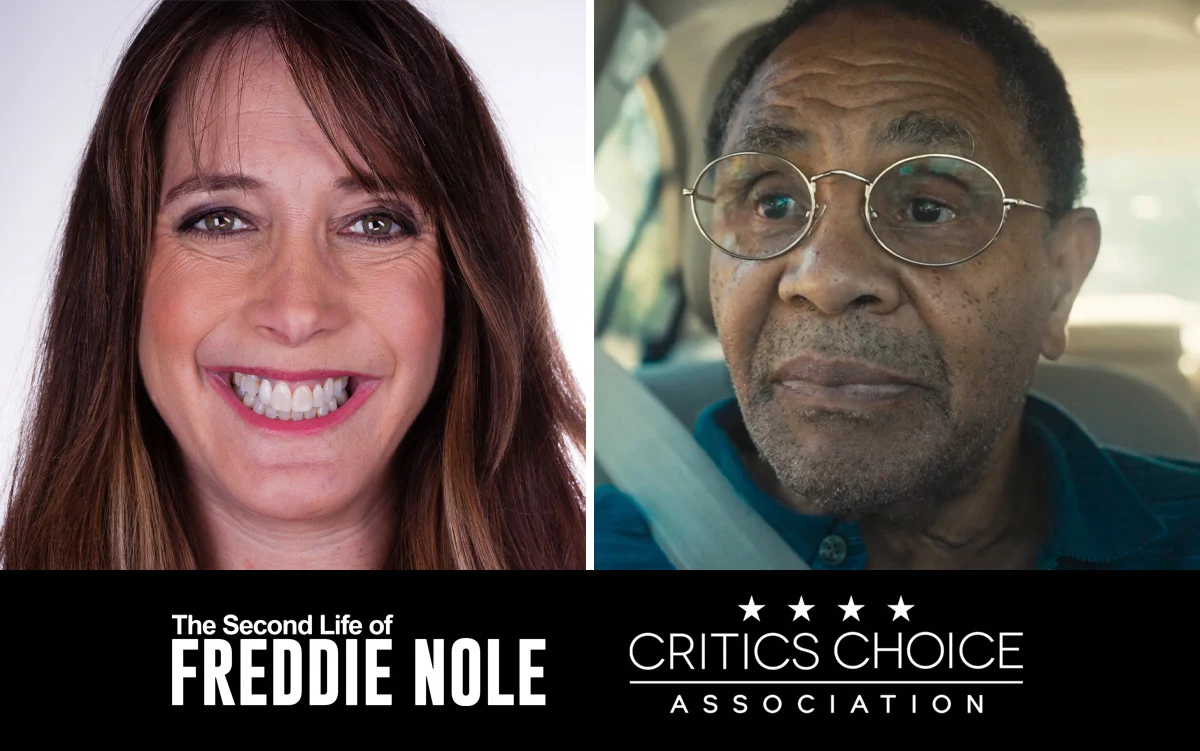
In the landscape of modern documentary filmmaking, few stories possess the visceral, gut-wrenching, and ultimately uplifting power of The Second Life of Freddie Nole. Directed by Dana Nachman, this short documentary has been making waves on the festival circuit, securing four Audience Awards and the prestigious Social Impact Award at the Indy Shorts International Film Festival.
Recently, Critics Choice Association member Carla Renata sat down with both Nachman and the film’s subject, Freddie Nole, to peel back the layers of a narrative that challenges our societal perceptions of justice, incarceration, and the true meaning of rehabilitation.
The Main Facts: A Mission Born from Injustice
At the heart of the film is a simple, yet profound premise: Freddie Nole, a man who lost five decades of his life to the carceral system, spends his "second life" waiting at the gates of prisons to offer rides to those stepping into freedom for the first time in years.
This is not a story about charity; it is a story about community, shared trauma, and the necessity of human connection. When Nole picks up an individual exiting prison, he is not merely providing transportation. He is providing a bridge to the outside world—a witness to their survival. The documentary operates as a vérité road trip, capturing the quiet, heavy, and often beautiful conversations that occur in the front seat of a car as the prison fence fades into the rearview mirror.
The film highlights the staggering reality of Nole’s own history: he served 50 years for a crime he did not commit, or more accurately, a "staggering mistake" that resulted in a half-century of lost potential. Instead of succumbing to bitterness, Nole has transformed his tragedy into a mission of service.
Chronology: From the Cell to the Open Road
To understand the weight of The Second Life of Freddie Nole, one must understand the timeline of a life interrupted.
The Stolen Decades
For 50 years, Freddie Nole lived within the confines of the American prison system. During this period, the world evolved—technology, social norms, and the political landscape shifted—while Nole remained static, trapped in a cycle of confinement. This period, which would break the spirit of most, became the forge in which Nole’s resolve was tempered.
The Release and the Realization
Upon his eventual release, Nole faced the "re-entry gap." Many prisoners released today find themselves in a world they no longer recognize, lacking the social scaffolding required to transition back into society. Nole realized that the most dangerous time for an ex-convict is the first few hours after release—a time of intense vulnerability, confusion, and fear.
The Genesis of the Mission
Nole began his mission not because of a grant or a non-profit initiative, but because of an intuitive understanding of the void left by the system. He decided that if no one else was going to be there to meet these men at the gate, he would.
The Cinematic Journey
Director Dana Nachman encountered Nole’s story and recognized its cinematic potential. Through The Second Life of Freddie Nole, she chronicles these pickups, allowing the audience to ride shotgun. The film tracks several specific journeys, mapping the transition from the sterile environment of the prison yard to the chaotic, vibrant reality of civilian life.
Supporting Data: The Crisis of Recidivism and Re-entry
The documentary serves as more than a character study; it is an indictment of a system that fails to prepare individuals for life after incarceration.
The Re-entry Gap
Data consistently shows that the first 72 hours following release are the most critical for an individual’s long-term success. According to the Bureau of Justice Statistics, a significant percentage of recidivism occurs within the first year of release. Lack of transportation, housing, and social support are the primary drivers of this failure.
Social Impact Metrics
The Indy Shorts Social Impact Award was bestowed upon this film because it highlights a scalable solution to a systemic problem. Nole’s work acts as a "soft landing" mechanism. By providing a safe space and a sympathetic ear, he helps mitigate the shock of sudden freedom.
The Cost of Incarceration
While the human cost of Nole’s 50-year sentence is incalculable, the financial burden on the state for keeping an innocent man incarcerated for five decades is immense. The film subtly underscores the inefficiency of the system, prompting viewers to consider how many "Freddies" are currently lost in the bureaucratic machinery of the Department of Corrections.
Official Responses and Creative Perspectives
In her conversation with Carla Renata, director Dana Nachman discussed the technical and emotional challenges of filming in such a volatile environment.
"I wanted the audience to feel the transition," Nachman noted. "The car is a liminal space. It’s not the prison, but it’s not yet ‘home.’ Freddie’s role is to act as a buffer between those two worlds."
Freddie Nole, speaking with a grace that defies his circumstances, emphasized that his mission is about dignity. "When you walk out of those gates, you are often treated as less than human," Nole told Renata. "My job is to remind these men that they are still men. They are still fathers, sons, and brothers. The ride is just the beginning of their journey back to themselves."
Critics have lauded the film for its restraint. Rather than utilizing heavy-handed narration or manipulative musical scores, the film relies on the raw, unvarnished dialogue between Nole and his passengers. It is a masterclass in observational documentary filmmaking.
Implications: A Call to Action
The success of The Second Life of Freddie Nole carries significant implications for policy and social activism.
Redefining Rehabilitation
The film challenges the punitive model of the American prison system. If we view rehabilitation as the goal of incarceration, then Nole’s work represents the final, essential step of that process. Without the bridge that Nole provides, the "rehabilitated" individual is often left to fend for themselves in a society that is fundamentally unwelcoming.
The Power of Peer Support
The documentary highlights the efficacy of peer-led support networks. Professionals and social workers have their place, but there is a unique authority and comfort that comes from someone who has "walked the walk." Nole’s life experience provides a level of credibility that no government-funded program can replicate.
Media as a Catalyst for Change
By bringing this story to a global audience, Nachman has effectively shifted the narrative from one of "criminality" to one of "community." The film encourages viewers to look past the label of "ex-convict" and see the human being underneath.
What Comes Next?
The momentum generated by the film’s festival run suggests that Nole’s story is far from over. There is a growing movement to support programs like the one depicted in the film, with advocates calling for state-sponsored re-entry programs that mirror the personalized, compassionate approach Nole has pioneered.
Conclusion: The Road Ahead
The Second Life of Freddie Nole is a profound reminder that redemption is not a destination, but a road we travel every day. Freddie Nole, who spent 50 years being told who he was by a system that was fundamentally wrong, is now spending his second life helping others define who they want to become.
As we look toward the future of criminal justice reform, it is stories like this that provide the roadmap. They remind us that while the system may be slow to change, the human spirit is resilient, and the act of driving a man home can, in itself, be a revolutionary act of love.
For those who have yet to see the film, it serves as an invitation: to witness a life reclaimed, and perhaps, to consider what we might do to help the next person who steps out of those prison gates find their way home.
About the Film:
- Director: Dana Nachman
- Subject: Freddie Nole
- Awards: 4 Audience Awards, Social Impact Award (Indy Shorts)
- Availability: Currently touring the festival circuit. For more information, visit the official production website.
