
From Departure to Appreciation: Denise Crosby’s Evolving Legacy in the Star Trek Universe
The Star Trek franchise is a cultural monolith, spanning six decades and evolving from a modest science fiction experiment into a sprawling transmedia empire. Central to this longevity is the profound connection between the onscreen characters and their audience. While iconic leads like James T. Kirk or Jean-Luc Picard serve as the franchise’s pillars, the true texture of the Star Trek universe is often woven by its supporting cast—characters who, despite limited screen time, leave an indelible mark on the fandom.
Perhaps no performer embodies the complexities of this "Trek" experience more than Denise Crosby. As the original chief security officer of the USS Enterprise-D, Tasha Yar, Crosby’s tenure on Star Trek: The Next Generation (TNG) was brief, tumultuous, and ultimately transformative. For decades, the actor held a complicated view of her time in the franchise, shaped by her abrupt departure during the show’s inaugural season. However, in a recent exclusive interview, Crosby revealed that a long-overdue revisit to the series has resulted in a profound change of heart, allowing her to finally embrace the legacy of the character that once felt like a professional burden.
The Early Exit: A Departure Born of Frustration
To understand the significance of Crosby’s current perspective, one must first examine the context of her exit in 1988. During the production of The Next Generation’s first season, the environment behind the scenes was notoriously difficult. The show was struggling to find its voice, and the writing staff was grappling with the pressure of succeeding the original 1960s series.
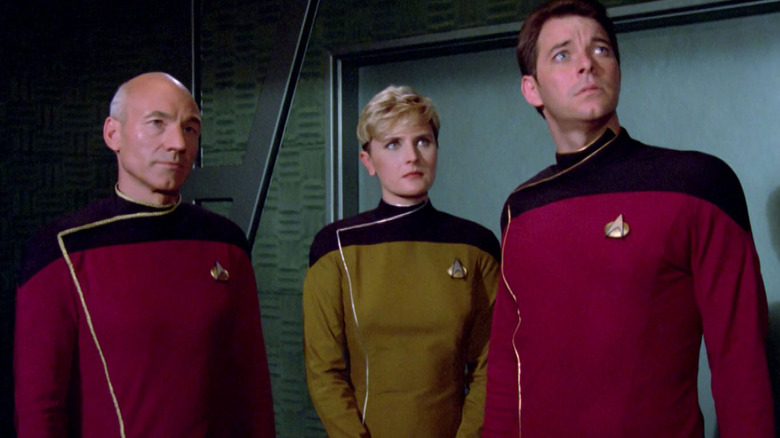
Crosby, cast as the hardened, no-nonsense Lieutenant Tasha Yar, found herself increasingly disillusioned. The character, intended to be a strong, capable security chief, often felt underutilized or poorly defined within the scripts. Frustrated by the lack of meaningful development and the creative limitations of the role, Crosby made the difficult decision to leave the series.
Her exit was finalized in the harrowing episode "Skin of Evil," where Tasha Yar was killed in a senseless, brutal encounter with a malevolent, sentient pool of tar known as Armus. It was a shocking conclusion for a main cast member—an abrupt end that left fans stunned and, in many cases, heartbroken. For years, this was the primary narrative regarding Crosby’s involvement: the actor who walked away from a hit show because she felt stifled.
A Second Life: From Yar to Sela
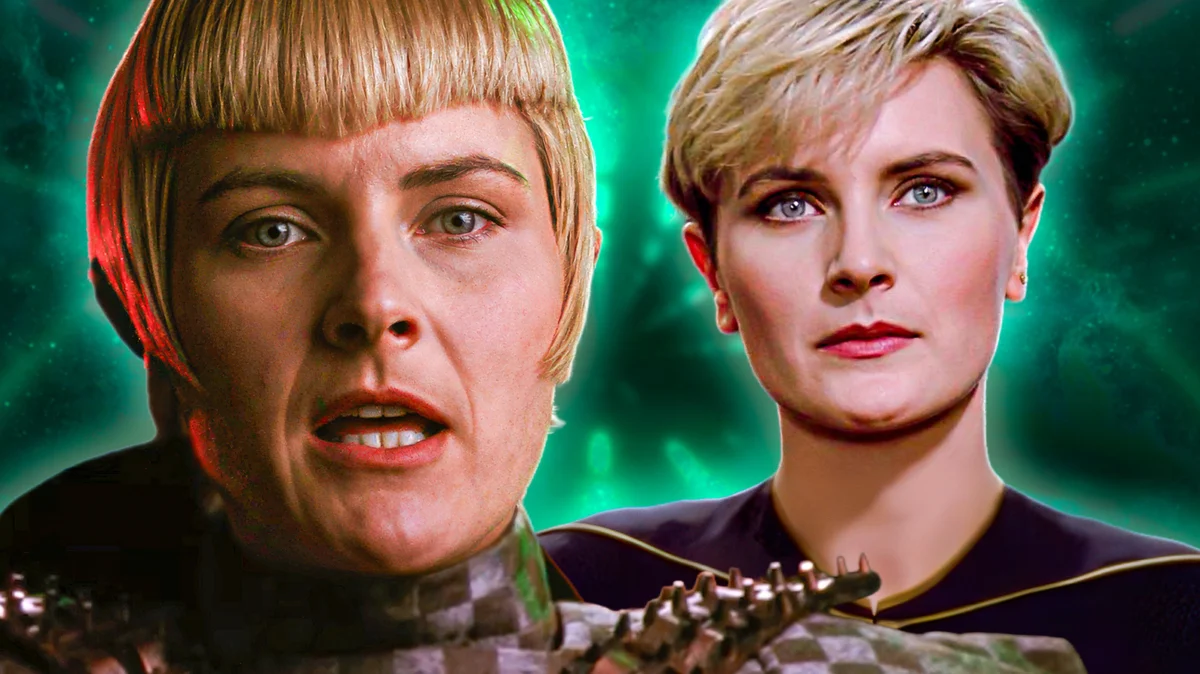
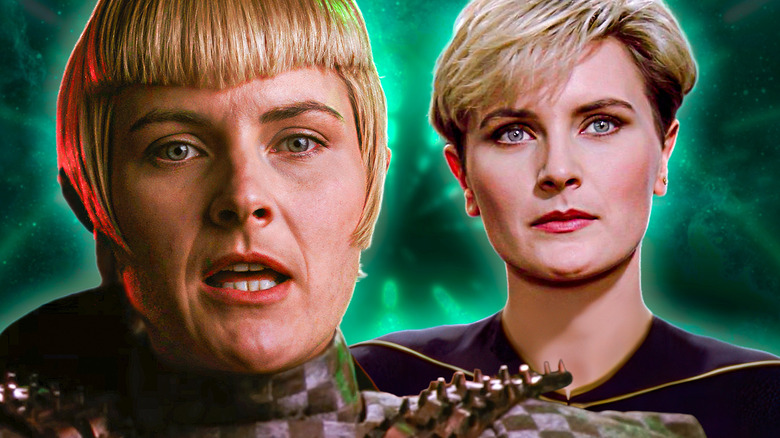
While Tasha Yar perished in the first season, Denise Crosby’s relationship with the Star Trek franchise was far from over. Her willingness to return to the fold demonstrated a unique professional flexibility. She returned as the alternate-timeline version of Tasha in the fan-favorite episode "Yesterday’s Enterprise," and later took on the recurring role of Commander Sela, a manipulative, half-Romulan antagonist.
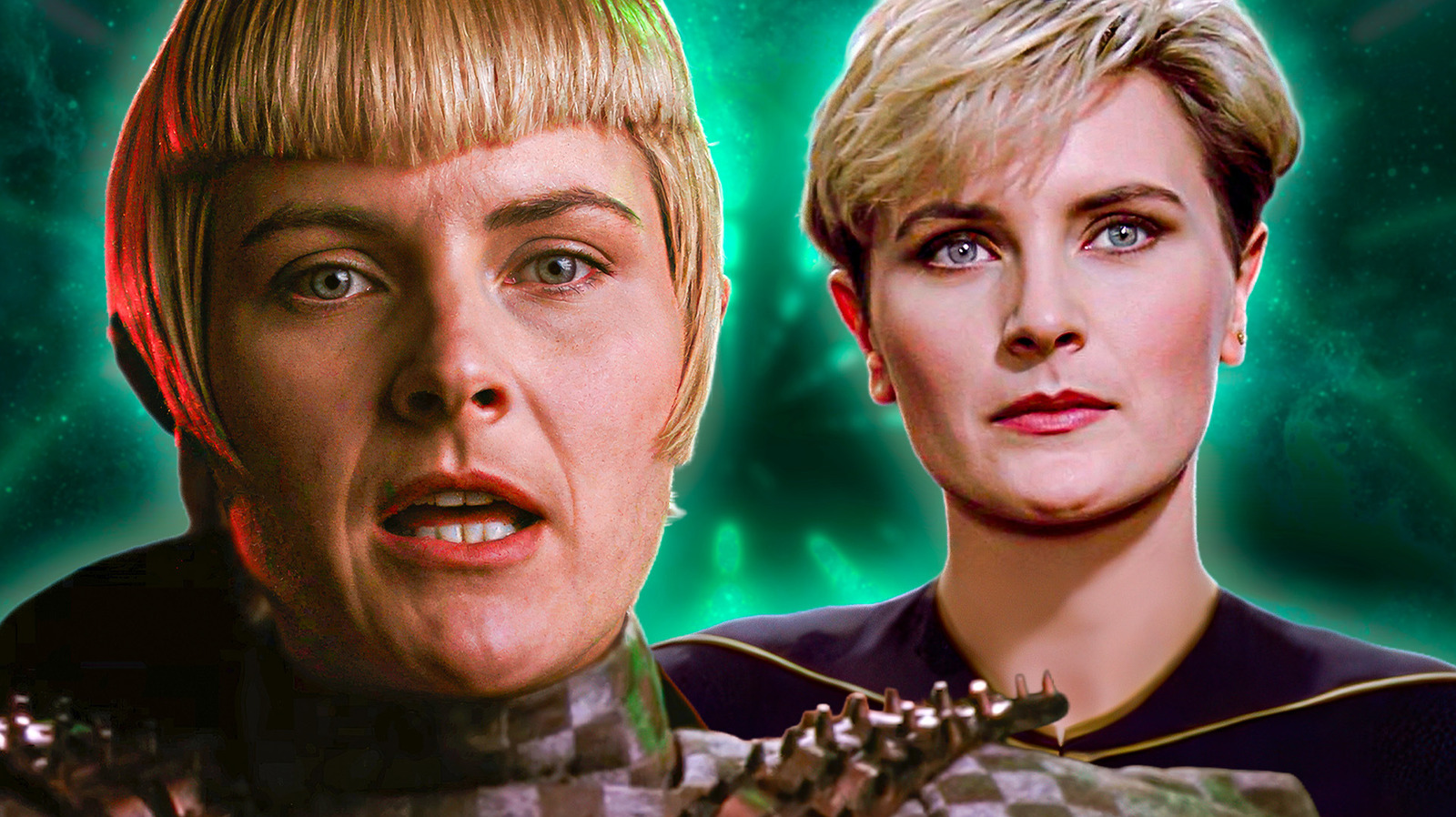
These later appearances allowed Crosby to showcase her range as an actress, moving from the rigid, duty-bound security officer to the complex, duplicitous villain. Despite these triumphs, however, Crosby remained somewhat detached from the cultural phenomenon of Tasha Yar. While fans at conventions shared emotional stories of how Yar’s death impacted their lives, Crosby viewed these interactions with a degree of professional gratitude, but without the personal connection that the audience felt. She was, in her own words, "too close to the fire" to understand the warmth the character radiated to the public.
The Turning Point: Revisiting the Source Material
The shift in Crosby’s perspective occurred roughly two years ago, catalyzed by an invitation to appear on The 7th Rule podcast, hosted by Deep Space Nine veteran Cirroc Lofton and producer Ryan Husk. To prepare for the engagement, Crosby decided to do something she had not done since the show aired in the late 1980s: she sat down to watch the first season of The Next Generation.
"About two years ago I watched The Next Generation, the first season, for the first time since it aired," Crosby explained during her appearance at New York Comic Con. "I had never gone back to have a look. So, that allowed me to look at that first season again for the first time."
Watching the show with the benefit of hindsight, removed from the pressures of the production schedule and the creative frustrations of the mid-80s, allowed Crosby to experience the show as a viewer rather than a participant. "Now I’m looking at it from this perspective, not in real-time, but at a distance, and it gave me such a renewed appreciation," she noted.
The Emotional Resonance of Tasha Yar
The realization was profound. For nearly four decades, Crosby had listened to fans speak about how Yar’s death—and her brief life—had left a void in the show. She had heard the stories of young girls who saw themselves in the strong, independent security officer. Yet, until she watched the episodes, those stories were abstract concepts.
Seeing the character through a modern lens, Crosby finally understood the weight of her contribution. She recognized that Tasha Yar was not merely a character who was "written off," but a symbol of resilience and professional excellence that resonated deeply with a specific demographic of Star Trek viewers.
"And then I watched it again for the first time in almost 40 years and went, ‘Ahh, I love this character,’" Crosby shared. "It gave me a renewed joy for Tasha Yar. I get why she would’ve meant something, especially to young girls. And so, it took me by surprise. It really took me by surprise. And I went, ‘Yeah, I’m so grateful I was able to leave this as part of a legacy.’"
Supporting Data: The Power of Fan Connection
Crosby’s experience is a testament to the "Trek" effect—a phenomenon where the audience often understands the value of a character better than the creators or the actors themselves in the moment. The history of the franchise is littered with similar instances. Consider Andrew Robinson’s Elim Garak from Deep Space Nine. Originally intended as a minor recurring character, the depth he brought to the role allowed the writers to expand his narrative until he became one of the most compelling figures in the entire Star Trek canon.
Similarly, Michelle Forbes’ Ro Laren provided a necessary grit and moral ambiguity to the Next Generation bridge crew. Like Crosby, these actors had to navigate the "melting pot" of the Star Trek production machine. The difference is that while many eventually embraced their roles, Crosby’s journey was arguably the most public and the most difficult, given the nature of her character’s death. The fact that she has moved from a place of frustration to one of genuine gratitude underscores the healing power of time and the validating nature of a legacy-driven fandom.
Official Context: The Sixty-Year Mission
Crosby’s reflections come at a poignant time for the franchise. As Star Trek celebrates its 60th anniversary, there is a renewed effort to document the history of the series, the actors, and the immense cultural footprint the franchise has left on television.
Crosby is currently featured in the documentary The Sixty-Year Mission: How Star Trek Changed Television and the World. The film serves as a comprehensive look at how a low-budget science fiction show became a global pillar of pop culture. Her participation in the project and her presence at events like New York Comic Con signal that she is no longer an actor who "left the show," but a key ambassador for the franchise.
Implications for the Future of Star Trek
What does this change of heart mean for the franchise moving forward? Primarily, it highlights the importance of the actor-fan relationship. For decades, the "Trek" fandom has been criticized for its intensity, yet it is that very intensity that preserves the legacy of characters like Tasha Yar.
By reconnecting with the material, Crosby has provided a model for how legacy performers can navigate their past work. Her journey demonstrates that the "baggage" of a troubled production is not necessarily permanent. When an actor allows themselves to step back and view their contribution through the eyes of those who loved it, the resentment often dissipates, replaced by a shared sense of pride.
Furthermore, as Star Trek continues to expand into new eras with series like Strange New Worlds and Starfleet Academy, the lessons learned by the pioneers of The Next Generation remain vital. The industry often treats actors as interchangeable parts, but the "Trek" experience proves that it is the humanity, the flaws, and the specific choices made by actors like Denise Crosby that ultimately define the longevity of these stories.
Conclusion: A Legacy Secured
Denise Crosby’s evolution is a heartening reminder that the story of Star Trek is never truly finished. Whether through documentaries, conventions, or the simple act of a nostalgic re-watch, the franchise provides a space for constant re-evaluation.
Tasha Yar may have died in the first season of The Next Generation, but she has lived on in the hearts of fans for nearly 40 years. Today, for the first time, she lives on in the heart of the woman who played her. In finding a "renewed joy" for her character, Crosby has not only made peace with her past—she has solidified her place in the history of the most significant science fiction franchise in television history. As she continues to carry the torch for the Star Trek legacy, one thing is certain: Lieutenant Tasha Yar’s watch has truly ended, but her influence continues to grow.
