
Visionary British Director and Cinematographer Nicolas Roeg Dies at 90
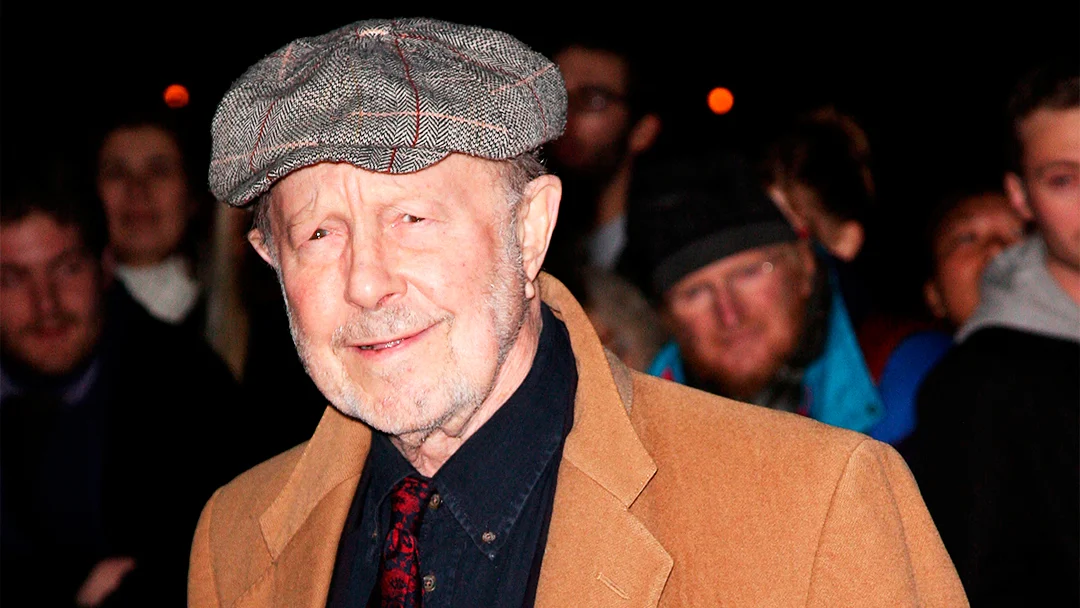
LONDON — Nicolas Roeg, the visionary British filmmaker and master cinematographer whose daring, psychologically complex, and visually arresting movies challenged conventional storytelling and left an indelible mark on global cinema, has passed away at the age of 90.
His son, Nicolas Roeg Jr., confirmed to the BBC that his father died on Friday night.
Throughout a career spanning decades, Roeg established himself as one of the most distinctive and uncompromising voices in film history. Known for his splintered temporal editing, moody aesthetics, and unflinching explorations of human psychology, alienation, and desire, he directed a string of cinematic milestones that continue to resonate. His iconic filmography includes Performance (1970), Walkabout (1971), Don’t Look Now (1973), The Man Who Fell to Earth (1976), and the beloved yet terrifying dark fantasy The Witches (1990).
Roeg’s unique artistic vision earned him reverence from peers and critics alike. He became a primary touchstone for modern cinematic innovators, directly inspiring generations of filmmakers, including Danny Boyle, Steven Soderbergh, and Christopher Nolan. Yet, his path to becoming an auteur was forged through years of rigorous, foundational labor within the British studio system—a grueling apprenticeship that transformed a former military projectionist into one of the most sought-after cinematographers of the 1960s.
Main Facts
Nicolas Roeg’s passing marks the end of an era for avant-garde and art-house cinema. Born in London in May 1928, Roeg cultivated a deep fascination with visual imagery and projection during his military service. He systematically climbed the industry ladder, starting from the absolute bottom as an office boy and apprentice editor in 1947, before ascending through every technical rung of the camera department.
By the 1960s, Roeg was a master craftsman behind the lens, lensing seminal pictures for directors like François Truffaut (Fahrenheit 451), John Schlesinger (Far From the Madding Crowd), and Richard Lester (Petulia). His breakthrough came when he co-directed Performance with Donald Cammell, a countercultural collision of gangster tropes and fluid identity starring Mick Jagger. The film’s famously troubled production and initial studio resistance—Warner Bros. executives initially deemed it incomprehensible—foreshadowed a career defined by artistic defiance.
Roeg’s subsequent solo directorial efforts transformed him from a brilliant technician into a celebrated auteur. His films frequently discarded linear narrative structures in favor of associative editing, matching emotional states rather than chronological time. Whether depicting the harsh, mystical expanses of the Australian Outback in Walkabout, the labyrinthine grief and watery canals of Venice in Don’t Look Now, or the melancholic alienation of an extraterrestrial in The Man Who Fell to Earth starring David Bowie, Roeg treated the screen as a canvas for poetic, psychological immersion.
Despite frequent battles with studio executives and distributors over accessibility and cuts, Roeg’s portfolio earned him enduring critical validation. He was named a Fellow of the British Film Institute in 1994, received the Dilys Powell Award for Excellence in Film from the London Film Critics Circle in 2011, and published his memoirs, The World Is Ever Changing, in 2013.
Chronology of a Legendary Career
The Apprenticeship and Lensman Years (1947–1969)
Roeg’s cinematic education was entirely practical. After serving in the military as a projectionist, he entered the British film industry in 1947 as an office boy and apprentice editor. By 1950, he was employed at MGM’s London Studios, grinding through roles from clapper boy and assistant camera operator to lighting cameraman.
During the 1950s, he worked on a variety of productions, including George Cukor’s Bhowani Junction and The Trials of Oscar Wilde, alongside various low-budget crime thrillers. His reputation soared when he served as the second-unit cinematographer on David Lean’s epic masterpiece Lawrence of Arabia (1962).
Throughout the mid-to-late ’60s, Roeg’s lensing defined the aesthetic of several major European and Hollywood productions shot in the UK and abroad. His credits included Roger Corman’s gothic horror The Masque of the Red Death (1964), François Truffaut’s dystopian adaptation Fahrenheit 451 (1966), and John Schlesinger’s romantic drama Far From the Madding Crowd (1967). He also contributed second-unit direction to Judith (1965) and shot select sequences for the 1966 James Bond spoof Casino Royale.
The Auteur Breakthrough and Masterpieces (1970–1980)
Transitioning to the director’s chair, Roeg co-directed Performance (1970) with Donald Cammell. The movie explored fluid identity and rock-and-roll hedonism through a fractured narrative style influenced by Jean-Luc Godard and Richard Lester. Warner Bros. executives were so confounded by the finished cut that the film sat on shelves for years before receiving a modified release, eventually achieving legendary status as a cornerstone of British counterculture cinema.
Roeg immediately followed this with Walkabout (1971), a visually stunning saga of survival in the Australian Outback. Starring Jenny Agutter, his son Luc Roeg, and David Gulpilil, the film juxtaposed modern industrial alienation with ancient Indigenous Australian traditions through a striking, non-linear editing style.
In 1973, Roeg delivered Don’t Look Now, an adaptation of a Daphne du Maurier short story starring Julie Christie and Donald Sutherland as grieving parents in Venice. Widely considered a masterpiece of psychological horror, the film utilized intricate cross-cutting and color motifs (specifically the recurring shock of red) to map out trauma, premonition, and dread. Although its box office run was partially eclipsed that year by the massive cultural footprint of The Exorcist, Don’t Look Now has since been heralded by critics as one of the greatest British films ever made.
Roeg continued his streak of idiosyncratic sci-fi and drama with The Man Who Fell to Earth (1976), casting rock icon David Bowie as Thomas Jerome Newton, a stranded alien corporate titan. Much like Performance, the film challenged traditional studio expectations. Paramount’s Barry Diller reportedly balked at the final cut, leading to an independent release that ultimately cemented the film as a cult classic.
Mature Works, Studio Collaborations, and Television (1981–2007)
Roeg entered the 1980s with Bad Timing: A Sensual Obsession (1980), a disturbingly effective, non-linear romantic tragedy starring Art Garfunkel and Theresa Russell. The film marked the beginning of his creative and personal partnership with Russell, whom he later married. His subsequent 1980s projects included Eureka (1983) with Gene Hackman, the theatrical adaptation Insignificance (1985), and the sun-bleached survival drama Castaway (1987).
In 1990, Roeg directed his most commercially visible film: The Witches, an adaptation of Roald Dahl’s dark children’s novel produced by Jim Henson and starring Anjelica Huston. While the movie has endured as a nostalgic touchstone and one of the most genuinely terrifying children’s films ever produced, it famously displeased Dahl himself due to alterations made to the story’s original conclusion.
When subsequent cinematic efforts, such as Cold Heaven (1991), struggled to find audiences, Roeg transitioned into television and international co-productions. He helmed notable TV movies and prestige projects, including Heart of Darkness (1993) starring Tim Roth and John Malkovich, Full Body Massage (1995), Samson and Delilah (1996), and a television adaptation of Tennessee Williams’ Sweet Bird of Youth (1989) featuring Elizabeth Taylor. His 1996 BBC Films drama Two Deaths, addressing the Serbo-Croatian conflict, garnered strong critical praise despite limited distribution.
Roeg returned to the big screen after a long absence with 2007’s psychological thriller Puffball: The Devil’s Eyeball, which ultimately received a limited release.
Supporting Data & Industry Impact
Roeg’s influence on the film industry stretches far beyond his box-office returns. His editing techniques—characterized by flash-forwards, associative match cuts, and temporal fragmentation—fundamentally expanded the vocabulary of visual storytelling.
- Critical Reception: Don’t Look Now routinely places near the top of British Film Institute (BFI) polls surveying the greatest British films of the 20th century. Performance and Walkabout enjoy similarly exalted status among international critics and cinephiles.
- Directorial Lineage: Contemporary auteurs frequently cite Roeg as a foundational influence. Steven Soderbergh has repeatedly praised Roeg’s editing rhythms, while Danny Boyle’s kinetic visual style bears clear lineage to Roeg’s stylistic playbook. Christopher Nolan’s manipulation of temporal storytelling in films like Memento and Inception shares stylistic DNA with Roeg’s pioneering experiments in narrative fragmentation.
- Awards and Honors:
- Fellow of the British Film Institute (1994)
- Dilys Powell Award for Excellence in Film, London Film Critics Circle (2011)
- Career retrospectives at major international film festivals, including Venice, Berlin, and London.
Official Responses and Tributes
Following the news of his passing, figures from across the global entertainment community took to social media and press outlets to pay tribute to the late director’s monumental contributions to cinema.
Film institutions and contemporary creators highlighted his bravery as an artist who consistently prioritized psychological truth and aesthetic daring over commercial safety. Colleagues remembered him as a gentle, fiercely dedicated collaborator who demanded absolute focus and creativity from everyone on his sets, from actors to gaffers.
Edgar Wright tweeted following the news, remembering Roeg as "a true cinematic innovator and a giant of British film," adding that his films "pulsed with a unique, restless, and hypnotic energy."
Fellow directors and fans alike shared appreciation for the visceral emotional resonance of his work, noting that Roeg’s films did not merely tell stories—they altered the viewer’s perception of time, memory, and reality.
Implications for Cinema and Legacy
The death of Nicolas Roeg closes the chapter on a rare breed of filmmaker: the cinematographer-turned-auteur who treated every frame of film as an emotional and philosophical puzzle.
In an era of increasingly homogenized cinematic aesthetics and standardized narrative structures, Roeg’s filmography stands as a monument to uncompromising artistic vision. His refusal to pander to audiences or spoon-feed narrative resolutions challenged viewers to actively participate in the creation of meaning.
Roeg is survived by his third wife, actress Harriet Harper; his four children with his first wife, actress Susan Stephen—including producer Nicolas Roeg Jr., Luc Roeg, and first assistant directors Sholto J. Roeg and Waldo Roeg; and two children with his second wife, actress Theresa Russell—actor Max Roeg and cameraman Statten Roeg.
As film historians and contemporary cinephiles mourn his passing, Nicolas Roeg’s legacy remains safe within a body of work that continues to challenge, mesmerize, and disrupt. His films do not age; rather, cinema continually catches up to them.
