
Beyond the Stage: Examining the Cinematic Legacy of Ageless Rock Icon Mick Jagger
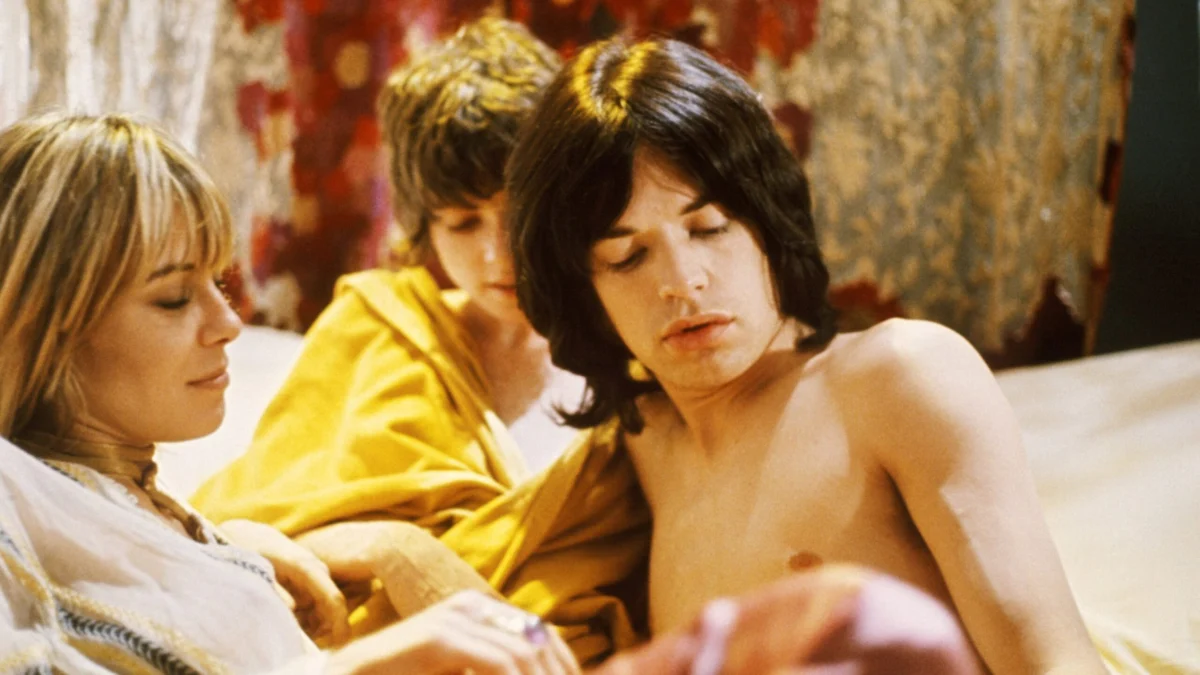
As Mick Jagger marks his milestone 80th birthday, the world celebrates a figure who remains remarkably ageless. Universally recognized as one of rock and roll’s greatest frontmen, the Rolling Stones icon has earned endless accolades for his soaring vocals, electrifying stage presence, and timeless songwriting. Yet, nestled beneath the colossal shadow of his musical career lies a fascinating, less-celebrated pursuit: his sporadic yet intriguing work as a dramatic film actor.
While contemporaries and fellow musicians often chased silver-screen glory with mixed results, Jagger’s cinematic journey has been marked by bold choices, near-misses, cultural clashes, and a distinct refusal to play it safe. From playing historical bushrangers to decadent musicians and eccentric art dealers, Jagger’s filmography offers a unique window into the allure and limitations of a rock god trying to translate his magnetism to celluloid.
Main Facts: The Reluctant Actor of Rock
Mick Jagger’s cinematic footprint is defined not by volume, but by select, high-risk, and often avant-garde projects. Unlike peers who seamlessly transitioned into full-time Hollywood heavyweights, Jagger approached acting as an intermittent playground where he could experiment with his public persona.
Despite possessing undeniable charisma, striking androgynous beauty, and an instinctive command of body language, Jagger never secured that elusive, career-defining breakthrough acting role—the cinematic equivalent of David Bowie’s mesmerizing turn in The Man Who Fell to Earth, Cher’s Oscar-winning triumph in Moonstruck, or Lady Gaga’s powerhouse performance in A Star Is Born.
Instead, Jagger’s cinematic resume reads like a collection of daring artistic experiments. He famously carved out a niche playing decadent, morally ambiguous, or eccentric characters. Yet, as film critics have noted over the decades, translating the lightning-in-a-bottle energy of a live Rolling Stones concert onto a static movie screen proved to be an elusive challenge.
Chronology: A Dual Cinematic Debut in 1970
Jagger’s cinematic baptism by fire occurred in 1970 with the simultaneous release of two vastly different, high-risk feature films: Ned Kelly and Performance.
Ned Kelly (April 1970)
Directed by Tony Richardson, this biographical drama cast the British rock star as the iconic Australian 1870s outlaw. Filmed earlier but released two months before his other cinematic venture, the project aimed to capitalize on Jagger’s raw rebellious edge.
Upon its release, Variety’s reviewer observed:
"No one who has ever seen Jagger in action playing to a live audience can question that he is a natural actor and performer with a wide range of expressions and postures at his instinctive command."
However, the critic ultimately found Jagger "curiously static" in the film, placing the lion’s share of the blame on Richardson’s heavy-handed direction rather than Jagger’s intrinsic abilities.
Performance (August 1970)
If Ned Kelly tried to frame Jagger as a historical folk hero, Performance leaned entirely into his reality. Directed by the co-helming debut team of Donald Cammell and Nicolas Roeg, the psychological crime drama featured Jagger playing a burned-out, decadent, reclusive rock star named Turner. It was a brilliant, self-aware deconstruction of his own public persona.
However, the film’s road to theaters was fraught with corporate anxiety. In October 1969, Variety reported that Performance had been shelved by Warner Bros. executives since 1968 because studio heads deemed it "unintelligible." It wasn’t until a new studio regime—led by the esteemed executive John Calley—took over that the film found champions. One insider at the time revealed that the new executives believed Performance was "one of the hottest pictures they have."
When Variety finally reviewed the film in August 1970, critic A.D. Murphy echoed the skepticism of the previous studio regime, dismissing it as a "substandard crime meller (melodrama)" that was strictly "for the psychedelic set," while panning the performances as "flat."
Despite opening to tepid commercial business, Performance quickly evolved into an enduring cult classic. Audiences fell in love with Roeg’s elliptical, eye-catching visual style—a harbinger of his brilliant directorial future—and were captivated by Jagger’s hypnotic screen presence. Notably, the film featured Jagger performing the track "Memo From Turner," which essentially served as a proto-music video, blending rock performance art with narrative cinema.
The Document of Reality: Gimme Shelter (1970)
Jagger’s third cinematic offering of 1970 had the most immediate and profound cultural impact. The Maysles brothers’ documentary Gimme Shelter captured the Rolling Stones on their 1969 U.S. tour, culminating in the tragic free concert at the Altamont Speedway, where four people died, including Meredith Hunter, who was stabbed by Hells Angels security. Unlike his scripted roles, Jagger’s appearance here was raw, unfiltered, and irrevocably tied to the shifting, darkening zeitgeist of the late 1960s counterculture.
Supporting Data: Critical Reception and Industry Outlook
Long before his narrative films hit theaters, the industry was already buzzing about Jagger’s cinematic potential. In May 1970, Variety published a comprehensive roundup assessing a wave of rising British acting talent. The curated list included future legends such as Anthony Hopkins (hailed as a "strong, good-looking actor in his 30s with big potential"), Ian McKellen, Dudley Moore, Helen Mirren, Charlotte Rampling—and Mick Jagger.
Assessing Jagger’s unproven cinematic chops, Variety astutely noted:
"His film work is not yet seen but may well surprise those who play him down as just a wacky warbler."
While few would ever characterize Jagger as "wacky," his personal life frequently dominated global headlines far more than his acting choices. During the 1960s, while the Beatles were initially marketed as the clean-cut "nice lads" of British pop, the Rolling Stones proudly cultivated a dangerous, "bad boy" image. Jagger, in particular, became a lightning rod for societal scandal—his turbulent relationships, marriages, and legendary lifestyle followed by fans with a mixture of moral shock and affectionate awe.
Despite this overwhelming celebrity gravity, Jagger exercised remarkable restraint over the next five decades, selecting roles that often subverted or played directly with his notoriety:
- The Man From Elysian Fields (2001): Directed by George Hickenlooper, Jagger played a jaded, smooth-talking business executive running an upscale escort agency, holding his own alongside Andy Garcia and Julianna Margulies.
- Bent (1997/2015 release landscape): Jagger delivered a memorable, flamboyant turn as a drag queen in this harrowing adaptation of Martin Sherman’s concentration camp-set play.
- The Burnt Orange Heresy (2019): In this neo-noir thriller, an older, distinguished Jagger stepped effortlessly into the skin of a wealthy, manipulative art dealer, proving he could still command the screen with understated menace.
Official Responses and Near-Misses: The Roles That Got Away
Jagger’s cinematic legacy is just as defined by the monumental projects he almost starred in as the ones he completed. In the 1970s and 1980s, his star power attracted some of the most visionary and daring auteurs in cinematic history.
Most notably, Jagger was signed for two famously ambitious, cutting-edge productions:
- Alejandro Jodorowsky’s Dune: Before David Lynch tackled Frank Herbert’s sci-fi masterpiece, surrealist auteur Jodorowsky attempted to mount an epic adaptation featuring an eccentric cast that included Orson Welles, Salvador Dalí, and Mick Jagger. Due to insurmountable financial and logistical hurdles, the project collapsed before filming truly commenced.
- Werner Herzog’s Fitzcarraldo (1982): Jagger was originally cast alongside Jason Robards in Herzog’s legendary Amazonian epic about an opera enthusiast trying to build an opera house in the jungle. Jagger even filmed early scenes for the grueling production. However, extensive weather delays, health crises on set, and scheduling conflicts forced Jagger to drop out. Herzog ultimately had to recast and completely eliminate Jagger’s character, rewriting the dynamic for Klaus Kinski in what became one of cinema’s most legendary troubled productions.
These near-misses highlight an industry paradox: filmmakers recognized that Jagger possessed a unique cinematic aura, yet the practical realities of Hollywood filmmaking often clashed with the relentless touring schedules and global lifestyle of a Rolling Stone.
Implications: The Intermittent Actor in Context
How should history evaluate Mick Jagger’s acting career? In the broader context of entertainment history, musician-turned-actors fall into two distinct camps. There are those who successfully balanced massive music and movie careers over decades—such as Frank Sinatra, Doris Day, and Will Smith—and those who treated acting as a fascinating artistic canvas for dabbling, such as Björk, Joan Jett, and Eminem.
Jagger comfortably fits into the latter category, though with a distinct pedigree. He never chased blockbuster box office numbers or attempted to construct a traditional Hollywood resume. Instead, his filmography is an eclectic mosaic of countercultural statements, psychological character studies, and missed avant-garde opportunities.
As he celebrates his 80th birthday, Jagger stands as a testament to creative longevity. While he may not have claimed an Academy Award or achieved the singular cinematic triumph of David Bowie, his film work remains a compelling footnote to one of the most remarkable cultural lives of the 20th and 21st centuries.
After all, as Hollywood has learned time and time again when dealing with rock’s ultimate survivor, there is still plenty of time. He’s only 80.
