
Architect of the High-Speed Era: Inside Don Toliver’s Calculated Ascent to No. 1
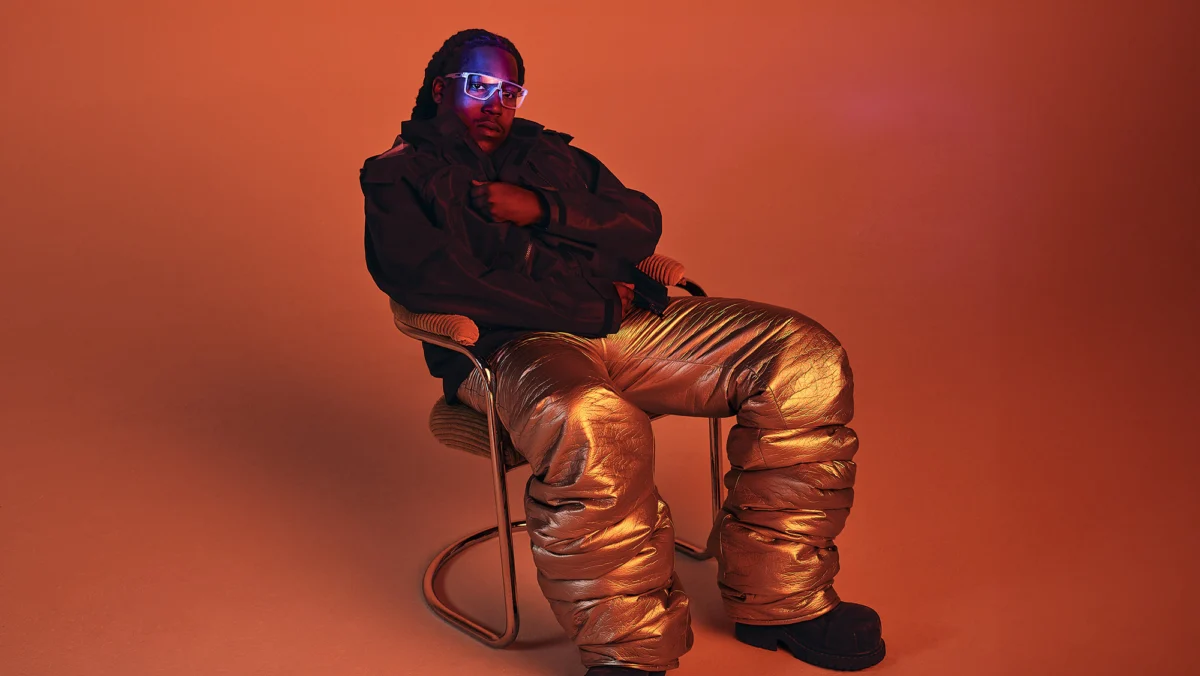
Main Facts: The Blueprint Behind Octane
When most recording artists achieve their career-defining milestone—securing their first Billboard No. 1 album—they typically lean into a familiar script of wide-eyed disbelief. They speak of humility, express profound shock that anyone bought their records, and offer platitudes about how dreams truly do come true.
Caleb Zackery Toliver, known globally simply as Don Toliver, does not play by those rules.
"I swear, I planned the whole shit," Toliver states with matter-of-fact confidence, speaking to The Hollywood Reporter from a rare day off during his grueling, high-capacity Octane arena tour.
Following the rollout of his 2024 project Hardstone Psycho, Toliver did not rest on his laurels or wait for inspiration to strike organically. Instead, he scanned the musical landscape, sensed a distinct vacuum, and deliberately shifted gears.
"I went right into Octane mode, and I felt like I just needed to crank it up," he explains. "Octane was supposed to be the package for the game because the game was quiet."
That calculated strike resulted in Octane, Toliver’s fifth studio album. Propelled by visceral imagery, relentless promotion, and a cohesive sonic identity, the project shattered his previous commercial ceilings to debut at the apex of the charts. Rather than a happy accident, the album was the product of sharp strategic timing, aggressive artistic world-building, and an unyielding self-belief that has defined Toliver’s trajectory since his earliest days in the Houston underground.
Chronology: From PlayStation Mics to the Mount Wilson Observatory
To understand the precision of Toliver’s modern strategy, one must retrace a journey rooted in the working-class neighborhood of Alief in southwest Houston. Music was not merely a hobby for young Caleb; it was an inescapable environment. His father, Bongo, earned industry stripes recording with artists tied to the legendary Houston hip-hop label Swishahouse. Immersed in this culture, Toliver began scribbling rhymes into school notebooks and recording rudimentary vocals using a PlayStation console microphone.
By the time he reached the ninth grade, his performance ambitions were already evident. He memorized and performed Kanye West’s 808s & Heartbreak cuts like "See You in My Nightmares" and "Love Lockdown" at a local school talent show. He recorded his first official song while still in high school, kicking off a grueling period of independent hustle.
The major turning point arrived in 2018. Fellow Houstonian and rap megastar Travis Scott recognized Toliver’s distinct, melodic vocal stylings, featuring him prominently on the monumental Astroworld album and subsequently signing him to his Cactus Jack imprint.
"I didn’t know what Travis was possibly going to be able to do for me," Toliver reflects on his early days under the mentorship of Scott. "I just knew where I wanted to go, how I wanted to do it, and what it probably took to do it. And Travis, he dealt with me. I probably annoyed the shit out of him. But he answered the phone when he could and showed me love."
That foundation allowed Toliver to carve out a lane defined by psychedelic trap, R&B cadences, and atmospheric melodies across projects like Heaven or Hell (2020), Life of a Don (2021), and Love Sick (2023). Yet, it was the transition from Hardstone Psycho to Octane that required an entirely new level of logistical and conceptual ambition.
Determined to mirror the high-octane themes of speed, rally culture, and automobiles that dominate the new record, Toliver initially sought a radical recording environment. His first concept was to construct an elaborate geodesic dome deep in the woods, haul his fleet of cars to the location, and record the entire album inside the makeshift structure.
Reality, however, quickly intervened. "That shit can get mad expensive," he admits with a laugh.
Pivoting from the forest to the sky, Toliver secured a legendary alternate location: the historic Mount Wilson Observatory, perched high in the San Gabriel Mountains overlooking Los Angeles. The white telescope domes and severe industrial architecture provided the exact brutalist, tactile aesthetic he required for both his recording sessions and the visual campaign accompanying Octane.

"When I build a world, it’s an opportunity to say, ‘Hey, I’m this person, this is where I’m at,’" Toliver explains. "‘This is where I reside, and these are the things that happen in this world while you’re getting this soundtrack.’" Mount Wilson, he notes, supplied the "industrial, old shit, brutalist-type feels" that gave the project its distinct mechanical soul.
Supporting Data: Navigating the Modern Hip-Hop Landscape
Toliver’s calculated strike with Octane did not happen in a vacuum; it was executed against the backdrop of a shifting commercial landscape for American rap music.
While hip-hop remains among the most heavily consumed genres in the United States, its undisputed cultural dominance has experienced a recalibration since the late 2010s. During that prior era, heavyweights like Kendrick Lamar, Drake, and J. Cole commanded the mainstream pop culture conversation, while a rapid succession of rising stars—including Juice WRLD, XXXTentacion, and Roddy Ricch—routinely smashed streaming records and captured global youth culture.
In recent years, the genre has produced fewer predictable, runaway global superstars as traditional album cycles have evolved. Simultaneously, genres like regional Mexican music, Afrobeats, and country music have aggressively expanded their mainstream market share and chart footprints.
Rather than viewing this transitional period as a crisis for hip-hop, Toliver interpreted it as an opening in the clouds. The central question for him was simple: Who would be bold enough to move first?
"There were a couple guys I was worried about," Toliver confesses, keeping names close to his chest regarding competitors he anticipated might seize the moment before he did. "They didn’t pop out, and I was able to do my thing."
By dropping a high-concept, visually striking project backed by a massive arena tour during a relative lull in major hip-hop releases, Toliver maximized his visibility. The data proved him right: Octane captured the collective attention of the streaming public, translating conceptual ambition into a chart-topping commercial victory.
Official Responses and Personal Motivations
For all his analytical talk of market timing and brutalist architecture, Toliver’s underlying motivations for the Octane era are deeply personal. The creation of the album coincided with a monumental shift in his personal life: becoming a father. In 2024, Toliver and fellow acclaimed recording artist Kali Uchis welcomed their first child into the world.
That milestone infused his creative process with a fresh, undeniable vitality. Toliver reports feeling "a jolt of energy" throughout the creation of Octane, marking his first complete project cycle undertaken as a parent.
While his infant son is not yet old enough to comprehend the intricacies of his father’s genre-bending discography, Toliver already has his sights set on the only critic whose opinion will ultimately matter.
"If my son is 10, 15 years old and he’s still like, ‘Yo, my dad is the best artist in the world.’ That’s my goal," Toliver says earnestly. "That’s all I care about."
Implications: What Octane Signals for the Future of Rap
Don Toliver’s ascension to the top of the charts with Octane carries significant implications for the broader music industry. First, it proves that world-building and physical aesthetic curation still hold immense weight in an era dominated by algorithmic playlisting and digital ephemera. By treating an album rollout as a physical environment—from the mechanics of rally culture to the brutalist slopes of Mount Wilson—Toliver has established a blueprint for how modern artists can cut through the noise.
Second, it highlights a generational shift within hip-hop. As veteran architects of the 2010s era navigate changing roles in the culture, artists from the Soundcloud and melodic trap lineage who have steadily built loyal fanbases are now stepping up to claim the mainstream throne. Toliver’s willingness to study the board, identify an opening, and aggressively execute his vision demonstrates that the future of rap belongs not to those who wait for permission, but to those who engineer their own moments.
As the Octane arena tour continues to pack venues across the country, Don Toliver has proven that his confidence is entirely earned. He didn’t just hope for a No. 1 album; he mapped out the coordinates, built the world around it, and drove straight to the top.
