Beyond the Rigidity: How Practical Puppetry and Clever Engineering Brought Rocky to Life in Project Hail Mary
Main Facts
Amazon MGM Studios’ cinematic adaptation of Andy Weir’s bestselling novel ProjectHailMary has cemented itself as a defining achievement in modern science fiction cinema. Directed by Phil Lord and Chris Miller, the film follows Ryland Grace (Ryan Gosling), a middle school teacher turned astronaut tasked with a perilous interstellar mission to save Earth’s sun from a mysterious, devastating organism. Following the tragic loss of his crew, Grace finds an unlikely companion in the ship’s corridors: an endearing, brilliant, and deeply emotional extraterrestrial known simply as Rocky.
While big-budget blockbusters of the 2020s rely almost exclusively on computer-generated imagery (CGI) or complex motion-capture suits to bring non-human characters to screen, Project Hail Mary took a surprisingly traditional route. The filmmakers utilized a physical, theatrical rod puppet operated in real-time by a team of puppeteers, alongside a specialized animatronic system for specific narrative environments.
In a recent exclusive interview with /Film, lead puppeteer and voice actor James Ortiz shed light on the complex production challenges that forced the team to pivot between a fluid rod puppet and a mechanical animatronic WALDO system. The choice of how to manifest Rocky physically was not merely an aesthetic preference; it was a deeply practical hurdle dictated by the laws of optics, set design, and the necessity of expressive organic movement.
Chronology
The journey of bringing Rocky from the pages of Andy Weir’s novel to the physical set of Project Hail Mary involved several distinct developmental phases:
Pre-Production Conceptions: Initial development leaned heavily toward making Rocky a fully animatronic character. Given his rocky, metallic physiology, mechanical execution seemed the most logical and advanced route for a major studio production.
The Puppetry Pivot: When James Ortiz joined the production, he evaluated the animatronic prototypes. While praising their engineering, Ortiz recognized a fatal flaw: full animatronics inherently carried a mechanical rigidity that would compromise Rocky’s emotional range. He advocated for the construction of a theatrical, hollow-shell rod puppet with modular handles to ensure maximum physical fluidity and allow for spontaneous on-set improvisation.
Principal Photography & Puppet Integration: During most of the filming process, Ortiz and his team operated the rod puppet directly on set alongside Ryan Gosling. This physical presence fostered genuine on-camera chemistry and comedic timing. Post-production artists later meticulously scrubbed the puppeteers out of the footage frame by frame.
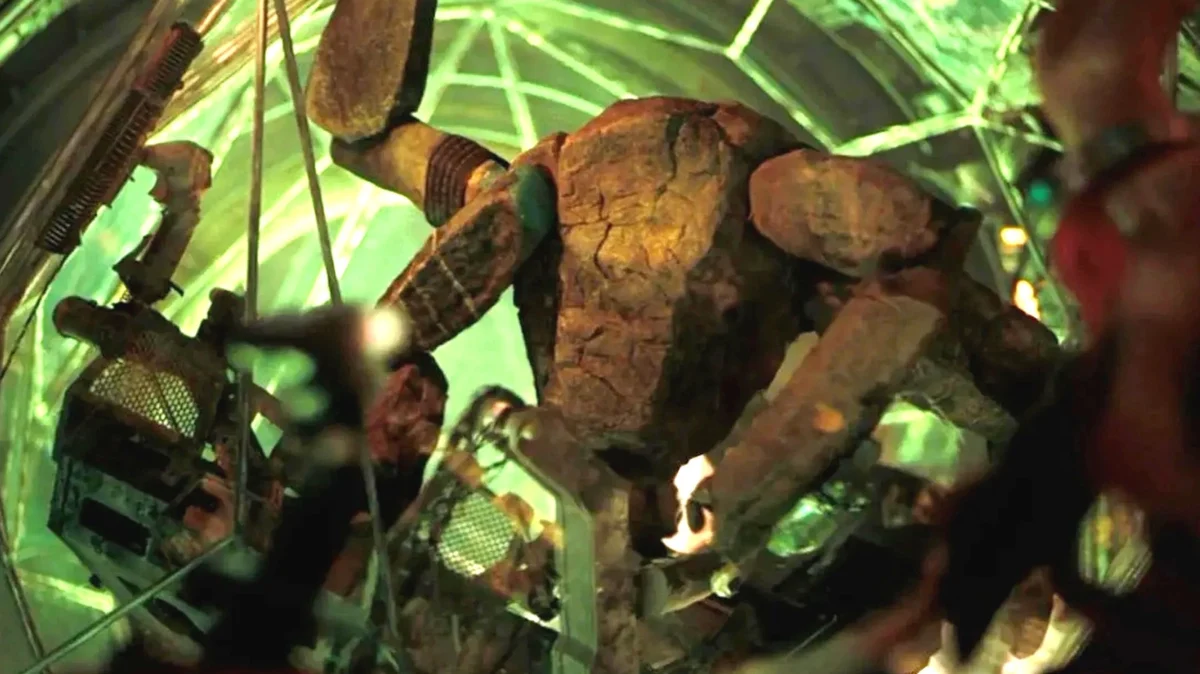
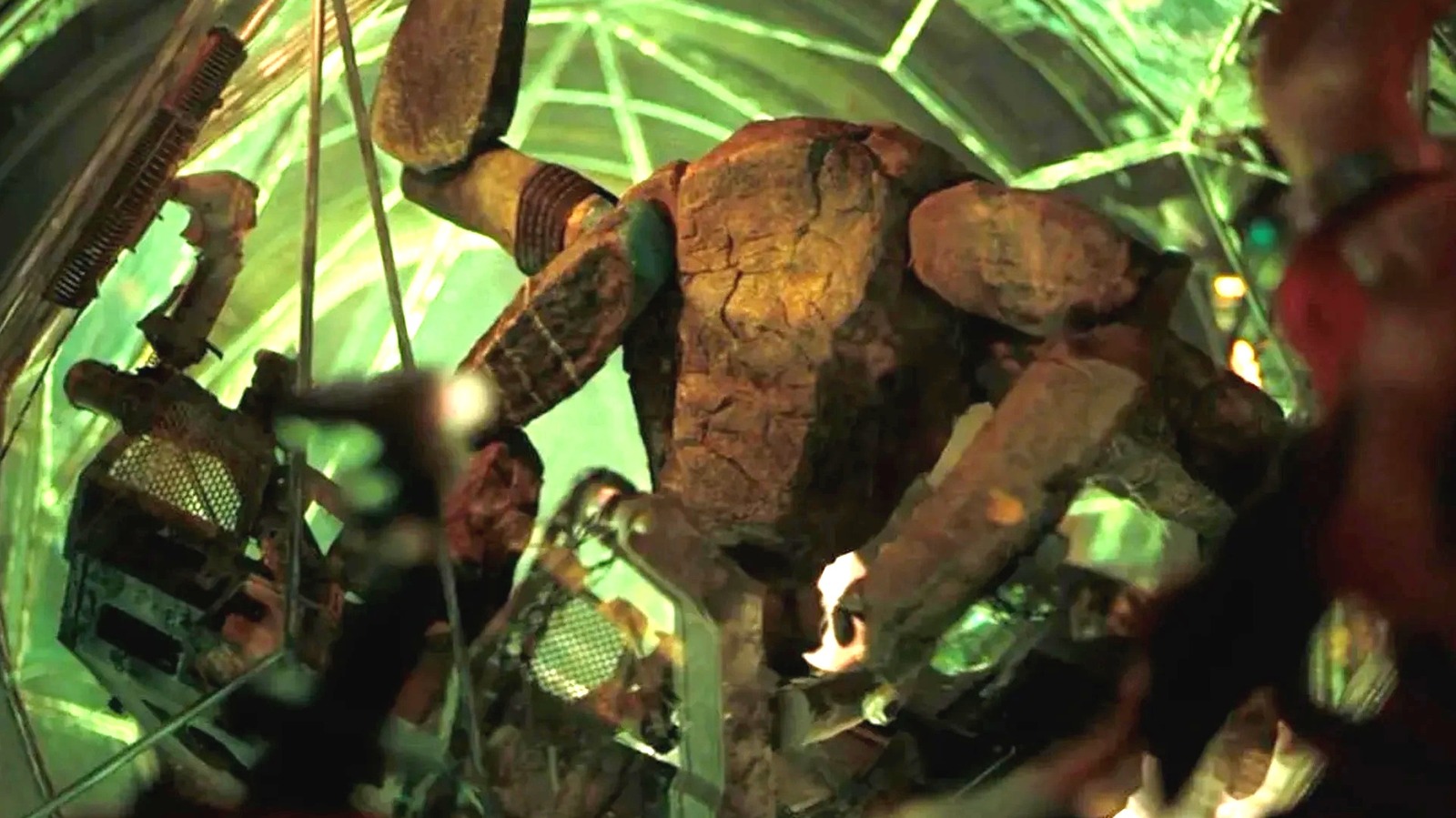
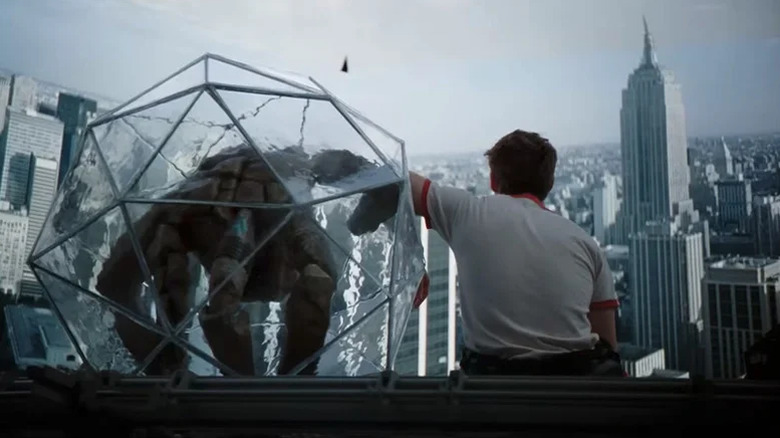
The Animatronic Exception: Certain confined, highly specialized sequences—most notably inside the ship’s Mental Health Node—rendered traditional puppetry impossible due to surrounding LED screens. For these specific scenes, the production shelved the rod puppet in favor of the animatronic Rocky system, using a cable-suspended ball that was digitally erased later.
Post-Production Overhauls: Prior to its successful theatrical run, the film underwent grueling editing room trials. Early assembly cuts famously clocked in at an unwieldy four hours and faced harsh internal feedback. Directors Lord and Miller successfully streamlined the narrative, preserving the heart of the dynamic between Grace and Rocky.
Supporting Data
The physical execution of Rocky represents a fascinating logistical puzzle for the visual effects (VFX) and practical effects teams. The production relied heavily on a hybrid methodology:
The Primary Tool (The Rod Puppet): Constructed as a hollow shell matching Rocky’s five-sided, rock-like biology, this puppet featured interchangeable screw-in/screw-out handles. This allowed puppeteers to adapt grips dynamically during takes to maximize physical expressiveness.
The Secondary Tool (The Animatronic WALDO System): Utilized sparingly, this mechanical setup was deployed to avoid the absolute logistical nightmare of digitally erasing multiple human puppeteers from heavily reflective environments.
The Set Constraints (The Mental Health Node): This specific set featured immersive LED screens playing high-fidelity panoramic video loops of Earthly environments (such as oceans and fireworks). According to Ortiz, trying to erase puppeteers moving around these active screens would have severely degraded the fidelity of the visual content and overwhelmed the VFX pipeline.
Editorial Scaling: The initial rough cut of Project Hail Mary tested at approximately four hours long. Pruning this down required a delicate balancing act to ensure that the removal of dense scientific jargon did not alienate fans of Weir’s hard-sci-fi novel, while keeping the pacing brisk enough to maintain blockbuster momentum.
Official Responses
Speaking with /Film’s Ben Pearson, lead puppeteer and voice actor James Ortiz detailed the precise rationale behind transitioning from a purely mechanical concept to a predominantly puppet-driven performance.
Reflecting on his initial arrival on the production, Ortiz recalled his critique of the original plans:
"When I showed up, I actually said, ‘I have a sense — the animatronic is beautiful and can do a lot of incredible things, but sometimes it’s a little rigid, and I needed this character to be really fluid.’ So I sort of said, ‘Let’s make a theatrical rod puppet in addition to this.’ So basically it was the same design, but a hollow shell and handles wherever we could screw them in or take them out."
Addressing the specific scenario that forced the crew to utilize the animatronic version instead of the puppet, Ortiz explained the unique challenges posed by the ship’s architecture:
"It actually helped us in scenes where we just didn’t want to see the puppeteers… because there were actual LED screens playing content, it would’ve been a nightmare for VFX to erase all of the puppeteers around it."
Elaborating further on the execution of that specific sequence, Ortiz noted:
"We put the animatronic Rocky in a real ball and put him on the set, there was usually a cable holding him in place, that was erased. We used it a handful of times, but for the most part, everything else, especially to help with the improv and the playfulness, it’s mostly me and my team. We are improvising, but operating this rod puppet, and then in post, they went very carefully and erased all of us around them."
Implications
The triumph of Project Hail Mary—both commercially and critically—carries significant implications for the future of blockbuster science fiction filmmaking. For over a decade, audiences have grown accustomed to characters built entirely in post-production through digital pixels and motion-capture markers. By choosing to anchor a complex, non-human alien character in tangible, physical materials, Amazon MGM Studios revitalized a classic cinematic art form reminiscent of the golden age of practical creature effects.
The Reversal of the Jurassic Park Paradigm
In many ways, the production pipeline of Project Hail Mary acted as a mirror image of Steven Spielberg’s landmark 1993 film Jurassic Park. While Spielberg famously intended to use stop-motion and full-scale animatronics for his prehistoric creatures before being largely swept into the digital revolution of CGI, Lord, Miller, and Ortiz deliberately steered away from a fully animatronic approach. They recognized that an alien character made of rock-like appendages required a degree of fluid, improvisational vulnerability that rigid mechanics simply could not replicate.
Proving the Power of Practical Chemistry
The palpable chemistry between Ryan Gosling’s Ryland Grace and James Ortiz’s voice-and-puppet performance as Rocky demonstrates that actors benefit profoundly from reacting to physical entities on set. A physical prop allows for genuine spatial awareness, authentic lighting interactions, and spontaneous improvisational beats that a green-screen tennis ball or digital placeholder can never fully replicate.
Ultimately, Project Hail Mary proves that when hard science fiction meets inspired old-school craftsmanship, the result is not an outdated gimmick, but a cinematic miracle that resonates on a deeply human and emotional level.