
The Architecture of Isolation: Why Single-Location Sci-Fi Remains the Genre’s Most Potent Tool
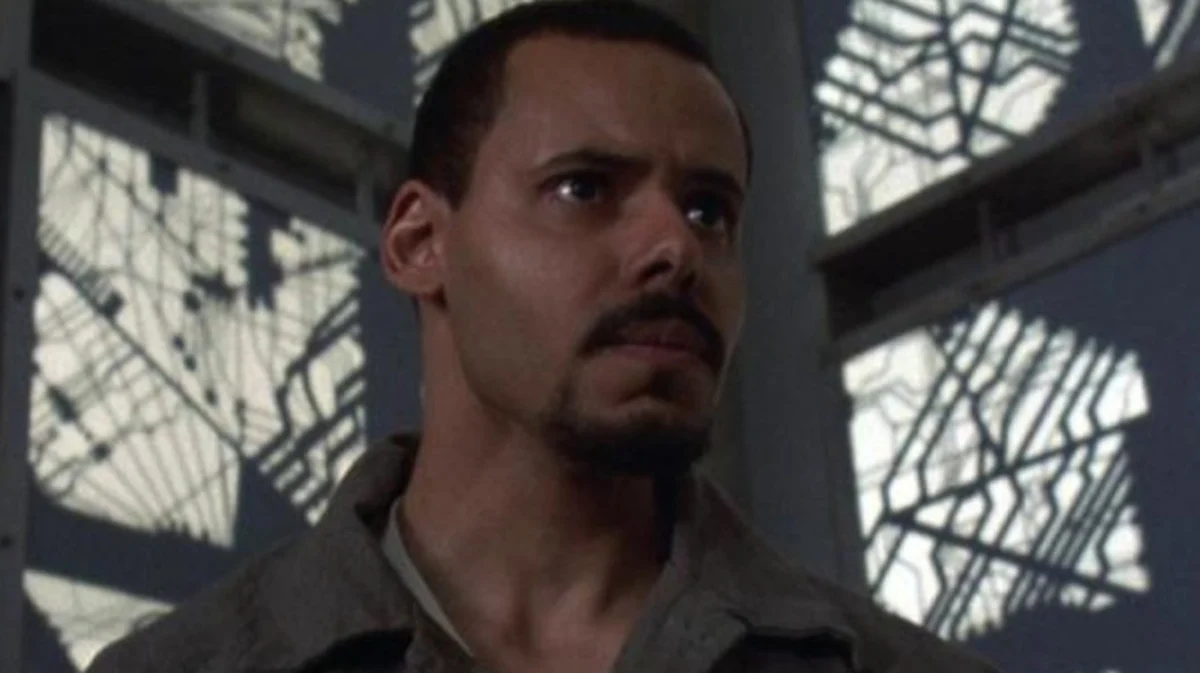
The history of cinema is often defined by spectacle. From the sweeping vistas of Lawrence of Arabia to the galaxy-spanning conflicts of Avengers: Endgame, the industry has long equated quality with scale. However, a persistent counter-movement exists—one that rejects the expansive in favor of the claustrophobic. By trapping characters within a single, high-tech, or alien environment, filmmakers can strip away the safety net of the external world, forcing a raw, unfiltered examination of the human condition.
As director Cecil B. DeMille famously suggested, the core of cinema isn’t found in the size of the budget, but in the power of the premise. In science fiction, where the environment is often the primary antagonist, the "single-location" film becomes a laboratory for testing sanity, ethics, and the fragility of human existence.
The Chronology of Claustrophobia
While the "bottle episode" is a staple of television, translating that intensity to a feature-length format requires a specific type of narrative rigor. The evolution of this sub-genre tracks closely with the development of modern sci-fi, moving from the philosophical musings of the 1970s to the visceral, high-concept survival horror of the current decade.
1974: The Nihilistic Humor of Dark Star
John Carpenter’s debut, Dark Star, serves as the foundational text for the "working-class space isolation" trope. Following a crew of astronauts tasked with the mundane, soul-crushing job of blowing up unstable planets, the film explores the psychological decay caused by years of separation from Earth. By the time the crew encounters a sentient bomb that requires a philosophical debate to prevent a premature detonation, the film has cemented its status as a masterpiece of nihilistic comedy.
1997: The Mathematical Terror of Cube
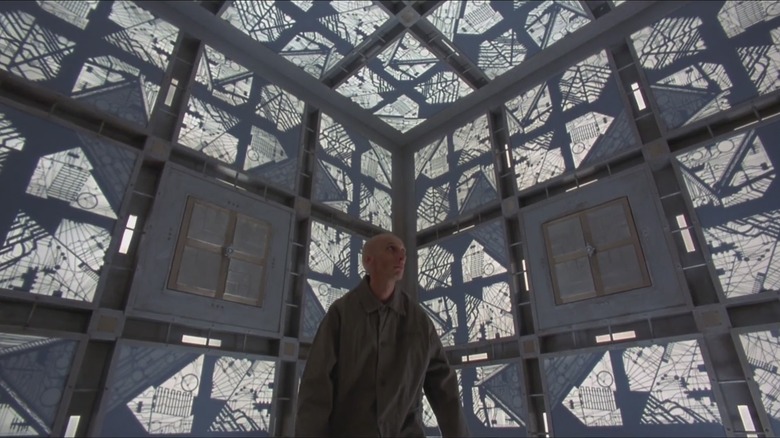
Vincenzo Natali’s Cube turned the limitations of a shoestring budget into a stylistic triumph. By utilizing a single, reconfigurable cell set, Natali created a labyrinthine nightmare that felt infinite. The film’s brilliance lies in its lack of exposition; the characters arrive in the structure through no choice of their own, mirroring the audience’s disorientation. It remains the definitive "puzzle-box" movie, proving that fear is best generated by the unknown.
2009: The Introspective Crisis of Moon
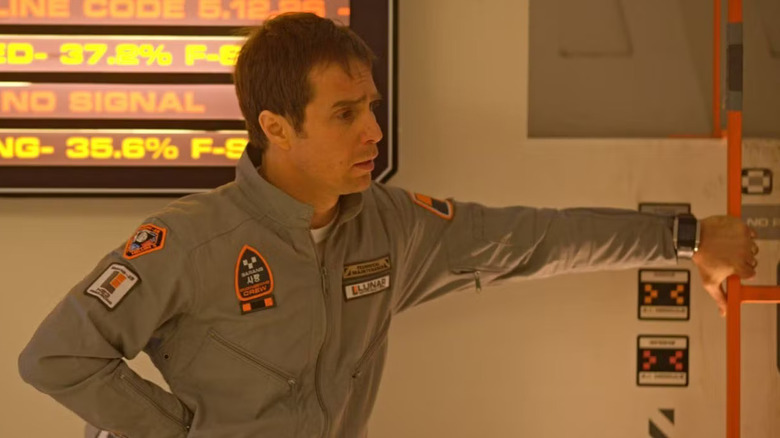
Duncan Jones’ Moon shifted the focus from external threats to internal ones. With Sam Rockwell delivering a tour-de-force performance, the film examines the existential dread of being a singular cog in a corporate machine. It asks: If you are entirely replaceable, do you possess a soul? The isolation here isn’t just physical; it is ontological.
2019: The Socio-Political Descent of The Platform
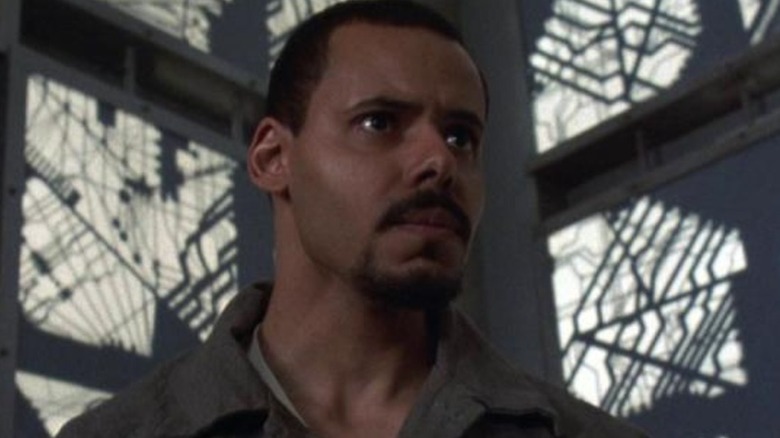
Galder Gaztelu-Urrutia’s The Platform represents the modern evolution of the genre, utilizing the "vertical prison" as a brutal allegory for wealth inequality. The film’s genius is in its simplicity: a slab of food descends through hundreds of levels. Those at the top gorge themselves; those at the bottom starve. It is a grim, unflinching look at the breakdown of human empathy in a zero-sum game.
2026: The Visceral Horror of Iron Lung
Mark Fischbach’s Iron Lung highlights the transition of the medium toward digital-native filmmakers. By placing the protagonist inside a leaking, rusted submarine in a sea of blood on an alien world, the film leans into the "sensory deprivation" school of horror. It emphasizes the terror of being unable to see, unable to escape, and ultimately, unable to understand the nature of the horror consuming you.
Supporting Data: The Economics of Efficiency
The financial logic behind these films is as compelling as their narratives. In an era where blockbuster budgets often exceed $200 million, the single-location sci-fi film provides a necessary alternative.
| Film | Estimated Budget | Primary Setting | Core Conflict |
|---|---|---|---|
| Dark Star | $60,000 | Spaceship | Existential Futility |
| Cube | $350,000 | Modular Prison | Systemic Traps |
| Moon | $5,000,000 | Lunar Base | Identity/Corporate Exploitation |
| The Platform | $2,500,000 | Vertical Silo | Class Struggle |
| Iron Lung | Varies/Indie | Submarine | Sensory Horror |
The data indicates that these films do not merely "save money"—they thrive because of their constraints. When a director cannot rely on grand set pieces or CGI armies, they must rely on character development, atmospheric tension, and tight scripting. This forced focus often results in higher critical acclaim and a longer shelf-life within cult cinema circles.
Official Responses and Industry Shifts
The industry’s response to these films has been a mixture of cautious respect and confusion. Major studios have largely abandoned the "mid-budget" thriller, preferring to oscillate between massive franchise tentpoles and ultra-low-budget horror. However, the rise of independent platforms and streaming services has created a sanctuary for these "bottle" projects.
Critics have noted that the success of films like The Platform and Iron Lung signals a fatigue with the "IP-milking" model that defined the 2010s. Audiences are increasingly drawn to original, high-concept narratives that challenge their comfort levels rather than providing familiar, safe spectacles. The "YouTuber-to-Director" pipeline, exemplified by Markiplier, suggests that a new generation of creators understands how to engage audiences through intimacy and direct address, rather than through massive, detached digital vistas.
Implications: The Future of Sci-Fi
What does this trend mean for the future of the genre? We are likely entering a "Golden Age of Isolationism."
The Death of the "World-Building" Obsession
For years, sci-fi was judged by the depth of its lore—how many planets, how many alien species, how detailed the history. The current trend suggests that "depth" can be achieved in a single room. By focusing on the psychology of one or two individuals, directors are discovering that the most alien landscape is the human mind.
Democratization of Production
The success of these films demonstrates that a compelling sci-fi story no longer requires the backing of a major studio. With advancements in practical effects and digital editing, filmmakers can produce professional-grade tension with minimal resources. This lowers the barrier to entry, allowing for more diverse voices and unconventional, risky stories to find an audience.
The Rise of "Sensory" Sci-Fi
As seen in Iron Lung and Cube, the future of the genre lies in sensory manipulation. When you are confined to a single location, the sounds, the lighting, and the claustrophobic camera work become the narrative. This creates an immersive experience that is difficult to replicate on a screen larger than a theater, or even a home television, effectively making the "small" film feel "big" in its impact.
Conclusion
The five films discussed—Dark Star, Cube, Moon, The Platform, and Iron Lung—stand as testaments to the power of the human imagination when pushed into a corner. They remind us that the best science fiction does not need to show us the universe; it only needs to show us ourselves, stripped of our surroundings and forced to confront the fundamental questions of existence.
As the blockbuster era continues to face an identity crisis, these "bottled" stories offer a clear path forward: keep the stakes high, the cast small, and the walls closing in. After all, when you have nowhere left to run, you are finally forced to stand still and face the truth. And for an audience increasingly looking for something real, that truth is the most compelling spectacle of all.
