
Beyond the Prom: How Mike Flanagan’s ‘Carrie’ is Quietly Building a Stephen King Multiverse
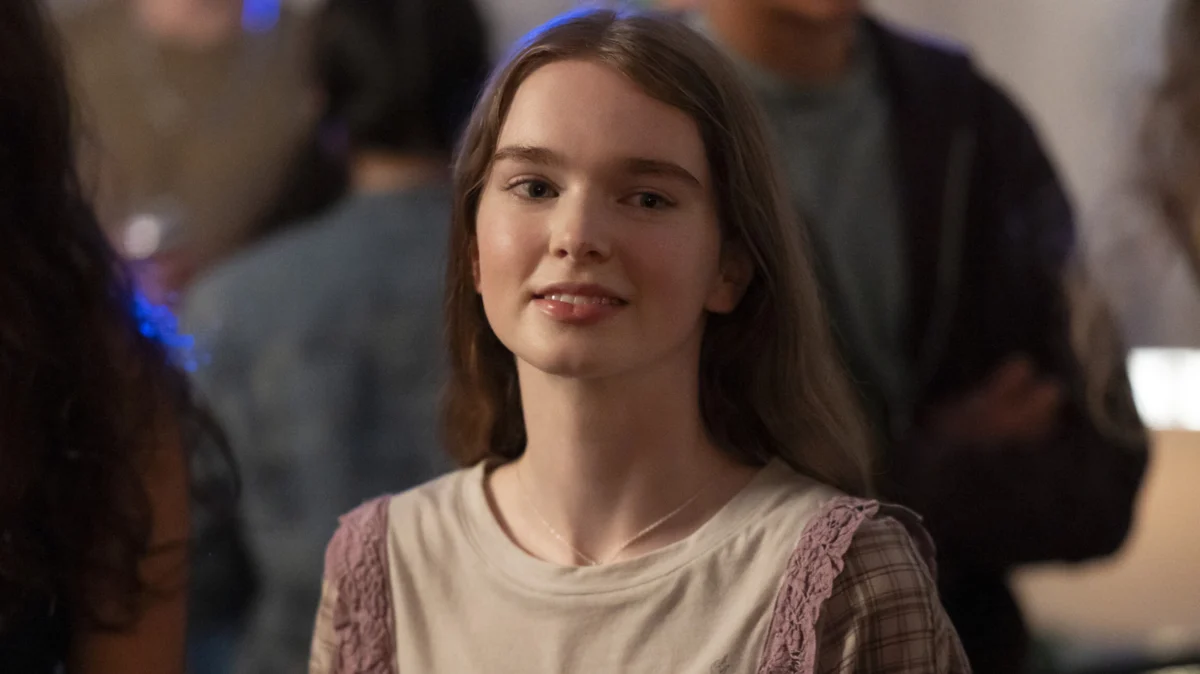
When Mike Flanagan, the visionary auteur behind The Haunting of Hill House and Midnight Mass, announced he was taking on Stephen King’s seminal debut novel Carrie for Prime Video, the horror community braced for impact. Carrie has been adapted multiple times—most famously by Brian De Palma in 1976 and again in 2013—leaving many to wonder what new ground could possibly be broken by the story of a telekinetic girl pushed to the brink.
However, Flanagan’s Carrie (2026) is not a mere remake; it is a reinvention that recalibrates the source material to serve as the potential bedrock for a sprawling, interconnected Stephen King television universe. While critics have noted that the series takes significant liberties with character motivations and narrative structure, the most eagle-eyed viewers have discovered something far more ambitious: the deliberate, tactical insertion of lore tied directly to Stephen King’s magnum opus, The Dark Tower.
Main Facts: The LaMerk Connection
The most striking revelation for hardcore "Constant Readers" arrives in the very first episode. During a sequence establishing the tragic backstory of Carrie White’s father, the narrative takes the viewer to his place of employment: a bustling construction site.
In a brief, blink-and-you-miss-it background shot, a sign prominently displays the name "LaMerk Industries." To the casual viewer, it is set dressing. To the devotee of King’s Dark Tower series, it is a seismic reveal. In the sprawling mythology of Mid-World and beyond, LaMerk is a formidable metalworks entity inextricably linked to the Crimson King, the primary antagonist of the Dark Tower saga.
In the novels, LaMerk Industries is responsible for the creation of sinister, advanced technology—specifically robots—that serve the Crimson King’s agenda to dismantle the titular Tower and collapse reality. By repositioning LaMerk as a real estate and construction firm in the Carrie universe, Flanagan is subtly suggesting that the malevolent influence of the Crimson King is not confined to the surreal deserts of Roland Deschain’s world, but is actively operating within the mundane landscape of contemporary suburban America.
Chronology of a Shared Universe
The inclusion of LaMerk is not an isolated incident of "fan service." As the season progresses, the breadcrumbs become more substantial. In a later episode, the character Billy Nolan is seen feeding a pet, and a sharp-eyed viewer can spot a tattoo on his arm that bears a striking, near-identical resemblance to the "Eye of the Crimson King"—a symbol that serves as a beacon for the forces of darkness throughout King’s bibliography.
This chronological placement of Easter eggs suggests a carefully mapped-out roadmap. Flanagan has long been vocal about his desire to adapt The Dark Tower, a project that has historically been stalled by the labyrinthine nature of the licensing agreements surrounding King’s works. By weaving these threads into Carrie, Flanagan appears to be playing the long game. He is effectively building a "King Cinematic Universe" from the ground up, utilizing smaller, standalone stories to establish the atmospheric and supernatural baseline required for a later, massive Dark Tower payoff.
Supporting Data: The Evolution of Adaptation
The current state of King adaptations is undergoing a massive transformation. Following the success of projects like Welcome to Derry—which bridges the gap between It and The Shining through subtle, thematic interconnectedness—the industry is moving away from isolated adaptations toward cohesive narrative ecosystems.
Flanagan’s Carrie utilizes the book’s original epistolary format—a stylistic choice that allows for a broader perspective on the town of Chamberlain, Maine. By expanding the narrative to include more town history and external political or industrial forces (like the aforementioned LaMerk Industries), the show moves away from the claustrophobic tragedy of the original novel and toward a wider, more conspiracy-driven thriller.
Data from social media discourse and fan forums indicate that this approach is paying off. Engagement with these specific "Easter eggs" has driven significant traffic to analytical breakdowns of King’s lore, proving that modern audiences are increasingly hungry for "puzzle-box" storytelling where every frame of a series might contain a hint about a larger, unseen reality.
Official Responses and Creative Intent
While Mike Flanagan has yet to provide a blow-by-blow explanation for every symbol placed in the series, his history with King’s work—spanning Doctor Sleep and Gerald’s Game—speaks for itself. Flanagan has consistently stated that his goal is not to "replace" the original works, but to engage with them as a dialogue.
In interviews surrounding the Carrie launch, Flanagan emphasized his desire to treat the King bibliography as a "tapestry." He noted, "If you look at the novels, they are all whispering to each other. They exist in the same conceptual space." By leaning into the "psychic" elements of Carrie and linking them to a wider array of telepaths and "breakers" (a term central to The Dark Tower), Flanagan is essentially creating a connective tissue that justifies why these stories feel like they occupy the same moral and metaphysical space.
Implications: Building the Tower, Brick by Brick
The implications of this strategy are profound. If Carrie is the foundation, then the second season—which the current finale clearly telegraphs—will likely expand the scope of the "psychic" threat to a national or even multiversal level.
1. The Licensing Loophole
By building a universe through individual series, Flanagan may be bypassing the logistical nightmares of the Dark Tower rights. If he can demonstrate that he has successfully built a "King-verse" that audiences love, the pressure on studios to consolidate those rights for a definitive Dark Tower event series will become insurmountable.
2. A New Standard for Horror
Flanagan is proving that horror does not have to be limited to the "monster in the closet" trope. By introducing the idea that a high school bully or a local construction company might be pawns in a cosmic war between the Light (The Tower) and the Dark (The Crimson King), he elevates the genre. The horror is no longer just about the tragedy of a lonely girl; it’s about the vulnerability of our reality to forces that we cannot perceive.
3. The Future of the "King-verse"
We are likely to see this pattern continue. If Carrie remains a hit for Prime Video, expect future King adaptations handled by Flanagan to carry similar "watermarks." Whether it’s a mention of the "Beam" or a reference to "Ka," the audience should remain vigilant.
Conclusion: The Long Road to Mid-World
Mike Flanagan’s Carrie is a masterclass in modern showrunning. It respects the core emotional resonance of King’s debut while daring to weave it into a larger, more complex tapestry. By planting the seeds of the Crimson King’s influence in the suburbs of Maine, Flanagan isn’t just making a show about a girl with telekinesis; he is making a show about the fragility of our world in the face of an encroaching, multiversal darkness.
For the casual viewer, Carrie remains a gripping, albeit polarizing, character drama. But for the Constant Reader, it is something much more: it is the beginning of the end, a slow-burn descent into the world of The Dark Tower, where every sign, every tattoo, and every whisper is a promise that, eventually, all things will serve the Beam. As we look toward a potential second season, one thing is certain: in the universe of Mike Flanagan, nothing is ever just a coincidence.
