
The Shadows of Whitechapel: László Nemes to Helm Ambitious Limited Series ‘Sickert’
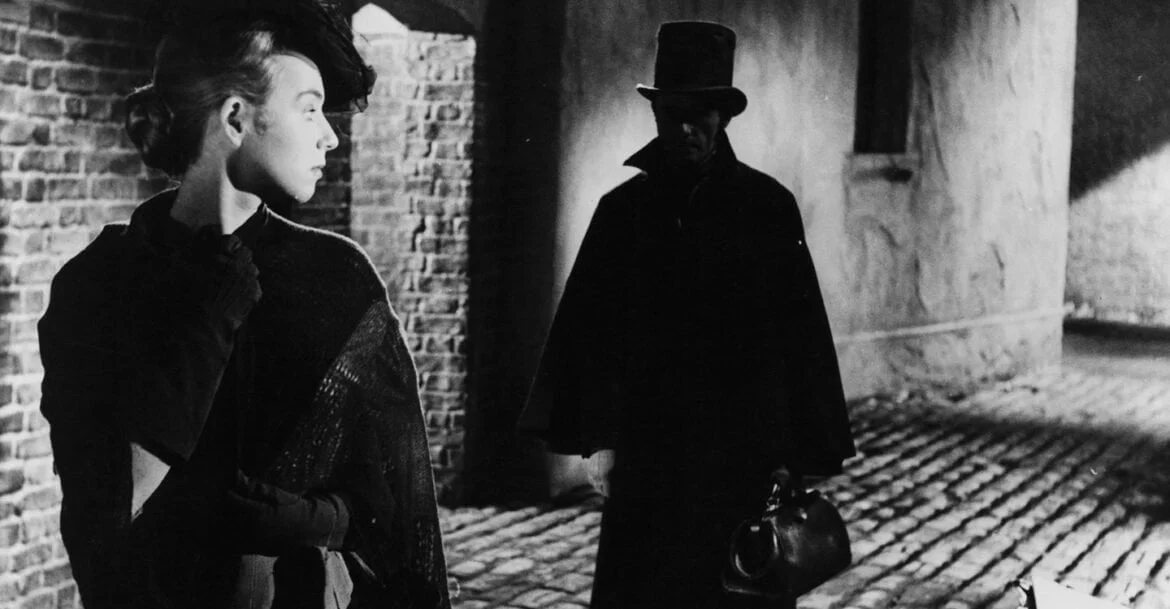
In a significant development for the landscape of prestige television, Academy Award-winning director László Nemes—best known for his harrowing, visceral Holocaust drama Son of Saul—has been tapped to write and direct Sickert. This ambitious limited series promises to peel back the layers of one of history’s most enduring enigmas: the identity of Jack the Ripper. Rather than opting for a traditional procedural format, the series will center on Walter Sickert, the influential German-British painter whose life and work have long been shrouded in the dark speculation that he was the man behind the Whitechapel murders.
The project, which is currently in development under the banner of AR Content, marks a pivotal return to historical exploration for Nemes. By marrying the aesthetic rigor of his previous cinematic work with the claustrophobic tension of a Victorian psychological thriller, Nemes aims to redefine how the Ripper mythos is portrayed on screen.
The Convergence of Art and Atrocity: The Core Narrative
At the heart of Sickert lies a complex, multi-layered examination of the dualities of Victorian London. The series is set in 1888, a year defined by the suffocating fog of Whitechapel and the absolute terror instilled by the unidentified serial killer who systematically targeted the city’s most vulnerable.
The narrative follows Walter Sickert, a titan of the avant-garde who occupied a unique vantage point in society. As a key figure in movements like the London Impressionists and the Camden Town Group, Sickert navigated the refined circles of high society while simultaneously harboring a morbid fascination with the poverty-stricken, marginalized residents of the East End. It was these very individuals who became the victims of the Ripper, and it is here that the series finds its central tension.
As Scotland Yard begins to close in on him, the series shifts into a psychological character study. Viewers will witness the slow erosion of Sickert’s psyche, as the artist—haunted by the crimes and under intense public scrutiny—begins to doubt his own memories, his morality, and his very identity. Is he a misunderstood observer of human suffering, or has he allowed the darkness he paints to bleed into his own actions?
Chronology of a Controversial Theory
To understand the weight of this series, one must look at the historical timeline of the "Sickert-as-Ripper" theory, which has persisted for over a century.
- 1888: The Autumn of Terror. The canonical five murders of the Whitechapel victims occur, sending London into a state of panic that would forever alter the city’s social consciousness.
- The Early 20th Century: Walter Sickert gains international acclaim for his "haunting" paintings, many of which depict solitary, often somber figures in dingy interiors—images that critics would later describe as possessing a "crime-scene" aesthetic.
- 1976: The theory gains mainstream traction with the publication of Stephen Knight’s Jack the Ripper: The Final Solution. Knight posits that the murders were part of a royal conspiracy, and he specifically implicates Sickert as a key player in the cover-up, if not the killer himself.
- 2002: The novelist Patricia Cornwell publishes Portrait of a Killer: Jack the Ripper – Case Closed. Cornwell, a renowned crime writer, spends millions of dollars on forensic research, claiming that mitochondrial DNA evidence found on letters attributed to the Ripper matches Sickert’s DNA. While the scientific community remains deeply divided, the theory becomes firmly embedded in pop culture.
- 2026 (Present Day): The announcement of the Sickert series signals a modern reappraisal of this theory, shifting the focus from "solving" the crime to exploring the psychological torment of being branded a monster.
A Visionary Creative Team
The production is bolstered by a heavy-hitting creative team. Joining László Nemes as co-writer is Adam Baroukh, a pairing that suggests a sharp focus on both historical authenticity and character-driven narrative tension.
Overseeing the project is Oscar-nominated producer Alexander Rodnyansky, whose track record with films like Leviathan and Loveless proves his penchant for high-stakes, emotionally resonant storytelling. Rodnyansky’s involvement, alongside executive producers Stuart Manashil and Michael Kupisk, provides the necessary infrastructure to handle a production of this magnitude.

For Nemes, this project is a long-held ambition. "My fascination for the first modern serial killer and for the mystery of the gothic world of Victorian London dates back to my childhood," Nemes stated. "I have the ambition to tell a story that is both epic and personal, frightening and illuminating, and to immerse today’s viewer in a universe that remains largely uncharted."
The Aesthetic of the Abyss: Historical Realism
One of the most compelling aspects of the upcoming series is Nemes’s commitment to visual authenticity. He has stated that the series will draw heavily from the historical records of 1888 London and, crucially, from Sickert’s own body of work.
Walter Sickert was a painter who captured the "underbelly" of London with a stark, unflinching eye. His depictions of the poverty-stricken neighborhoods of Whitechapel—the very streets where the Ripper operated—are noted for their oppressive atmosphere and muted, melancholic color palettes. By utilizing these paintings as a visual blueprint, Nemes intends to create a series that feels less like a costume drama and more like a fever dream of late-19th-century urban decay.
Furthermore, Sickert’s influence on the 20th-century art world—impacting the likes of Francis Bacon and Lucien Freud—provides a fascinating subtext. The series will likely explore how the artistic process can sometimes act as a bridge between profound empathy and profound cruelty.
Cultural Implications and Critical Reception
The announcement of Sickert has reignited the perennial debate surrounding the "Ripper industry." For decades, the media has been criticized for sensationalizing the brutal murders of women in Whitechapel. However, by focusing on an artist who was himself an "outsider" and an intellectual, the series potentially avoids the more exploitative tropes of the true-crime genre.
Industry analysts suggest that the project’s success will hinge on its ability to handle the "unsolved" nature of the case with sophistication. In the current era of prestige television, audiences have demonstrated a high appetite for dark, historically grounded narratives that prioritize psychological depth over cheap thrills. By framing the Ripper not just as a killer, but as a catalyst for a nervous breakdown within the Victorian elite, the series offers a fresh angle on a stale topic.
Conclusion: A New Chapter in Historical Noir
As production nears, the anticipation surrounding Sickert is palpable. It represents a rare convergence of an auteur filmmaker known for his uncompromising vision and a historical mystery that continues to haunt the modern imagination.
Whether or not the series offers a definitive answer to the identity of Jack the Ripper is arguably secondary to its greater promise: an immersive, haunting exploration of how the shadows of the past continue to shape our present understanding of genius, madness, and the thin line that separates them. With László Nemes at the helm, Sickert is poised to be more than just a historical thriller—it is shaping up to be a definitive meditation on the darkness that lurks behind the easel.
