
Unleashing the Unicorn: How the World Premiere of Buddy: The Sing-Along Version Redefined Horror Marketing
GLENDALE, Calif. — Traditional Hollywood premieres are usually meticulously orchestrated spectacles designed primarily for glossy photo-ops, high-fashion spotlights, and stoic industry press lines. They are built for photographers, publicists, and the elite upper echelon of the film business. However, when Roadside Attractions and Saban Films rolled out the welcome mat for the world premiere of Buddy: The Sing-Along Version at the historic Alex Theatre in Glendale, California, they threw out the conventional playbook.
Instead of a traditional red carpet, they rolled out an unmistakable, vibrant orange one. There were no stiff gowns or tailored tuxedos required; instead, the asphalt played host to sea of enthusiastic fans donning neon orange ensembles and glowing unicorn horns. This was not a standard industry screening—it was an interactive, delightfully unhinged celebration designed entirely for the fans. And in the modern landscape of theatrical distribution, that fan-first approach is proving to be a masterclass in modern horror marketing.
Main Facts: The Anatomy of a Cult Phenomenon
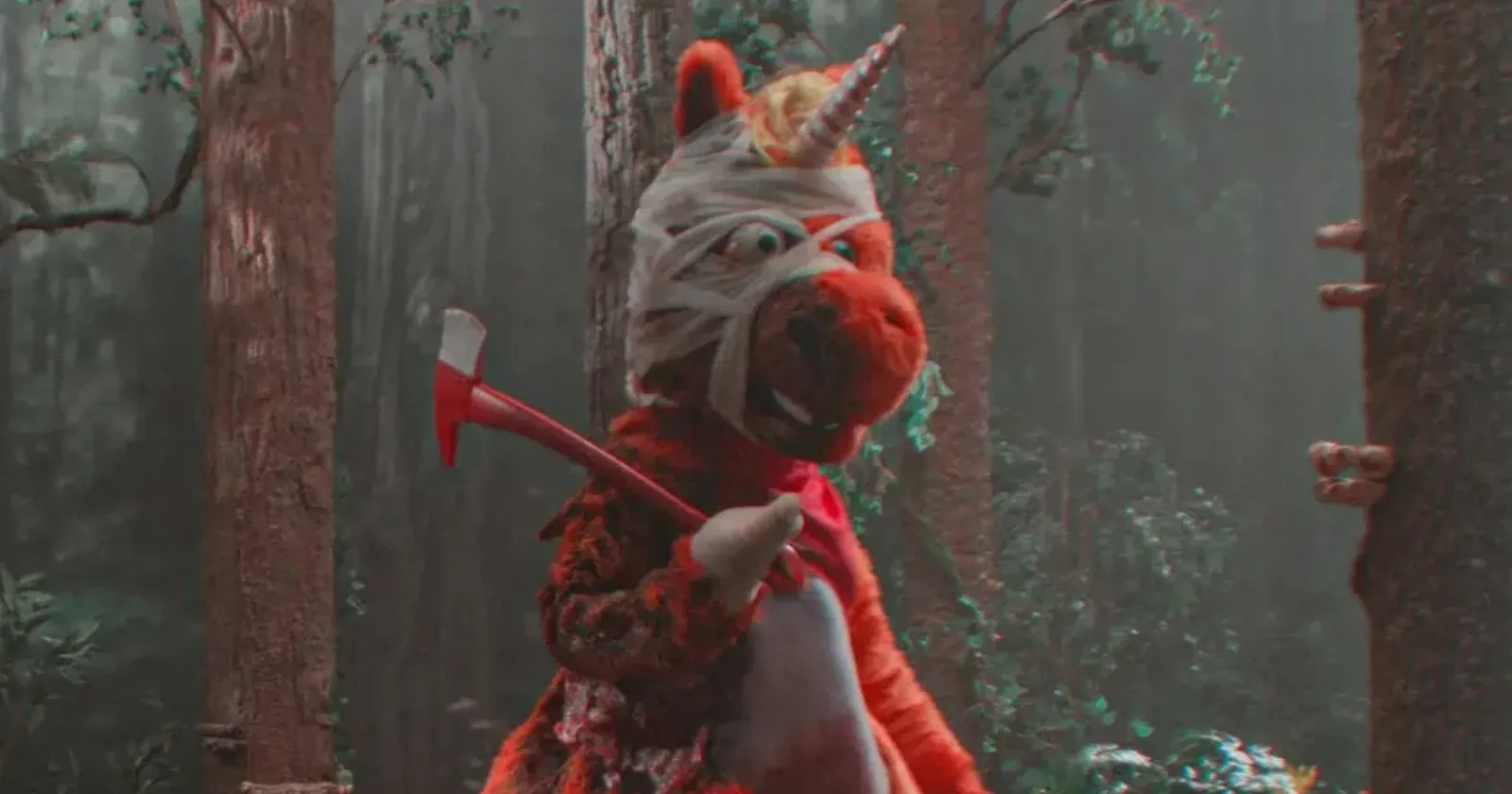
Directed by Casper Kelly, Buddy is an R-rated horror-comedy that plays on the deepest, most unsettling corners of childhood nostalgia. The narrative centers on a painfully cheerful, aggressively wholesome children’s television show whose primary host—an exuberant orange unicorn voiced by comedic powerhouse Keegan-Michael Key—turns terrifyingly sinister when a single child refuses to play along with the program’s manufactured joy.
The film, which originally opened in theaters on August 28, has quietly become a commercial force to be reckoned with. According to tracking data provided by its distributors, Buddy surpassed the $25 million mark in domestic box office receipts within its first five weeks of release.
Capitalizing on this unexpected momentum, Roadside Attractions and Saban Films organized a high-profile world premiere for the upcoming Sing-Along Version, setting the stage for a wide nationwide re-release scheduled for October 2. Rather than resting on the laurels of its initial box office success, the studio leveraged the event to transform a simple theatrical expansion into a communal, interactive cultural happening.
Chronology: A Night of Neon, Mascots, and Mayhem
The transformation of the Alex Theatre on Tuesday night was swift, complete, and delightfully surreal.

Late Afternoon: The Orange Carpet Unfurls
Hours before the first screening of the Sing-Along Version, crews replaced the classic red carpet with a high-visibility orange runner stretching down the sidewalk of Glendale’s iconic venue. Early arrivals, many of whom had traveled across Southern California to secure spots along the barricades, immediately understood the assignment. The crowd quickly filled with dedicated cosplayers, families with a dark sense of humor, and horror aficionados sporting everything from DIY Buddy t-shirts to elaborate prosthetic unicorn horns.
Early Evening: The Mascot Takes the Sidewalk
As twilight settled over the venue, the marketing campaign stepped straight out of the screen and into reality. A fully realized, walk-around mascot of Buddy the Unicorn made his grand entrance.
Rather than staying sequestered in a VIP green room, Buddy worked the crowd with the unsettling, unearned enthusiasm of a mall-appearance children’s show character. He posed on the orange carpet, high-fived fans lining the sidewalk, and mugged for smartphone cameras. The atmosphere struck a brilliant psychological balance: it was simultaneously heartwarming and deeply unnerving, perfectly mirroring the tonal tightrope walk of Kelly’s film. Everyone in attendance knew precisely what Buddy was capable of committing on the silver screen once the cameras stopped rolling, which only added to the nervous, electric energy of the crowd.
Nightfall: The Costume Contest and the Sing-Along
Inside the historic auditorium, the festivities continued with a fiercely contested costume competition. Dozens of fans who had dressed up as twisted versions of children’s television show hosts or tortured studio audience members took to the stage to vie for prizes and crowd applause.
When the lights finally went down and the Sing-Along Version began, the theater transformed. Lyrics scrolled across the bottom of the screen like a twisted karaoke session, and the audience—fully primed by the pre-show rituals—belting out the unsettlingly chipper songs in unison. The screening felt less like a passive moviegoing experience and more like an immersive, participatory cult ritual.
Supporting Data: Box Office Resilience and Theatrical Strategy
The timing of Tuesday night’s premiere is far from accidental. In an era where mid-budget and independent horror films often experience a sharp, front-loaded box office drop after their second weekend, Buddy has displayed remarkable theatrical legs.

Reaching the $25 million threshold within five weeks of an August release—traditionally a dumping ground for weaker studio offerings or a winding-down period for summer blockbusters—is no small feat. Horror, as a genre, has always relied heavily on word-of-mouth recommendations, but Buddy has leaned into something more active: peer-to-peer participation.
By introducing a Sing-Along Version just weeks after the initial theatrical run, Roadside Attractions and Saban Films are employing a distribution strategy more commonly associated with event cinema, rock concert films, or cult classics like The Rocky Horror Picture Show or The Room. Going back to the theater is no longer just about seeing a movie a second time; it is about participating in a shared cultural moment.
Industry analysts note that specialty horror releases are increasingly relying on interactive elements to compete with at-home streaming options. When a ticket purchase guarantees not just a seat in a dark room, but an active, communal experience—complete with custom merchandise, costume contests, and synchronized singing—the theatrical window regains its unique, irreplaceable value.
Official Responses and Industry Reception
While the studios expected a positive turnout from regional horror fans, the sheer velocity of social media engagement surrounding the Glendale premiere caught even the marketing teams by surprise.
Within hours of the event, hashtags associated with the film and the orange carpet began trending across major platforms. Short-form video clips of the towering orange unicorn dancing on stage alongside costumed fans generated millions of cumulative views overnight.
"We didn’t want to throw a party where people just stood around drinking sparkling water and looking at a step-and-repeat backdrop," said a representative close to the production who spoke on the condition of anonymity. "The whole DNA of Buddy is about forcing you to engage, to sing along, to play the game. If you refuse to play along with the marketing, you’re missing the point of the movie itself. We wanted the premiere to feel like an extension of the nightmare."

Critics who attended the early screenings of the Sing-Along Version noted that the format acts as a pressure valve for the film’s intense, pitch-black comedy. By allowing the audience to vocalize their shock, laughter, and unease collectively, the film transforms from a standard viewing experience into a shared communal exorcism.
Implications: The Future of Horror Event Marketing
The resounding success of the Buddy world premiere and its impending nationwide Sing-Along expansion offers a compelling roadmap for independent horror distributors looking to cut through an increasingly crowded media landscape.
For years, horror marketing relied on classic tropes: found-footage prank videos, hidden-camera jump scares, or minimalist teaser trailers shrouded in mystery. While these tactics still hold value, the Buddy campaign demonstrates that immersion and interactivity are the true frontier for modern genre films.
By turning the audience members into active participants—whether by wearing orange, competing in costume contests, or shouting lyrics alongside a murderous unicorn—studios can bypass the traditional fatigue associated with standard promotional cycles. Fans do not just want to consume horror; they want to inhabit it, weaponize it within their social circles, and perform it together.
As Buddy: The Sing-Along Version expands its footprint nationwide on October 2, the legacy of Tuesday night’s orange carpet will likely echo in future horror campaigns. It proved once and for all that when a marketing team builds an event for the fans rather than the photographers, the audience will gladly show up, put on their unicorn horns, and sing along until the credits roll.
