
The Kaleidoscope of Community: A Deep Dive into Andrea Hairston’s The Redemption Center Is Closed on Sundays
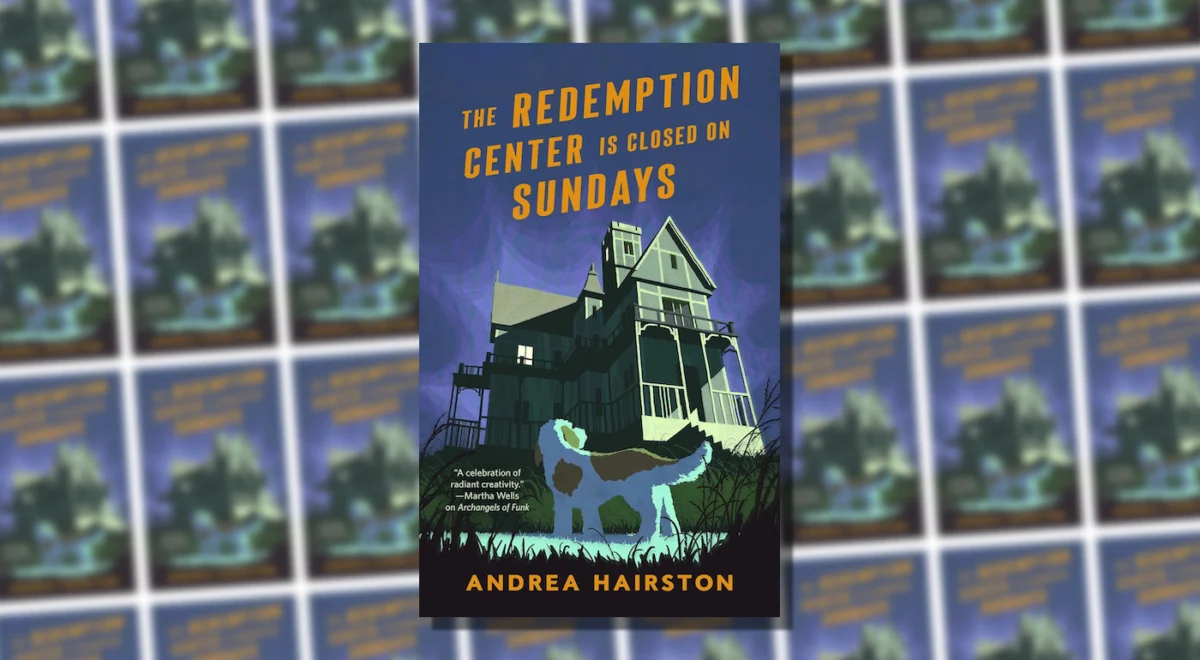
Andrea Hairston’s latest novel, The Redemption Center Is Closed on Sundays, is a literary achievement that defies the gravity of traditional genre constraints. Published by Tor Books, this sprawling, multi-threaded narrative functions as both a celebration of human interconnectedness and a meditation on the persistence of horror in a world that refuses to stop spinning. To read it is to engage with a work of massive, almost intimidating abundance—a book that demands the reader’s full attention while rewarding them with a profound sense of communal empathy.
Main Facts: A Narrative of Infinite Specificity
At its core, The Redemption Center Is Closed on Sundays is a story about the hidden layers of our everyday existence. Hairston crafts a town where the mundane—waiting for a late bus, walking a dog, or meeting a friend for a picnic—is inextricably linked to a larger, more mysterious reality. The novel follows a cast of dozens, each rendered with meticulous detail, whose lives intersect in a pattern that is as complex as it is beautiful.
The title itself serves as the narrative’s anchor. The "Redemption Center," located in the local State Forest, is an anomaly; it is a place where paths converge, where the laws of geography seem to bend, and where a motley crew of "pissy tourists," corporate figures, and community leaders find themselves trapped. As the title suggests, the center is closed on Sundays, yet it remains the gravitational pull for the story’s diverse cast of characters.
The novel employs a nonlinear structure, oscillating between "Yesterday"—the day the center was occupied and the crimes began—and "Today," a period marked by the aftermath of violence and the search for answers. This shifting timeline allows Hairston to build her characters layer by layer, peeling back the masks of social performance to reveal the anxieties, hopes, and secrets beneath.
Chronology: Navigating the Multiverse of Human Experience
The story is woven through three primary narrative threads that eventually collide in a dizzying display of literary architecture.
The First Thread: Paula B. Queenie.
Paula is the quintessential observer. As a self-professed "nerd" who knows every corner of her town, she serves as the reader’s guide to the local landscape. Her morning is defined by frustration: the bus is late, the weather is miserable, and her conspiracy-minded neighbor is intent on detailing the latest local murder. Central to her arc is Oona, her St. Berdoodle. Far from a standard pet, Oona is a "carnival dog," raised by a magician and a clown, possessing an intuitive, almost supernatural ability to navigate trails that do not appear on any human map.
The Second Thread: The Redemption Center Incident.
On a Sunday, Zsuzsu Marlene Hönig and Oona venture into the state forest, only to find the Redemption Center occupied by a group of stranded individuals. This ensemble includes medical professionals, eco-tourists, and Belle Roberts, the director of the local library and leader of the "Change Gang"—a group described by Paula as "hope junkies." Despite their best efforts to leave, these characters find themselves caught in a loop, forced to confront the mysteries of their location and the strange, unfolding events in the town beyond.
The Third Thread: An’qwenique Robinson.
A podcaster with a sharp mind and an anxious heart, An’qwenique finds her life upended by the appearance of strange figures in her neighborhood and the impending murder of a neighbor. Her planned vegan picnic with a local computer expert dissolves into a series of inexplicable events, further heightening the sense of unease that permeates the town.

Supporting Data: The Character-Driven Tapestry
Hairston’s work is characterized by a "kaleidoscopic" perspective. If one were to take a kaleidoscope apart, they would find individual, glittering components; similarly, the novel asks the reader to inspect the individual lives that make up the whole.
- The Power of the Canine: Hairston has established herself as a premier writer of dogs. Following the wise and clever border collies in her previous work, Archangels of Funk, Oona represents a leap in characterization. She is more than a companion; she is a catalyst. Oona belongs to no one and everywhere, serving as a friend to the overlooked—crows, turtles, and the lost. She is the thread that stitches these stories together, moving through the world with a sense of purpose that remains tantalizingly beyond human reach.
- The Queer Romance: Woven into the suspense and political intrigue is a slow-burn queer romance that provides a grounding emotional current. It is a testament to Hairston’s skill that this relationship feels as vital as the overarching mystery of the murders.
- The Community Effect: The town depicted in the book is a reflection of real-world community: often reluctant, occasionally petulant, but undeniably resilient. The interaction between characters—such as the "Louise and Thelma" queer couple or the various librarians—highlights the beauty of human connection.
Official Responses and Literary Reception
While The Redemption Center Is Closed on Sundays is a work of fiction, the "official" response from the literary community has been one of overwhelming admiration for its ambitious scope. Critics have noted that while the book features deeply upsetting crimes, Hairston handles these moments with a gentle, deliberate touch. The juxtaposition of the "horrors that persist" with the "we who persist" provides the novel with its moral center.
The book is frequently described as "speculative" but firmly rooted in the real world. It is not easily classified, which is precisely where its strength lies. It is a political, romantic, and thriller-esque exploration of how we construct our own versions of reality. As An’qwenique realizes within the narrative: "We’re in a multiverse insisting it’s one world. The witch’s trick is to break that spell." Hairston, acting as the authorial witch, breaks the spell of the mundane to reveal the extraordinary.
Implications: Why This Novel Matters
The primary implication of The Redemption Center Is Closed on Sundays is a call to radical empathy. In an era of fragmentation, Hairston’s novel posits that every stranger is a gateway to a new reality. By forcing her characters—and her readers—to slow down and observe the "infinite specificity" of the people around them, she challenges the apathy that often accompanies modern life.
The novel’s structure suggests that even when we feel stuck in a loop—whether at a closed center or in our daily routines—we are part of a larger, resonant quilt. The murders and mysteries serve as the "darkness" against which the "light" of community is measured. The persistence of the killer, and the threat he poses to the dog and the town, does not result in paralysis; instead, it reinforces the necessity of solidarity.
For readers, the book leaves an impression of expansiveness. It discourages the impulse to remain in one’s own head, instead encouraging a "march out into the world" to engage with others. Hairston has proven herself a singular force, capable of blending the high-stakes drama of a thriller with the intimate, quiet moments that define our shared human experience.
Ultimately, The Redemption Center Is Closed on Sundays is a reminder that the world is far stranger and more beautiful than we dare to imagine. It is a dizzying, joyful, and necessary read for anyone who believes that community is not just a place where we live, but a practice we must perform every day. Through its kaleidoscopic vision, the novel does not just tell a story; it shifts the reader’s perspective, making the familiar world feel suddenly, wonderfully, and terrifyingly new.
