
The Glass Ceiling of Nonfiction: Why the Academy’s Best Picture Barrier is Finally Cracking
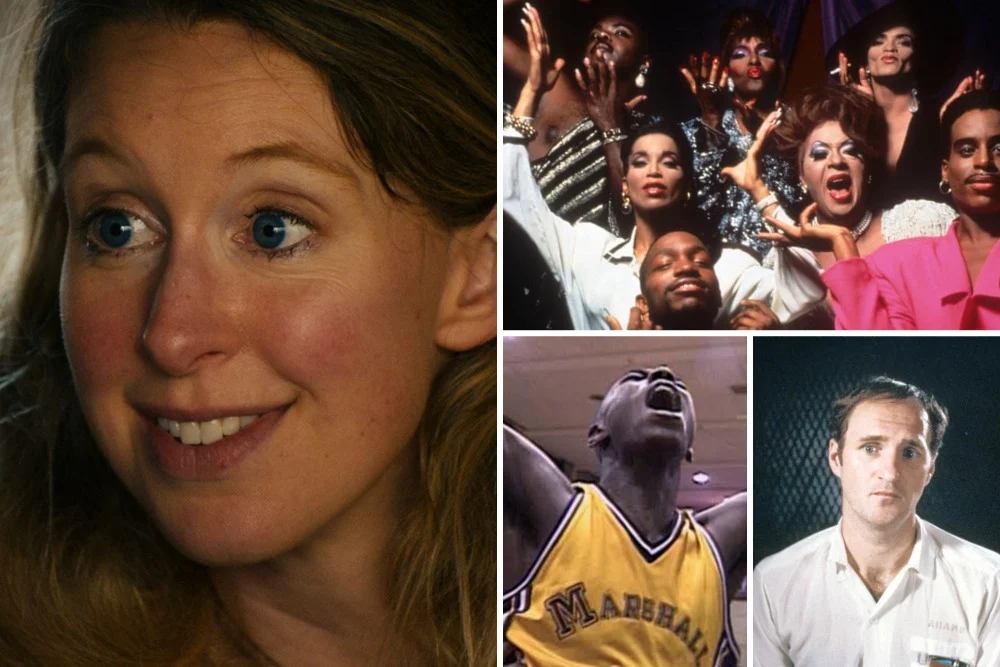
In the nearly century-long history of the Academy Awards, the "Best Picture" category has functioned as a fortress of traditional narrative storytelling. While the Academy of Motion Picture Arts and Sciences has evolved to include international features, animated triumphs, and blockbusters that break the mold, one specific medium has remained strictly cordoned off: the documentary.

For decades, nonfiction filmmaking has been relegated to its own specialized category, despite the fact that documentaries have often outperformed their narrative counterparts in cultural impact, technical innovation, and sheer emotional resonance. However, as the industry enters a new era of blurred lines between genres, the long-standing wall between "fact" and "fiction" is showing significant signs of collapse.

The Evolution of a Snub: From ‘Hoop Dreams’ to the Present
The historical reluctance to nominate a documentary for Best Picture is not a formal rule, but rather a deeply ingrained industry preference. The Academy has long operated under the assumption that "Best Picture" is a designation for scripted drama or comedy.

This exclusion has been a subject of frustration for cinephiles since at least 1994, when Steve James’ Hoop Dreams—a sweeping, novelistic portrait of two Chicago teens chasing NBA dreams—was infamously snubbed for a Best Documentary Feature nomination, let alone a Best Picture nod. The outrage was so profound that it led to a total restructuring of the Academy’s documentary branch voting process.

In 2009, following the massive critical success of The Dark Knight—which missed the Best Picture cut, leading the Academy to expand the category to up to ten nominees—the official press release explicitly hinted that the change was designed to make room for "a broader range of films," including documentaries. Yet, fifteen years later, the top category remains a documentary-free zone.

The "You Can See Everything" Phenomenon
This season, that assumption is being challenged by You Can See Everything, the incendiary, high-stakes nonfiction sensation directed by Nathan Fielder and Lance Oppenheim. Centered on the rise and fall of Theranos founder Elizabeth Holmes, the film does not merely document a scandal; it employs the stylistic flourishes, pacing, and psychological depth usually reserved for top-tier political thrillers.

The film’s box office performance and its inescapable presence in the cultural discourse have forced voters to grapple with a uncomfortable reality: if a film moves the audience, defines the year’s conversation, and exhibits master-level craft, why does its label as "nonfiction" disqualify it from the industry’s highest honor?

If You Can See Everything secures a nomination this year, it will be more than just a nod; it will be an act of historical correction. However, it also invites a retrospective look at the films that paved the way—the masterpieces that, in hindsight, were robbed of the opportunity to stand alongside the best films of their respective years.

A Chronology of Omissions: 40 Years of Missed Opportunities
To understand the gravity of this moment, Variety has curated a list of the 20 films from the past four decades that arguably deserved a seat at the Best Picture table.

The 1990s: Redefining Reality
The decade began with the realization that documentaries could be more immersive than any studio drama. Films like Hoop Dreams (1994) proved that nonfiction could sustain a narrative arc over three hours that felt as tight as a Dickensian novel. During this era, the documentary branch often prioritized "issue-based" films, frequently ignoring those with high stylistic ambitions.

The 2000s: The Expansion Era
The early 2000s saw the rise of the "investigative blockbuster." Errol Morris’s The Fog of War (2003) and the climate-defining An Inconvenient Truth (2006) brought documentarians to the red carpet, yet they remained trapped in the documentary ghetto. When the category expanded in 2009, the hope was that the "Big Picture" would finally become a place where political urgency could be rewarded at the highest level.

The 2010s to Today: The Era of Cinematic Nonfiction
The last decade has seen a blurring of the lines. Man on Wire (2008), The Act of Killing (2012), and Apollo 11 (2019) utilized techniques—archival restoration, re-enactments, and suspenseful editing—that challenged the very definition of a documentary. Films like Flee (2021) further shattered expectations by using animation to tell a deeply personal, non-fictional story, proving that the medium is limited only by the director’s imagination.

Supporting Data: Why the Academy Stays Rigid
The Academy’s resistance to documentaries is rooted in a mix of traditionalism and voting mechanics. Documentary branch members often view their films through a lens of journalism and educational utility, while the wider Academy membership—composed of actors, editors, and producers—often consumes documentaries as "supplemental" viewing.

According to industry analysts, there is also a "campaign exhaustion" factor. Best Picture campaigns are expensive and grueling. Documentary producers, who often work with significantly smaller budgets than studio narrative features, rarely have the capital to mount the multi-million dollar "For Your Consideration" campaigns required to land a Best Picture nomination.

Furthermore, there is the "Genre Bias." The Academy has historically struggled to recognize horror, comedy, and animation in the Best Picture category. Adding documentaries to that mix represents a threat to the traditional prestige-drama hegemony that defines the Oscars.

Official Responses and Industry Sentiment
In recent years, the Academy has made efforts to diversify its voting body, adding thousands of new members from international territories and younger demographics. These voters are statistically more likely to view nonfiction as a legitimate form of prestige cinema.

Prominent filmmakers, including Ava DuVernay and Alex Gibney, have long advocated for the dissolution of the documentary category entirely, arguing that "Best Picture" should be based on the film’s quality rather than its production method. While the Academy is unlikely to merge the categories, the sentiment among current members is shifting. "If it’s the best movie of the year, it’s the best movie of the year," says one anonymous Academy voter. "The format shouldn’t be the deciding factor."

The Implications of a Breakthrough
If You Can See Everything—or other 2024 contenders like Once Upon a Time in Harlem and Naza—breaks the barrier, the implications for the film industry will be profound.

- Budgetary Shifts: Studios will be more willing to invest in high-concept documentaries, knowing they have a path to the industry’s most prestigious award.
- Distribution Models: Streamers, which have long been the home of documentaries, will likely pivot to exclusive theatrical windows to ensure their nonfiction films meet the criteria for Best Picture consideration.
- The End of the "Documentary" Label: The success of such a film would effectively end the era where "documentary" is used as a pejorative or a limiting label. It would signal that the industry is finally ready to reward the most powerful, true stories of our time with the same reverence as the most compelling fictions.
Conclusion: A New Chapter for the Oscars
The list of 20 films that Variety highlights serves as a reminder that the Oscars have, for 40 years, been telling an incomplete story of cinema. While we celebrate the potential for a new milestone, we must also acknowledge the pioneers who were denied this recognition.

As we look toward the upcoming awards ceremony, the question is no longer whether a documentary can be a Best Picture nominee. It is whether the Academy is finally brave enough to admit that the greatest stories ever told are the ones that actually happened. Whether it is You Can See Everything or another breakout hit of the year, the barrier is weakening. It is time for the Oscars to reflect the reality of the medium, not just the tradition of the ceremony.
