
Unraveling the Shadows: A Critical Examination of David Balda’s Ambitious Political Thriller Manipulation
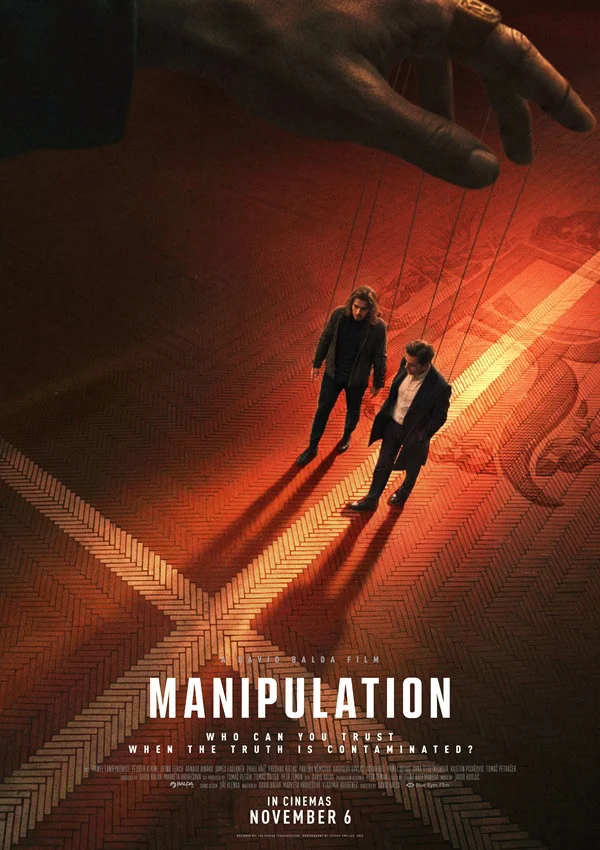
Main Facts
- Film Manipulation
- Release Year: 2026
- Director and Writer: David Balda
- Cast: Radoslav Gavlas, Pawel Lawrynowicz, James Faulkner, Anna Čtvrtníčková, Heino Ferch, and Paulina Nemcova.
- Production Scope: An internationally cast and crewed European feature film shot on location in Prague (Czechia), Ferrara (Italy), and Bologna (Italy).
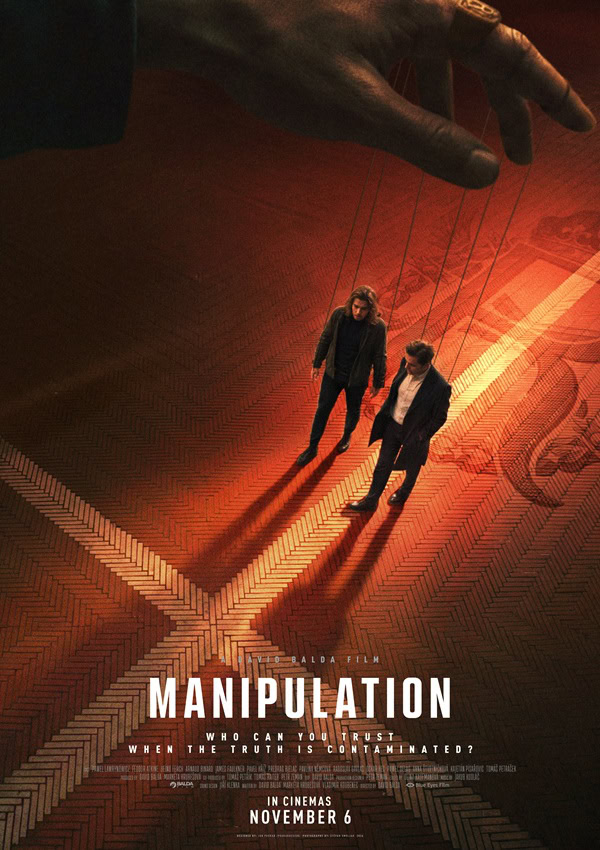
- Core Premise: An exploration of a global, omnipresent conspiracy where hidden elites pull the strings of both church and state, featuring a young initiate who discovers the ruthless, neo-fascist nature of his father’s inner circle.
- Critical Reception: Praised for its striking, atmospheric cinematography and ambitious scope, but widely criticized for heavy-handed exposition, clunky dialogue, an incoherent plot structure, and uninspired action sequences.
Chronology: From Prodigy to Pan-European Filmmaker
The trajectory of young writer-director David Balda has been closely watched within European independent cinema circles. Balda first captured industry attention when his debut feature premiered in his native Czechia while he was just 18 years old. Now in his mid-twenties, Balda has returned with a significantly scaled-up sophomore project, Manipulation, looking to transition from local prodigy to a notable player on the international cinematic stage.
Production on Manipulation spanned several years, utilizing picturesque, historically rich European backdrops to establish a brooding, atmospheric aesthetic. The filmmakers secured an eclectic international cast—bringing together emerging talents like Radoslav Gavlas and Anna Čtvrtníčková alongside seasoned veterans such as James Faulkner and Heino Ferch.
As the project moved through post-production toward its 2026 release, promotional materials promised a high-stakes geopolitical thriller dissecting the mechanics of systemic control. However, upon its premiere, the film’s theatrical and critical rollout revealed a distinct gap between its grand ambitions and its execution, raising questions about the maturation of Balda’s screenwriting and structural pacing.

Supporting Data: Behind the Production and Narrative Mechanics
To understand the shortcomings of Manipulation, one must examine the specific mechanical choices made in its script and editing suite. The production’s financial and creative resources are visibly up on the screen, manifesting in polished visual assets:
- Geographical Scope: Filming locations included Prague, Ferrara, and Bologna, granting the movie a sophisticated, postcard-ready visual palette that leverages ancient European architecture to evoke a sense of timeless, institutional dread.
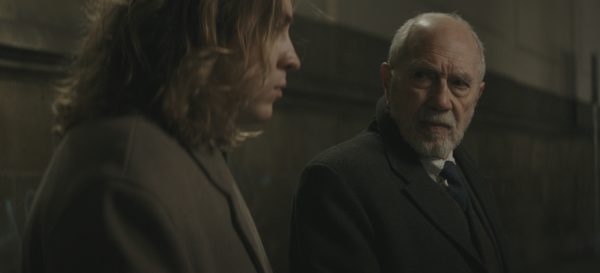
- The Narrative Engine: The plot hinges on Radoslav Gavlas’s character—a young initiate thrust into an elite circle of movers and shakers. As he uncovers the sinister reality of his father and fellow acolytes, he confides in Anna (played by Anna Čtvrtníčková), whose family is similarly entangled.
- The Turning Point: Seeking distance and safety, the protagonist relocates from Prague to study at the historic university city of Bologna. Meanwhile, a rebel faction attempts to expose the sprawling global conspiracy using an unconventional medium: a local Prague newspaper.
- Critical Metrics: Reviewers have pointed out glaring logical inconsistencies within this framework—most notably, the narrative stretch that a global, all-powerful cabal capable of manipulating church and state would fail to suppress a localized print newspaper. Furthermore, the film suffers from a structural imbalance where lengthy, stilted dialogue sequences constantly interrupt whatever momentum the mystery manages to build.
Official Responses and Creative Intent
While the film has faced rigorous critique from trade publications and festival reviewers, the underlying intent of the production team offers a window into what Manipulation was striving to achieve. In promotional statements and early press briefings, David Balda positioned the film not merely as a genre exercise, but as a philosophical exploration of contemporary autonomy.
Balda and his creative team aimed to address a universally relevant anxiety: the invisible architectures of power that dictate modern existence. The director sought to capture the existential vertigo experienced by young, intelligent individuals trying to navigate a world seemingly governed by corrupt historical symbols and institutional facades.
Despite these thematic aspirations, the creative team has faced substantial pushback regarding the film’s execution. Critics have universally noted that while the conceptual foundation—how youth survive under the weight of systemic corruption—holds immense dramatic potential, it was ultimately buried under a mountain of redundant exposition. The failure of the characters to forge genuine emotional chemistry, coupled with poorly choreographed and inexplicably placed action set-pieces, has drawn sharp commentary from industry analysts examining why high-concept European thrillers frequently stumble in translation from page to screen.
Implications for European Indie Cinema and Director David Balda
The release of Manipulation in 2026 carries broader implications for the career of David Balda and the viability of mid-budget, independent European political thrillers.
The Burden of Ambition
For Balda, Manipulation serves as a sobering lesson in narrative discipline. Transitioning from an adolescent wunderkind to a mature auteur requires more than just scaling up budgets, casting international veterans, and utilizing stunning European backdrops. The film demonstrates that aesthetic polish—no matter how "Insta-ready" or atmospheric—cannot substitute for a tight, logical, and emotionally resonant screenplay. For Balda’s future projects, critics have emphasized the necessity of script doctoring, tightening runtimes, and paring away excessive exposition in favor of showing rather than telling.
Lessons in Genre Storytelling
On a broader level, Manipulation highlights the delicate tightrope walk required when crafting political conspiracies for the screen. Modern audiences are sophisticated consumers of geopolitical fiction; plot points that strain credulity—such as relying on a local print newspaper to dismantle a shadow government—can instantly pull viewers out of the narrative immersion.
A Call for Focused Themes
Ultimately, Manipulation will likely be remembered as a transitional misfire that possessed all the right ingredients on paper but suffered from over-cooked plotting. If Balda and similar young filmmakers can harness the strongest underlying element of this project—the psychological plight of youth facing systemic corruption—and marry it to disciplined, streamlined storytelling, future endeavors may yet fulfill the lofty promise first glimpsed at the dawn of Balda’s career.
