
Beyond the Void: The Psychology of Cosmic Horror in Modern Video Games
For over a century, cosmic horror has occupied a peculiar and elusive space within speculative fiction. Popularized by early pulp pioneers and refined through decades of literary evolution, the subgenre is frequently misunderstood. Enthusiasts and casual audiences alike often mistake superficial set dressing for genuine cosmic terror. An aesthetic saturated with tentacles, cyclopean architecture, and eldritch iconography does not automatically qualify a piece of media as cosmic horror.
True cosmic horror demands more than maritime monsters or Victorian gloom; it requires a fundamental violation of the natural order—one that remains stubbornly abstract and defiant of human comprehension. As H.P. Lovecraft famously noted, "The basis of all true cosmic horror is violation of the order of nature, and the profoundest violations are always the least concrete and describable."
This genre is defined by the profound vertigo experienced when the human intellect collides with phenomena it is biologically and philosophically unequipped to process. Much like trying to mentally visualize a trillion dollars stripped of its sociopolitical context—an abstract magnitude that triggers cognitive resistance and mental static—cosmic horror confronts players with limits they cannot surpass.
To explore how interactive media captures this terrifying cognitive friction, we examine six defining video games that master the art of the unknowable.

1. Dredge (2023)
- Developer: Black Salt Games
- Publisher: Team17
- Platform: PC, Consoles
Main Facts & Setting the Scene
Released in 2023 by Black Salt Games in collaboration with Team17, Dredge initially presents itself as a deceptively serene maritime adventure. Players step into the boots of a down-on-his-luck fisherman operating out of five distinct, picturesque archipelagos. The core gameplay loop during daylight hours is meditative: you cast nets, haul in coastal catches, upgrade your trawler’s hull and engine, and interact with the local populace.
Chronology and Escalation
However, as the sun dips below the horizon, the game undergoes a chilling metamorphosis. Navigating at night forces players to manage a psychological panic meter. The tranquil waters churn into a psychological nightmare populated by aberrant sea life, phantom landmasses, and colossal entities lurking just beneath the surface.
As the narrative progresses, the protagonist uncovers a tragic past involving supernatural forces, binding their fate to the whims of the Leviathan—the archipelagos’ most terrifying apex predator. Featuring multiple branching endings, Dredge expertly balances peaceful economic progression with relentless psychological dread, proving that cosmic horror thrives best when contrasted with the mundane.
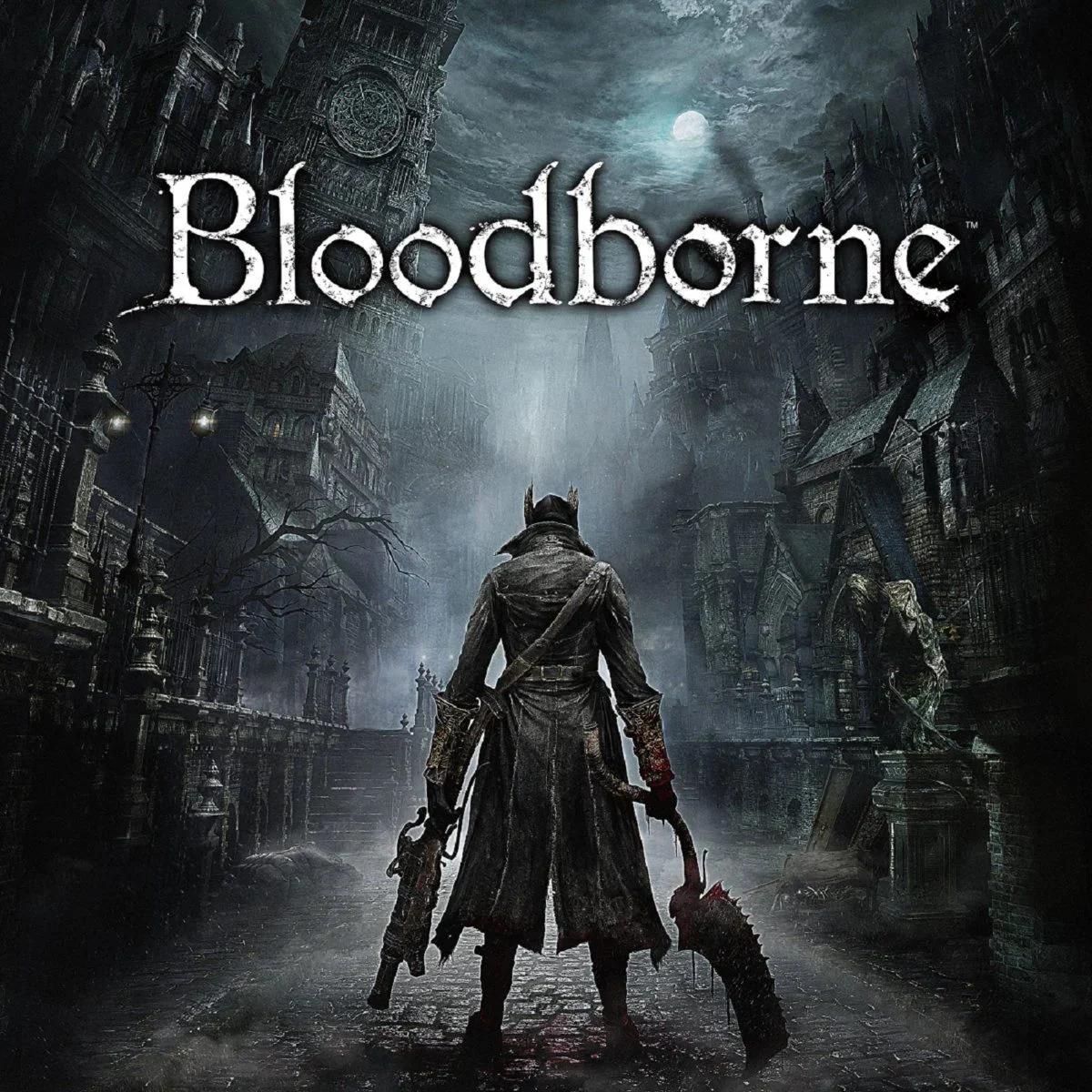
2. Bloodborne (2015)
- Developer: FromSoftware
- Publisher: Sony Computer Entertainment
- Platform: PlayStation 4, PlayStation 5 (via backward compatibility)
Supporting Data & World-Building
FromSoftware’s 2015 masterpiece Bloodborne remains a watershed moment in video game storytelling. Initially masquerading as a fast-paced Victorian gothic horror steeped in werewolf hunts and religious zealotry, the game slowly peels back its narrative layers to reveal a terrifying cosmic reality.

Employing FromSoftware’s trademark indirect storytelling, the game refuses to spoon-feed its lore. Players must actively piece together clues scattered across the decaying city of Yharnam through item descriptions, environmental design, and cryptic dialogue.
Implications of Insight
As the player’s "Insight" stat increases—representing their exposure to cosmic truths—the environment literally changes around them. Eldritch horrors clinging to church steeples, once invisible to the ignorant eye, are suddenly laid bare. Bloodborne masterfully illustrates the tragedy of forbidden knowledge: the more you uncover about the Great Ones and the cosmos, the more acutely you realize your absolute insignificance.
3. Pathologic & Pathologic 2 (2005 / 2019)
- Developer: Ice-Pick Lodge
- Publisher: Ice-Pick Lodge / tinyBuild
- Platform: PC, Consoles
Main Facts & Determinism
Ice-Pick Lodge’s Pathologic (and its acclaimed 2019 reimagining, Pathologic 2) approaches cosmic horror through the lens of philosophical determinism. Set in an isolated steppe town situated along the Ghorkon River, the narrative places players in the shoes of one of three healers trying to survive an unstoppable, reality-warping plague.
Chronology of Despair
The philosophical core of cosmicism posits that human destinies are entirely out of our control. Pathologic operationalizes this thesis. Players are given strict, unforgiving time limits and resource constraints, forcing them to make impossible moral choices. The town is dominated by the Polyhedron—an inexplicable, physics-defying architectural marvel that towers over the landscape like a geometric wound in reality.

While notoriously punishing and often described by players as an exercise in psychological endurance, Pathologic redefines ludic powerlessness, trapping the player within a script they can neither rewrite nor escape.
4. No, I’m Not a Human (2025)
- Developer: Trioskaz
- Publisher: Critical Reflex
- Platform: PC
Official Responses & Atmospheric Terror
Scheduled for release in 2025, No, I’m Not a Human by Trioskaz and Critical Reflex plunges players into an apocalyptic scenario defined by solar hostility. In this unsettling vision of the end times, the sun has turned aggressively lethal; brief exposure incinerates human life, forcing society indoors and into total collapse.
Implications and the "Visitors"
The player assumes the role of a solitary hermit isolated in a remote cabin. As societal infrastructure crumbles, an existential threat emerges: "Visitors"—entities that mimic human form with grotesque, imperfect precision. Theories abound within the narrative regarding whether these beings are reanimated corpses, biological parasites, or extraterrestrial vanguard units.
The game eschews traditional jump scares in favor of deep-seated paranoia, forcing players to verify the humanity of anyone knocking at their door while the dying sun bakes the world outside.

5. Amnesia: The Dark Descent (2010)
- Developer: Frictional Games
- Publisher: Frictional Games
- Platform: PC, Consoles
Chronology and the Sanity Mechanic
Frictional Games fundamentally reshaped modern horror with the 2010 release of Amnesia: The Dark Descent. Set in 1839 within the oppressive stone corridors of Prussia’s Brennenberg Castle, the game follows Daniel, an amnesiac Englishman guided only by a note written by his past self. The instruction is absolute and chilling: enter the Inner Sanctum and assassinate Baron Alexander.
Supporting Data & Psychological Toll
As Daniel navigates the castle, he discovers that he intentionally wiped his memory to escape the guilt of his past actions. Furthermore, he is being actively hunted by "The Shadow"—an amorphous, reality-consuming eldritch entity whose acidic, fleshy corruption alters the castle’s architecture.
Amnesia popularized the modern sanity system; prolonged exposure to darkness, monsters, or supernatural events degrades Daniel’s mental state, causing hallucinations and alerting enemies to his presence. It remains a benchmark for how vulnerability and memory manipulation amplify cosmic terror.
6. SOMA (2015)
- Developer: Frictional Games
- Publisher: Frictional Games
- Platform: PC, Consoles
Main Facts & The Abyssal Setting
Closing out this exploration of the incomprehensible is Frictional Games’ 2015 philosophical sci-fi horror masterpiece, SOMA. Shifting the cosmic dread from ancient castles to the crushing abyssal depths of the Atlantic Ocean, the game follows Simon Jarrett. After undergoing a routine brain scan in 2015 to treat severe brain damage, Simon awakens nearly a century later in 2103 inside the derelict PATHOS-II research facility.

Implications on Humanity
The surface of the Earth has been rendered uninhabitable by an extinction-level impact event, and the facility’s remaining inhabitants—merged with Cronenburg-esque machinery by a sentient, corrupted artificial intelligence—possess simulated human consciousness. These biomechanical constructs feel pain, fear, and confusion, blurring the line between machine and mortal.
SOMA delivers one of the most intellectually devastating endings in gaming history. Rather than relying on simple monsters, it forces players to confront agonizing questions regarding identity, continuity of consciousness, and what it truly means to be human in a universe indifferent to our survival.
Conclusion
Horror as a medium thrives on diversity, but cosmic horror occupies a unique niche because it refuses tidy resolutions. Whether navigating the decaying architecture of Yharnam, managing panic on a midnight trawler, or questioning your own consciousness at the bottom of the ocean, these games succeed by reminding us of a humbling truth: the universe is vast, uncaring, and profoundly beyond our control. For those willing to gaze into the void, these titles offer an unforgettable descent into the beautiful agony of the unknown.
