
The Death of the Binge? How HBO Max’s Lanterns Proves Weekly Releases Are Saving Prestige Television
By Felipe Rangel
Published October 9, 2026
In the ever-evolving landscape of modern entertainment, a quiet yet profound realization is dawning on industry executives and audiences alike: the binge-watch model, popularized and cemented by Netflix over the past decade, may officially be broken.
For years, dropping an entire season of television all at once was heralded as the ultimate consumer-friendly innovation. It freed viewers from the archaic constraints of traditional television programming, allowing them to gorge on narratives at their own pace. However, as the streaming wars have matured, the cracks in the foundation of the all-at-once release format have become glaringly apparent. Shows flare up brightly in the cultural zeitgeist for a chaotic weekend, only to vanish entirely from public consciousness by Monday morning, leaving platforms struggling to maintain subscriber retention.
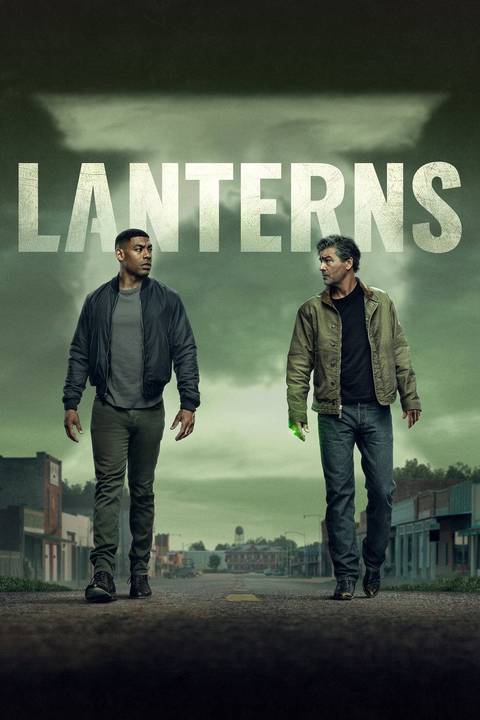
Enter HBO Max and its crown jewel of the 2026 television calendar: DC’s Lanterns. By sticking steadfastly to a traditional weekly rollout, the sci-fi detective series has shattered expectations, dominating global viewership charts and proving that anticipation, community theorizing, and sustained momentum are far more valuable than instant gratification. As Lanterns closes out its monumental first season as the reigning #1 show on HBO Max worldwide, it offers a masterclass in how serialized television should be distributed.
Main Facts: The Lanterns Phenomenon and the Shift in Streaming
The debate over streaming distribution models has found its ultimate case study in Lanterns, an integral part of James Gunn’s newly minted DC Universe (DCU). Co-created by an powerhouse creative team featuring Tom King, Chris Mundy (serving as showrunner), and Damon Lindelof, the series represents a massive tonal departure for comic book adaptations. Blending gritty procedural detective work with cosmic scale, Lanterns overcame the baggage of the poorly received 2011 Green Lantern feature film to become a runaway critical and commercial success.
Crucially, the series achieved this dominance not by dumping eight episodes onto HBO Max in a single afternoon, but by rolling them out week by week from August 16 to October 4, 2026. According to data tracking from FlixPatrol, Lanterns sits comfortably as the number-one television series on HBO Max both globally and domestically.
The strategy behind its release schedule highlights a fundamental flaw in the binge model: while dropping everything at once can generate immediate spike traffic, it severely limits a show’s ability to build a long-term narrative ecosystem. Lanterns utilized its eight-week run to foster an active, engaged community. Every Sunday brought fresh online discourse, wild fan theories, and intense social media scrutiny—a cultural phenomenon that simply cannot replicate itself when an entire season is consumed in a 48-hour blur.
Chronology: From Summer Debut to Global Domination
To understand how Lanterns rewrote the modern playbook for streaming success, one must examine its trajectory week by week over the late summer and early autumn of 2026:

- August 16, 2026: Lanterns makes its highly anticipated series premiere on HBO Max. The opening episode immediately hooks viewers by introducing a dark, grounded mystery punctuated by the shocking, tone-setting revelation of Hal Jordan’s death in the final moments.
- Late August to September 2026: Rather than seeing a rapid decline in viewership—a common drop-off point for binge-released shows—Lanterns experiences consistent week-over-week audience growth. The mystery crafted by writers Damon Lindelof, Chris Mundy, Tom King, Vanessa Baden Kelly, Justin Britt-Gibson, and Breannah Gibson keeps viewers guessing, prompting intense cross-examination across social media platforms.
- October 4, 2026: The gripping season 1 finale airs, bringing together narrative threads directed by a powerhouse roster including Alik Sakharov, James Hawes, Stephen Williams, and Geeta Patel.
- Post-Finale (October 2026): Days after the finale concludes, Lanterns maintains its stronghold at the summit of global streaming charts, with early development already underway for a highly anticipated second season.
Supporting Data: The Numbers Behind the Weekly Strategy
The success of Lanterns is not merely anecdotal; it is heavily backed by hard metrics released by HBO and independent tracking firms.
According to official figures reported by The Hollywood Reporter, the Lanterns series premiere hauled in an impressive 9.3 million viewers worldwide within its first three days of availability. However, unlike traditional streaming series where premiere numbers represent the high-water mark before a steady descent, Lanterns bucked the trend entirely.
Data published by Deadline revealed that the Lanterns season 1 finale shattered the show’s previous records, pulling in 10.5 million global viewers in its first three days. Furthermore, cumulative tracking indicates that ongoing interest in the series has driven the premiere episode’s total global viewership to a staggering, near-record milestone approaching 30 million viewers.
This upward trajectory directly counters the traditional binge pattern, where early episodes suffer from neglect once viewers rush to the finale. By pacing the release, HBO Max allowed word-of-mouth recommendations to compound organically over two months, pulling in hesitant viewers who needed time to catch up.
Official Responses and Industry Context
Industry analysts and studio executives are taking serious note of the Lanterns data, especially when contrasted against the cautionary tales of other high-profile streaming casualties.
Most notably, industry observers have drawn direct comparisons to Sony and Prime Video’s Spider-Noir. Starring Nicolas Cage, the Marvel-adjacent series debuted to critical acclaim, securing a stellar 92% critics’ score and a 90% audience score on Rotten Tomatoes. Yet, despite its initial splash as a global binge release, Spider-Noir was abruptly canceled after a single season. As Deadline noted, the series lacked the long-tail staying power and sustained cultural footprint boasted by Prime Video’s weekly-adjacent or long-burn hits like Reacher.
While Netflix continues to anchor its platform identity to the binge model—spawning massive, albeit fleeting, hits like Stranger Things, Squid Game, and Wednesday—it also faces severe attrition rates. Shows that fail to immediately capture millions of concurrent viewers in their first weekend are routinely sent to the chopping block, fostering a volatile environment for creators and fans.
HBO Max, conversely, has historically leaned into a hybrid approach, using weekly releases for its marquee prestige dramas like House of the Dragon, The Last of Us, and Hacks. The addition of Lanterns to this roster proves that even high-concept sci-fi and comic book adaptations thrive exponentially better when given room to breathe.

Implications: What Lanterns Means for the Future of Streaming
The triumph of Lanterns signals a broader reckoning for the entertainment industry. As subscription fatigue sets in globally, consumers are increasingly valuing platforms that offer curated, event-style television over a passive, fire-hose dump of content.
- The Death of the "Weekend Flash-in-the-Pan": Shows released all at once often suffer from compressed cultural conversations. By the time a viewer finishes a binge-released show on a Sunday night, the internet has already moved on. Weekly rollouts ensure a prolonged marketing cycle driven entirely by the audience.
- Mitigating Cancellation Risks: As seen with Spider-Noir, a brilliant show can be discarded if it doesn’t instantly conquer the global algorithm in 72 hours. Weekly models allow word-of-mouth to build, rescuing slower-burn narratives that require audience investment and speculation.
- A Blueprint for the DCU: For James Gunn and DC Studios, the success of Lanterns is a vital proof of concept. As the DC Universe expands with projects like Clayface arriving later in October 2026, maintaining a deliberate, high-engagement release schedule will be crucial for keeping audiences invested in a sprawling, interconnected multimedia narrative.
Ultimately, Lanterns has illuminated a path forward for prestige television. By treating episodes as individual cinematic events rather than chapters in a static book, HBO Max has demonstrated that patience remains one of the most powerful tools in modern entertainment.
