
Beyond the Mask: Rediscovering Five Forgotten Slasher Gems That Defy the Genre

The slasher subgenre, often dismissed by critics as a repetitive cycle of “teens in peril,” holds a far more complex lineage than its modern reputation suggests. Long before the term “slasher” was codified in the lexicon of film journalism, the foundational blueprint—a group of individuals isolated in a singular location, picked off systematically by a mysterious assailant—was being perfected. Agatha Christie’s seminal 1939 novel, And Then There Were None, provided the architectural skeleton that would later support iconic franchises like Friday the 13th.
The formula is deceptively simple: establish a cast of potential victims, set the stage, and systematically execute them in increasingly inventive ways until the killer’s identity and motive are revealed. Yet, the history of the genre is littered with attempts that failed to understand that the "slasher" is not just about the kill—it is about the tension, the atmosphere, and the psychological interplay between hunter and prey.
A Brief Chronology: From Giallo to the Slasher Craze
The seeds of the modern slasher were sown in the 1960s. The psychological terror of Alfred Hitchcock’s Psycho (1960), the voyeuristic dread of Michael Powell’s Peeping Tom (1960), and the visceral, splatter-heavy aesthetic of Herschell Gordon Lewis created an audience appetite for horror that demanded both technical craft and extreme violence. Concurrently, Italian giallo films, such as Mario Bava’s Blood and Black Lace (1964), introduced the black-gloved killer and the stylish, colorful cinematography that would become a staple of the subgenre.

However, the dam truly broke in 1978 with the release of John Carpenter’s Halloween. As the film transformed from a low-budget independent project into one of the most profitable movies in cinematic history, the industry rushed to capitalize on the "stalk-and-slash" phenomenon. This led to a gold rush of production in the early 1980s. While many of these films were derivative, bargain-bin efforts, a select few managed to subvert the formula or elevate the premise through unique stylistic choices. Navigating this era is a brutal game of trial and error, but for the discerning horror enthusiast, the rewards are immense.
The Forgotten Pantheon: Five Essential Discoveries
To understand the breadth of the genre, one must look beyond the marquee names like A Nightmare on Elm Street or Sleepaway Camp. Here are five films that, despite being largely overlooked upon release, remain essential viewing for the modern student of horror.
1. The Swinging Barmaids (1973): A Gritty Pre-Slasher Masterpiece
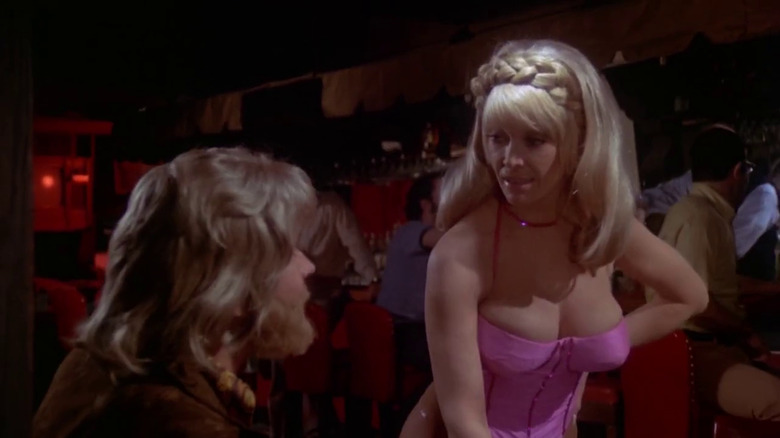
Director Gus Trikonis, perhaps best known for his later work in television and his marriage to Goldie Hawn, crafted a film that defies easy categorization. The Swinging Barmaids is an unrepentantly sleazy, atmosphere-heavy slasher set against the backdrop of a low-rent Los Angeles nightclub.

Written by Charles B. Griffith—the mind behind the original The Little Shop of Horrors—the film follows a murderous voyeur (played with chilling intensity by Bruce Watson) who possesses both a penchant for martial arts and a deep-seated hatred for his own identity. The film is a masterclass in “grindhouse” aesthetics; the viewer can almost smell the stale cigarettes and despair of the Swing-a-Ling nightclub. Unlike many slashers that focus on fantastical chase sequences, the kills here are messy, realistic, and jarring. It feels like a Brian De Palma thriller stripped of its formal polish and morality, resulting in a visceral experience that remains deeply unsettling.
2. Night School (1981): Style Meets the Kukri
Directed by Ken Hughes and released during the peak of the slasher craze, Night School was unfairly maligned by critics who dismissed it as another Friday the 13th clone. History has been much kinder to the film, which has since developed a robust cult following, bolstered by recent high-quality restorations.
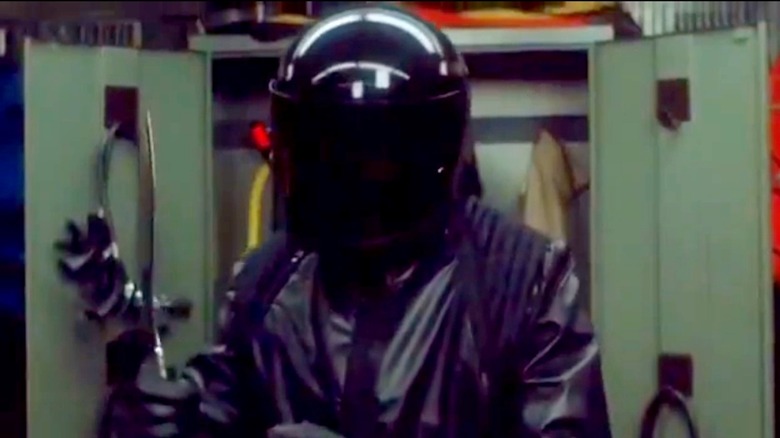
The film follows a series of gruesome decapitations at Wendell College, where the prime suspect is an anthropology professor (Drew Snyder) with a history of predatory behavior toward his students. What sets Night School apart is its restraint; it is remarkably less gory than its peers, opting instead for a sturdy, suspenseful narrative and genuinely competent acting. The image of a killer donning a motorcycle helmet and wielding a kukri blade remains one of the most striking visual motifs of the era. It is a sophisticated, Boston-set mystery that proves a slasher can be cerebral without sacrificing its dark, murderous heart.
3. Butcher, Baker, Nightmare Maker (1981): An Oedipal Nightmare
William Asher, a veteran of lighthearted beach movies, delivered a shocking pivot with this 1981 film. While some purists argue over its categorization, Butcher, Baker, Nightmare Maker is an essential inclusion in any discussion of slasher evolution.
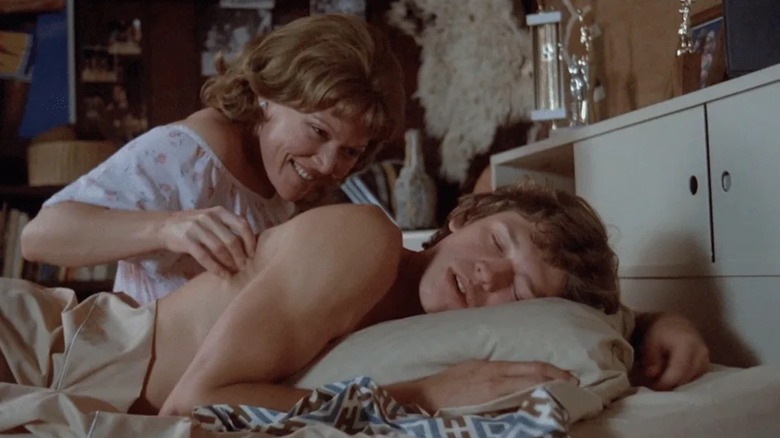
The story centers on a young man (Jimmy McNichol) raised by his pathologically possessive aunt (a tour-de-force performance by Susan Tyrrell). The film is a dark, Oedipal exploration of control, featuring a subplot involving a homophobic police detective that adds a layer of social commentary rarely seen in 80s horror. Notably, the film presents a gay character as a source of genuine support for the protagonist, subverting the tropes of the time. It is a film of immense ambition and cultural significance, possessing the kind of narrative depth that deserves a place in the National Film Registry.
4. The Mutilator (1984): The Perfection of Brutality
If Night School is a film of restraint, The Mutilator is the antithesis: a glorious, savage celebration of pure slasher excess. Co-directed by Buddy Cooper and John S. Douglass, the film is unapologetically "amateur hour" in its execution, yet it hits with the force of a sledgehammer.
The premise is simple: a college student and his friends travel to his father’s beachfront home, unaware that the father is harboring a deep, murderous grudge involving a past hunting accident. The film’s "fatal flaw" is actually its greatest asset—it front-loads its most shockingly gruesome kill, a sequence involving fishing gear that remains unsurpassed in its creative brutality. It is a film that understands its audience perfectly, providing exactly the level of "sleaze and gore" that the 80s market craved.
5. Jack’s Back (1988): A Late-Decade Triumph
Released just before the genre entered its mid-90s decline, Jack’s Back is a fascinating, high-concept slasher that leans into its procedural elements. Directed by Rowdy Herrington, the film stars James Spader in a dual role—an ambitious doctor and his twin brother—as they investigate a series of Jack the Ripper-inspired murders in Los Angeles.
Herrington, who would later direct Road House, brings a surprisingly scholarly approach to the Ripper lore, blending historical obsession with the slick, neon-drenched aesthetic of late-80s studio filmmaking. Spader is excellent, anchoring the film with a performance that balances vulnerability and intensity. It is a rare example of a slasher that functions as a legitimate murder mystery, proving that the genre still had creative gas left in the tank even as the decade drew to a close.
Implications for Modern Horror
The enduring appeal of these five films lies in their defiance of expectations. While the mainstream slasher genre eventually became defined by cookie-cutter sequels and diminishing returns, these hidden gems serve as a reminder that the formula is merely a container. When filled with unique characters, social commentary, or innovative visual language, the slasher is a potent vessel for exploring human fear.
The current trend of "elevated horror" often forgets that the roots of the genre were planted in the dirt of grindhouse theaters and the aisles of local video stores. By revisiting these films, we gain a clearer understanding of the genre’s DNA. They are not merely "forgotten" movies; they are the outliers that kept the slasher alive when it was at risk of becoming a parody of itself. For those willing to look past the occasional low-budget limitation, these films offer a masterclass in tension, style, and the dark, enduring allure of the slasher film.
