
Samuel L. Jackson Confirms His Next MCU Appearance as Nick Fury in ‘Avengers: Secret Wars’—Skipping ‘Doomsday’
Main Facts
The Marvel Cinematic Universe (MCU) is expanding its vast multiverse toward two monumental crossover events: Avengers: Doomsday and Avengers: Secret Wars. While Doomsday is shaping up to be an unprecedented gathering of cinematic heroes and villains—featuring the return of original franchise cornerstones like Chris Evans and Chris Hemsworth, alongside incoming actors from Fox’s legacy X-Men franchise and Robert Downey Jr. as the formidable antagonist Doctor Doom—one vital figure will be noticeably absent.
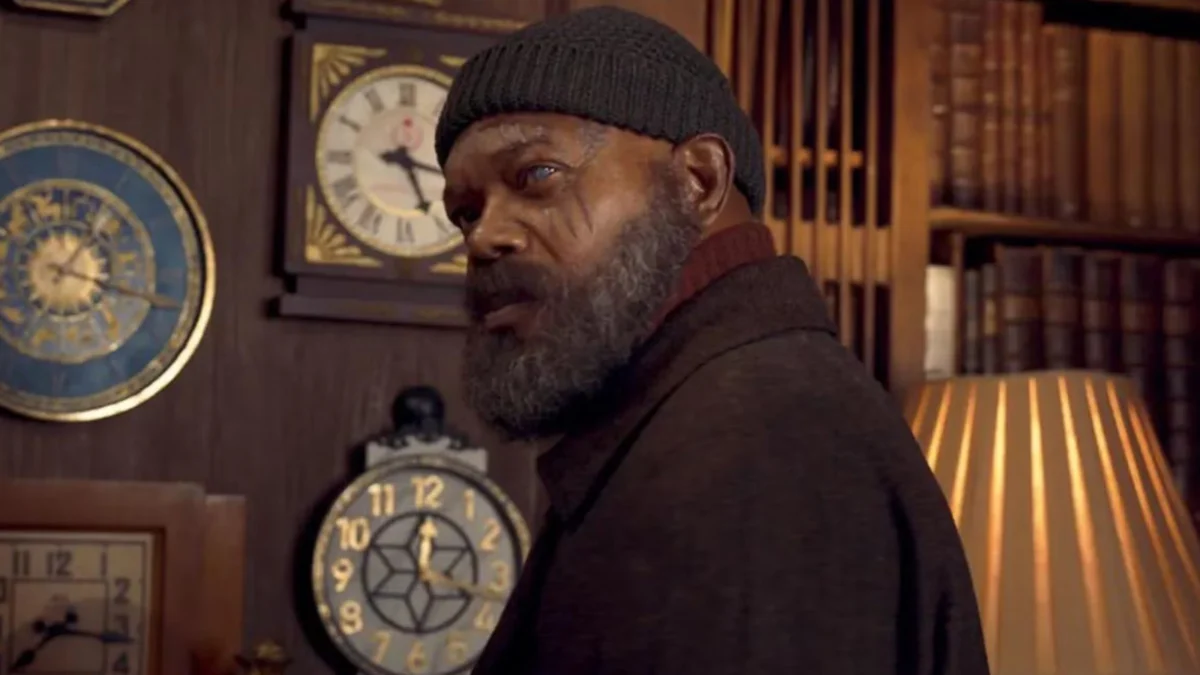
Samuel L. Jackson, who has anchored the franchise as the master spy and original architect of the Avengers initiative, Nick Fury, since his iconic post-credits introduction in 2008’s Iron Man, has confirmed that he will not appear in Avengers: Doomsday. Instead, Jackson has verified in an interview with The Direct that his next performance as the former S.H.I.E.L.D. director will take place in the subsequent blockbuster event, Avengers: Secret Wars.
Despite his extensive tenure in the MCU—spanning multiple feature films and the Disney+ streaming series Secret Invasion—Jackson revealed that Marvel Studios has kept plot specifics strictly under wraps. When queried about the overarching narrative of Secret Wars, Jackson stated, "I have no idea. [Marvel] hasn’t told me anything, other than, ‘You’re not gonna be in this movie. You’ll be in the next.’"
Chronology: The Evolution of Nick Fury in the MCU
To understand the weight of Nick Fury’s scheduled absence and subsequent return, it is essential to trace his historical footprint within the Marvel Cinematic Universe:
- May 2008 (Iron Man): Samuel L. Jackson makes his historic cinematic debut in a post-credits scene, stepping out of the shadows to pitch the "Avengers Initiative" to Tony Stark. This single scene establishes a cinematic universe model that Hollywood would replicate for decades.
- 2008–2012 (Phase One building blocks): Fury appears in supporting roles across Iron Man 2, Thor, and Captain America: The First Avenger, quietly moving pieces on the board.
- May 2012 (The Avengers): Fury serves as the emotional and operational glue that unites disparate heroes—Iron Man, Captain America, Thor, the Hulk, Black Widow, and Hawkeye—against Loki and the Chitauri invasion.
- April 2014 (Captain America: The Winter Soldier): Following an attempted assassination, Fury’s supposed death forces him into the shadows, exposing deep-seated corruption within S.H.I.E.L.D. and redefining his character as a gritty, espionage-driven survivor.
- 2015–2019 (Global crises & The Blip): Fury returns in Avengers: Age of Ultron, rallies help in Avengers: Infinity War (where he turns to dust following Thanos’ snap), and returns triumphantly in Avengers: Endgame. He also plays a mentoring role in Captain Marvel (set in the 1990s) and Spider-Man: Far From Home.
- 2023 (Secret Invasion): Jackson takes center stage in his own Disney+ miniseries, dealing with a clandestine infiltration of Earth by shape-shifting Skrulls.
- November 2023 (The Marvels): Fury commands S.A.B.E.R., coordinating cosmic threats alongside Carol Danvers, Monica Rambeau, and Kamala Khan.
- December 2027 (Projected Avengers: Secret Wars): Jackson is officially slated to make his next franchise return, bridging the gap between historical MCU continuity and the explosive multiversal climax.
Supporting Data & Production Landscape
The production pipeline for Marvel Studios’ upcoming Phase Six slate highlights a massive logistical undertaking. Avengers: Doomsday is currently racing toward its theatrical debut, designed to reset the stakes of the multiverse following the conclusion of the "Multiverse Saga." The film brings back directing duo Anthony and Joe Russo, who previously helmed Avengers: Infinity War and Avengers: Endgame, signaling a return to the scale that defined the studio’s peak box-office eras.
Following Doomsday, Avengers: Secret Wars is currently pencilled in for release on December 17, 2027. The project draws heavy inspiration from Marvel Comics’ iconic 1984–1985 crossover event of the same name. In the source material, a cosmic entity known as the Beyonder transports Earth’s mightiest heroes and most dangerous villains to a fabricated celestial body known as Battleworld, forcing them into gladiator-style combat with the promise of any wish granted to the ultimate victor.
Because Secret Wars is fundamentally a grand-scale sandbox designed to answer childhood hypothetical questions regarding "who would win in a fight," the production demands an astronomical ensemble. While Jackson’s schedule does not include Doomsday, his confirmed placement in Secret Wars ensures that the moral compass and institutional memory of the original Avengers lineup will be represented as the multiverse potentially faces collapse or restructuring.
Outside of the Marvel universe, Jackson remains remarkably active in cinema. He stars in Renny Harlin’s upcoming thriller The Beast, slated for an October 9, 2026 theatrical release. Additionally, he has secured a prominent role in J.J. Abrams’ highly anticipated, yet tightly guarded, 2027 feature film The Great Beyond.
Official Responses and Secrecy Protocols
Marvel Studios has long maintained a reputation for hyper-secrecy, often going to extremes—such as distributing false scripts or keeping actors confined to specific soundstages—to prevent plot details from leaking to the public. Jackson’s candid remarks to The Direct highlight this operational philosophy.
Rather than receiving a comprehensive overview of the overarching multiversal arc, veteran actors like Jackson are frequently provided only with the need-to-know information required to execute their specific contractual appearances. When informed that he would bypass Doomsday entirely, Jackson’s interaction with studio executives was reportedly stripped of grand philosophical explanations about timeline mechanics or variant iterations of characters. Instead, he was simply given a directive: sit out the first chapter, report to set for the second.
This compartmentalized approach reflects the immense logistical challenge of coordinating schedules for dozens of A-list actors whose availability fluctuates wildly. With Robert Downey Jr. stepping into the antagonist role of Doctor Doom, and countless legacy characters from Fox, Sony, and Disney eras converging, narrative bandwidth in Avengers: Doomsday is at a premium, likely explaining why characters like Nick Fury are being strategically held back for the finale.
Implications for the Marvel Cinematic Universe
Nick Fury’s exclusion from Avengers: Doomsday and subsequent positioning in Avengers: Secret Wars carries significant thematic and narrative implications for the MCU:
1. The Passing of the Tactical Torch
For over a decade, Nick Fury has been the ultimate planner, the man behind the curtain pulling the strings to unite heroes. With Doomsday focusing on multiversal chaos, incursions, and the destructive arrival of Doctor Doom, the sheer scale of the threat transcends traditional espionage. By benching Fury for Doomsday, Marvel allows the narrative to focus squarely on the multiversal collateral damage and the desperate survival efforts of individual heroes before bringing back the ultimate coordinator for the final chessboard reset in Secret Wars.
2. Streamlining a Bloated Ensemble
Avengers: Doomsday is already tasked with balancing the heavy lifting of introducing Robert Downey Jr.’s Doctor Doom, integrating the Fantastic Four, absorbing the X-Men film universe continuities, and managing surviving heroes from the core MCU. Attempting to fit Nick Fury and his cosmic S.A.B.E.R. network into that specific narrative bottleneck could have resulted in narrative overextension. Saving Fury for Secret Wars allows the screenwriters to utilize him with greater focus.
3. The Future of the Multiverse
As the MCU speeds toward the culmination of the Multiverse Saga in Secret Wars, the ultimate fate of reality remains uncertain. Given that Secret Wars in the comics traditionally results in the destruction and recreation of reality (leading to an all-new merged universe), having a foundational character like Nick Fury present at the structural terminus of the timeline gives the event emotional grounding. Whether Fury will interact with multiversal variants of his old allies—or encounter alternate iterations of agents he once trusted—remains one of the most compelling questions heading into 2027.
