
A Cinematic Odyssey: Trieste Science+Fiction Festival Returns for a Landmark 26th Edition
As the autumnal chill settles over the Adriatic, the city of Trieste is preparing to transform into the global epicenter of speculative imagination. The Trieste Science+Fiction Festival, Italy’s premier showcase for genre cinema, has officially unveiled the program for its 26th edition, scheduled to take place from November 3rd to 8th, 2026.
This year’s iteration promises to be more than a mere gathering of cinephiles; it is a curated exploration of the anxieties, dreams, and technological nightmares that define our current era. With a lineup that spans dystopian comedies, visceral body horror, and psychological thrillers, the festival continues its long-standing tradition of using the "fantastic" as a lens through which to view the fractured reality of the 21st century.
The Festival Landscape: Where Speculation Meets Reality
The Trieste Science+Fiction Festival has long operated on the belief that science fiction is not an escape from reality, but a confrontation with it. This year, the programming team has selected films that grapple with the encroachment of synthetic life, the fragility of the biological world, and the claustrophobia of modern existence.

Artistic Director Alan Jones explains that the selection is a deliberate response to a world in flux. "Once again, Trieste Science+Fiction Festival turns to the genre we love and its extraordinary creators to interpret the times we live in," Jones stated. "Through the cosmic perspective of science fiction, the titles we are announcing reflect the social changes we are experiencing. In an increasingly unstable world, we look towards the epic, the celestial, and the primordial. From robotic animals and out-of-control viruses to extreme alienation, our audience will find what they are looking for: emotion, adventure, and new ways of understanding the world."
A Program of Premiere Visions
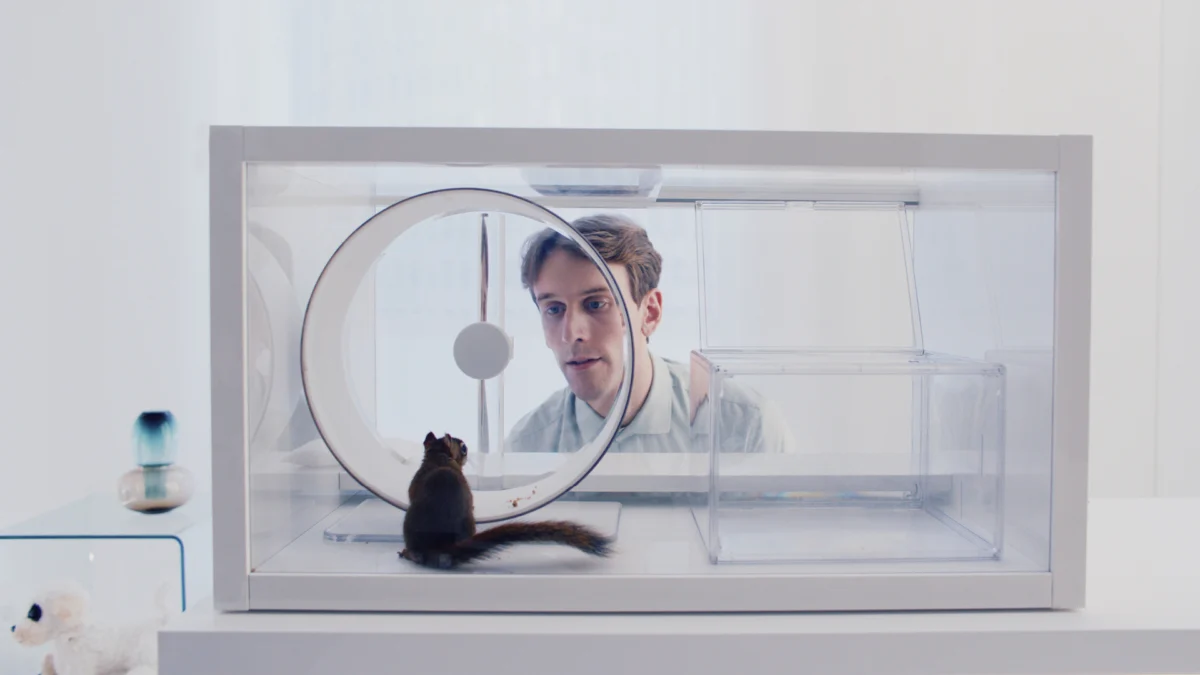
The festival’s competitive sections feature a diverse array of international talent. The opening film, The Squirrel (Finland, 2026), directed by Markus Lehmusruusu, sets a tone of melancholic surrealism. In a future where nature has been eradicated and replaced by synthetic replicas, a designer of artificial animals discovers a living, breathing squirrel in his apartment. The film, which has been selected as Finland’s official entry for the 2027 Academy Awards, serves as a poignant, ironic fable about humanity’s fractured relationship with the natural world.
From the high-octane world of South Korean cinema comes Colony, the latest project from Yeon Sang-ho, the visionary behind the global phenomenon Train to Busan. Screening after its debut at the Cannes Film Festival’s Midnight section, Colony returns to the roots of outbreak horror. The narrative follows a group of survivors trapped inside a high-tech biotechnology conference center as an unpredictable, rapidly mutating virus takes hold. It is a masterclass in tension that underscores the fragility of social order.

The festival also highlights the intersection of interactive media and film with the screening of Exit 8, directed by Genki Kawamura. Based on the viral independent video game of the same name, this psychological thriller leans into the "liminal space" aesthetic, trapping its protagonist in a subterranean corridor where a single mistake results in a nightmarish temporal loop. Starring Kazunari Ninomiya, the film is a testament to the festival’s commitment to exploring how digital narratives translate to the silver screen.
Rounding out the early announcements are Freaks II (Canada, 2026), a visceral anti-superhero sequel from Zach Lipovsky and Adam B. Stein, and Crawlers (USA, 2026), a creature-feature directed by Ángel Gómez Hernández. The latter, starring Matilda Lutz, promises to turn the home environment into a site of claustrophobic terror, reinforcing the festival’s dedication to high-stakes genre filmmaking.
Jury Dynamics: Recognizing Excellence in the Fantastic
The prestige of the Trieste Science+Fiction Festival is bolstered by its rigorous judging process. This year, the Asteroide Award—presented to the best emerging director in the science fiction and fantasy genres—will be overseen by a high-profile jury chaired by acclaimed filmmaker Paolo Strippoli. Strippoli’s own work, L’estranea, currently serves as Italy’s submission for the 2027 Academy Awards, grounding the jury in the perspective of a director currently navigating the global festival circuit. He is joined by writer-director Emma Braslavsky and Ramaskrik Film Festival Artistic Director Morten Haagensen.

The Méliès d’argent Award, dedicated to European feature-length fantastic films, will be decided by a panel comprising journalist Valentina Ariete, Film4 Editorial Director David Cox, and STARBURST Magazine Editorial Director Martin Unsworth. Furthermore, the Stars War Critics’ Award for Best First Feature will be adjudicated by Marco Lovisato, Beatrice Pagan, and Simone Soranna, ensuring that the festival remains a vital launchpad for new voices in the genre.
The Centenary Tribute: Honoring Roger Corman
Perhaps the most significant element of the 26th edition is the extensive tribute to the late, legendary filmmaker and producer Roger Corman. Born 100 years ago, Corman’s influence on cinema is immeasurable. The festival, which shares a deep historical connection with Corman—his film X: The Man with the X-Ray Eyes won the top prize at the inaugural Trieste festival in 1963—will host a retrospective that spans his work as both a director and a talent scout.
The Training Ground of Legends
Before the festival begins in November, a preliminary retrospective at the Cinema Ariston will focus on Corman’s role as a mentor. These screenings will feature three early-career masterworks from directors who were "born" in the Corman production house:

- October 9: Boxcar Bertha (Dir. Martin Scorsese)
- October 16: Piranha (Dir. Joe Dante)
- October 30: Dementia 13 (Dir. Francis Ford Coppola)
These films serve as a case study in how Corman utilized independent, low-budget production methods to foster radical creativity in young filmmakers, providing the autonomy they needed to develop their distinct cinematic languages.
The Director’s Vision
During the main festival dates in November, the focus shifts to Corman’s own directorial efforts. The selection includes The Masque of the Red Death, a cornerstone of his Gothic cycle; Gas-s-s-s, an example of his countercultural satire; and Frankenstein Unbound, his return to the sci-fi roots that defined his early career. Julie Corman, producer and widow of Roger Corman, will attend the festival in person to introduce these films, providing a personal window into the life of a man who changed the DNA of American cinema.
Implications for the Future of Genre Cinema
The 2026 Trieste Science+Fiction Festival arrives at a pivotal moment for the film industry. As global audiences grow weary of homogenized blockbuster content, the appetite for high-concept, independent, and international genre films is surging. By bridging the gap between historical reverence (the Corman tribute) and cutting-edge experimentation (the new competitive entries), the festival maintains its relevance as an essential cultural institution.

The festival’s emphasis on "liminal spaces," "ecological anxiety," and "out-of-control viruses" serves as a mirror for the contemporary viewer. These films are not mere entertainment; they are cautionary tales, political metaphors, and emotional landscapes. By providing a platform for these narratives, Trieste continues to prove that science fiction is the most effective language we have to discuss the uncertainties of our future.
As the industry prepares for the event, the message from the festival’s organizers is clear: in an era of digital noise and social fragmentation, the communal experience of the cinema remains the most powerful way to interpret our reality. Whether through the lens of a classic Corman horror film or the latest dystopian thriller, the 26th Trieste Science+Fiction Festival invites audiences to look into the void—and find, in the reflection, a new way to understand our world.
For the full program, ticket information, and updates regarding the 2026 edition, visit the official website at https://www.sciencefictionfestival.org/en/.
